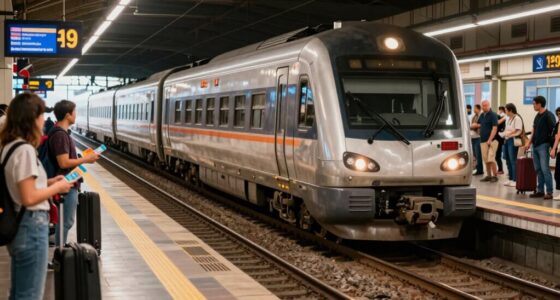
When choosing between long-distance buses and trains, consider both environmental impact and comfort. Buses usually have a smaller carbon footprint but can feel cramped with limited amenities. Trains offer more spacious seating, dining options, and a chance to move around, making them a better choice for longer journeys. While budget constraints may lean you towards buses, trains provide a more relaxed travel experience. There’s plenty more to explore about these travel options and what suits you best!
Key Takeaways
- Buses generally have a smaller carbon footprint than cars but can be less efficient than trains when fully loaded.
- Trains offer more spacious environments and comfort features, including dining options and the ability to move around.
- Modern buses provide basic amenities like Wi-Fi, but trains typically have superior seating and legroom for long journeys.
- Electric trains can be powered by renewable energy sources, reducing their environmental impact further compared to traditional buses.
- Cost-conscious travelers might prefer buses, while those seeking comfort and amenities may opt for trains despite potentially higher fares.

When it comes to long-distance travel, which option suits you best: buses or trains? Both modes of transportation have their merits, but if you’re concerned about the environmental impact and passenger amenities, it’s worth diving deeper into these aspects.
Exploring long-distance travel? Buses and trains each offer unique benefits, especially regarding environmental impact and passenger comfort.
Buses typically have a smaller carbon footprint compared to trains, especially when you consider the energy efficiency of newer models. A full bus can transport many passengers at once, reducing the number of vehicles on the road. On the other hand, trains, particularly electric ones, can also be environmentally friendly. They often run on renewable energy sources and can move large numbers of people efficiently. Depending on the route and the type of train, you might find that trains have a lower per-passenger environmental impact than buses.
Now, let’s talk about passenger amenities. Buses often offer basic comfort levels, with reclining seats and air conditioning. However, you might find that the space is more cramped compared to trains. On a bus, you’re usually confined to your seat, and legroom can be limited. Some modern buses have Wi-Fi and power outlets, but that’s not the case for all services. If you’re traveling for several hours, those amenities can make a difference in your overall experience.
Trains, on the other hand, generally provide a more spacious environment. You can get up, walk around, and even visit a dining car on longer routes. Many trains come equipped with comfortable seating, ample legroom, and sometimes even sleeper cars for overnight journeys. The experience can feel more relaxed and enjoyable, allowing you to take in the scenery without feeling cramped. Additionally, just like Kia Sedona tuning, which enhances engine performance, trains can also optimize their operations for better energy efficiency.
When weighing your options, consider how much time you’ll spend in transit and what amenities will make your journey more pleasant. If you prioritize comfort and the ability to move around, trains may be the better choice for long distances. If you’re on a budget and looking for a lower environmental impact, buses could be the way to go. Ultimately, it boils down to what you value most in your travel experience. Whether you choose a bus or a train, being mindful of both comfort and environmental considerations can enhance your journey.
Frequently Asked Questions
Which Option Is Generally More Affordable for Long-Distance Travel?
Generally, long-distance buses are more affordable for your travels. You’ll often find ticket discounts that make bus fares even cheaper than train tickets. Plus, buses usually offer more flexible baggage policies, allowing you to bring extra bags without hefty fees. While comfort may vary, if saving money is your priority, you’ll likely find that buses give you the best bang for your buck. So, check those discounts and pack wisely!
How Do Travel Times Compare Between Buses and Trains?
Travel times between buses and trains can vary considerably. Generally, trains have a higher travel speed, allowing you to reach your destination faster. However, buses often offer more scheduling flexibility, with numerous routes and departure times. If you’ve got a tight schedule, trains might be your best bet. But if you prefer convenience and don’t mind a longer journey, buses can fit your plans more easily. It all depends on your priorities!
Are There Any Hidden Fees Associated With Either Mode of Transport?
When you’re packing for a trip, it’s like wrapping a gift for yourself—you want it to be perfect! But don’t forget those hidden fees. Both buses and trains can surprise you with extra charges, like baggage fees that can add up quickly. You might think you’re getting a good deal, only to find out you’ll pay more at the counter. Always read the fine print to avoid surprises and keep your budget intact!
What Amenities Are Typically Available on Long-Distance Buses vs. Trains?
On long-distance buses, you’ll often find reclining seats, Wi-Fi, and restrooms, though amenities can vary. Trains usually offer more comfort with spacious seating, dining cars, and power outlets at your seat, making it easier to charge devices. Buses might have limited snack services, while trains often provide a café or dining options. Depending on your journey, you may prefer the more relaxed atmosphere of trains or the convenience of bus travel.
Can I Bring Pets on Long-Distance Buses or Trains?
Yes, you can bring pets on long-distance buses or trains, but pet policies vary by company. Some allow small pets in carriers, while others might have specific weight limits. To guarantee your pet’s comfort, always check the guidelines beforehand. Make sure your pet is secure and has enough space to relax during the journey. Also, consider bringing familiar items like blankets or toys to help keep them calm and comfortable.
Conclusion
When choosing between long-distance buses and trains, consider both your comfort and environmental impact. Buses often have a smaller carbon footprint, while trains provide a more spacious ride. Which matters more to you: a greener choice or a cozier journey? Ultimately, your decision depends on what you value most during your travels. So next time you’re planning a trip, weigh these factors carefully to guarantee you pick the best option for your needs.