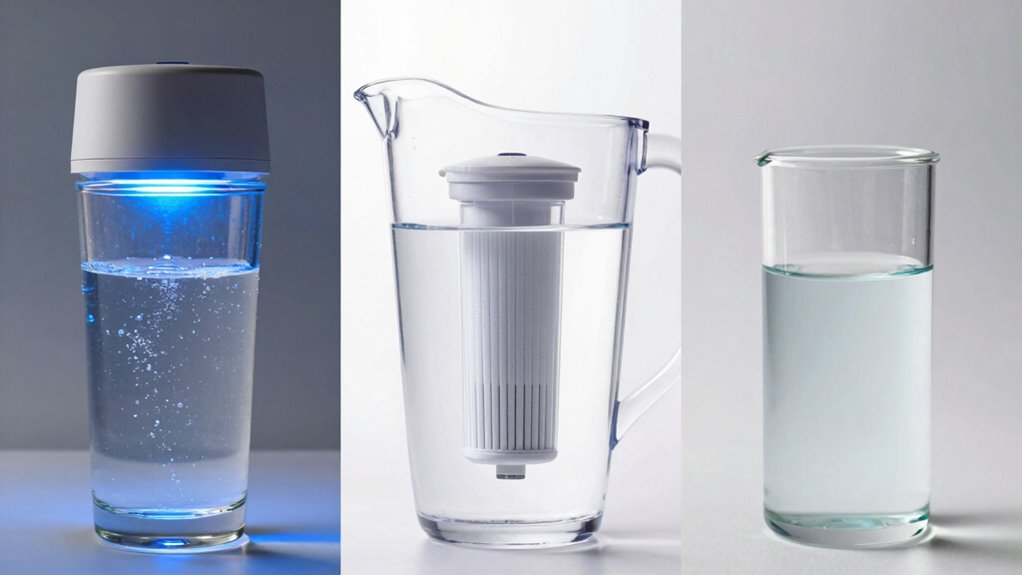
When choosing water purification methods, consider UV treatment, filtration, and chemical options. UV uses light to inactivate bacteria and viruses quickly but needs power, while filters remove physical debris and some contaminants without chemicals. Chemical tablets are lightweight and effective against microorganisms but can affect taste and won’t remove physical pollutants. To guarantee the safest water, combining methods often offers the best protection—keep exploring to find the right solution for your needs.
Key Takeaways
- UV purification uses ultraviolet light to deactivate bacteria and viruses without chemicals, but requires power sources.
- Filters physically remove debris, bacteria, and some chemicals, preserving water taste but may not eliminate all viruses or chemical residues.
- Chemical treatments (iodine or chlorine tablets) effectively kill pathogens quickly but can alter water taste and leave chemical residues.
- Combining methods, such as filtration plus chemical or UV treatment, offers comprehensive water safety and improved quality.
- Choice depends on water source, environment, and needs; portable options suit travelers, while combined systems benefit home use.
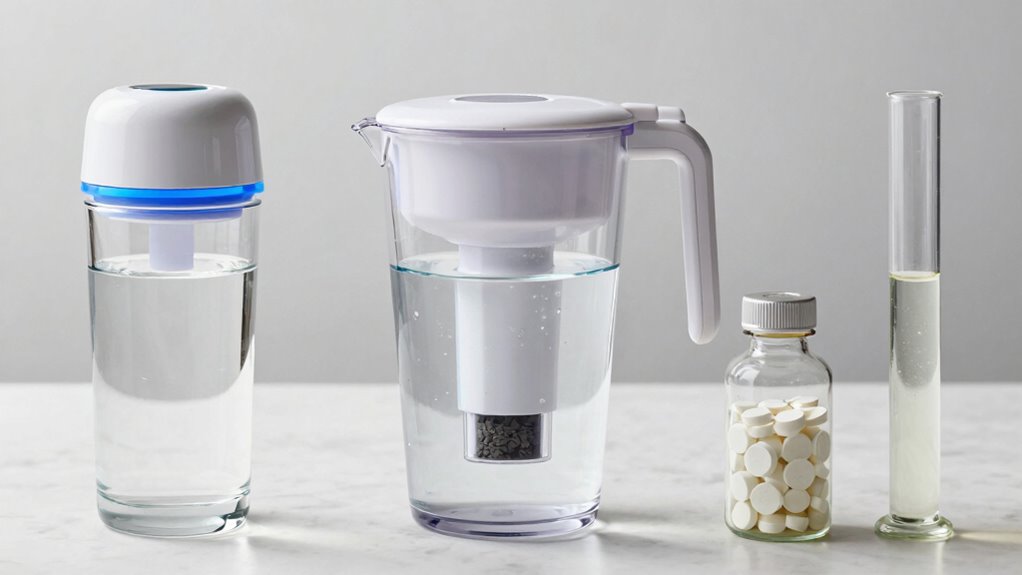
Clean water is vital for your health and daily life, and there are various techniques to purify it effectively. One popular approach involves using portable devices that fit easily into your routine, whether you’re at home or on the go. These devices often incorporate filtration systems designed to remove physical impurities, bacteria, and chemicals. Many of these portable filters use activated carbon or advanced membranes to improve water quality, making them a convenient choice for travelers, hikers, or anyone needing quick access to clean water. Alternatively, chemical additives like iodine or chlorine tablets offer a simple, lightweight solution. You drop these tablets into water, wait a specified time, and then enjoy safe drinking water. Chemical additives are especially useful when you’re in remote areas without access to electricity or complex equipment. They work quickly and are highly portable, making them a practical choice for emergencies or outdoor adventures.
However, each method has its limitations and advantages. Portable devices provide a physical barrier, capturing contaminants and particles without introducing chemicals into your water. This method often preserves the water’s taste better and avoids potential chemical residues. Nonetheless, some portable filters may not eliminate all viruses or chemical residues, so you need to choose the right device based on your water source. On the other hand, chemical additives are effective against bacteria and viruses but can alter the water’s taste and sometimes leave an aftertaste. They also require proper handling and storage to avoid accidental ingestion or misuse, especially if children are around. Additionally, chemical treatments don’t remove physical impurities or chemical pollutants already present in the water, so they’re best paired with filtration methods if you want all-encompassing purification. Incorporating advanced filtration technology can significantly enhance the overall safety and quality of your purified water.
It’s important to understand that UV purification, filter systems, and chemical additives serve different purposes and can be combined for maximum results. For instance, using a portable filter first to remove physical debris followed by a chemical treatment can ensure both clarity and biological safety. UV purifiers, which use ultraviolet light to deactivate bacteria and viruses, are another option that doesn’t involve chemicals but requires a power source. They are effective and quick but less portable if you’re in a location without electricity. Overall, selecting the right water purification method depends on your specific needs, environment, and water source. If you’re traveling, portable devices and chemical additives might be your best bet. For home use, combining filtration with UV or chemical treatments can provide the highest level of safety. Whatever method you choose, understanding its strengths and limitations ensures you always have access to clean, safe water.
Frequently Asked Questions
Which Method Is Most Environmentally Sustainable?
You’ll find that filters are the most eco-friendly choice because they typically use less resource consumption and produce minimal waste. UV purification is also sustainable since it consumes no chemicals, but it requires electricity, which may have environmental impacts. Chemical methods tend to be less eco-friendly due to chemical waste and higher resource use. Overall, filters strike a good balance between effective purification and eco-conscious resource consumption.
How Do Water Purification Costs Compare Long-Term?
You’ll find that UV purification often has higher initial costs but lower ongoing expenses due to minimal maintenance, making it cost-effective long-term. Filters usually require periodic replacements, increasing maintenance costs over time. Chemical methods tend to have lower upfront costs but can become expensive with frequent chemical purchases. A thorough cost analysis shows that UV and filters can be more economical long-term, especially with proper maintenance, compared to chemical treatments.
Can These Methods Remove All Contaminants?
You can’t count on any method to completely conquer the contaminant spectrum. UV, filters, and chemicals each excel at removing specific pollutants but fall short of total triumph. Their removal efficiency varies, depending on contaminant type and concentration. So, while these methods markedly reduce most contaminants, they don’t guarantee absolute eradication. For thorough purification, combining methods or consulting experts might be your best bet for safer, cleaner water.
Are There Health Risks Associated With Each Method?
Yes, each method has potential health risks. Chemical treatments may leave residuals that could cause health implications if not properly managed. UV purification effectively kills germs but doesn’t remove chemical contaminants, so residuals might remain. Filters can trap some chemicals but may not eliminate all, and poor maintenance can lead to bacterial growth. Always follow manufacturer instructions to mitigate risks and ensure safe drinking water.
Which Method Is Most Effective for Outdoor Use?
For outdoor use, chemical methods come with convenience, but UV sterilizers and portable filters often provide better benefits. UV systems offer quick, chemical-free purification, boasting portable efficiency and ease of use, making them ideal for backpackers and campers. Filters are simple and reliable, while chemicals may be messier and less practical. Ultimately, UV and filters lead in outdoor effectiveness, combining convenience, safety, and ease of use for outdoor adventures.
Conclusion
When choosing a water purification method, consider how each option impacts your safety and convenience. UV purification kills 99.9% of bacteria instantly, making it a fast, chemical-free choice. Filters remove impurities but may need regular replacement, while chemicals like chlorine are affordable but can leave residues. Did you know that in 2020, over 1.8 billion people lacked safely managed drinking water? Selecting the right method guarantees you’re among the millions prioritizing clean, safe water every day.