
To pair solar panels with a power station safely, first check that their voltage and capacity are compatible, and avoid exceeding the power station’s limits. Use a proper charge controller or voltage regulator to stabilize the output and prevent surges. Confirm all components meet their specifications before connecting. Small adjustments make a big difference in safety and efficiency. Keep these steps in mind, and you’ll discover more ways to protect your setup as you go along.
Key Takeaways
- Always verify the voltage and capacity ratings of solar panels and the power station to ensure compatibility.
- Incorporate a voltage regulator or charge controller to stabilize voltage and prevent overloads.
- Match the panel’s output voltage within the power station’s acceptable input range before connecting.
- Use proper wiring and connectors rated for your system’s voltage and current to avoid shorts or sparks.
- Regularly check system specifications and perform safety checks to maintain optimal, damage-free operation.

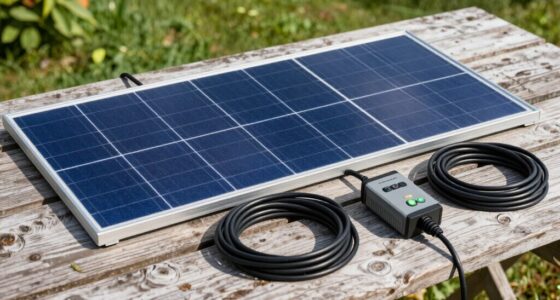
Pairing solar panels with power stations is a practical way to maximize renewable energy use and guarantee reliable electricity supply. To do this safely and effectively, you need to understand how battery compatibility and voltage regulation play vital roles in the process. Battery compatibility ensures that the power station can handle the energy stored and discharged from your solar panels without damage or inefficiency. Not all batteries are created equal; some are designed for specific voltage levels or chemistries. Before connecting your solar panels, check the specifications of your power station’s battery system to confirm it can accommodate the voltage and capacity produced by your panels. Using incompatible batteries risks damaging both the battery and the power station, leading to costly repairs or replacements.
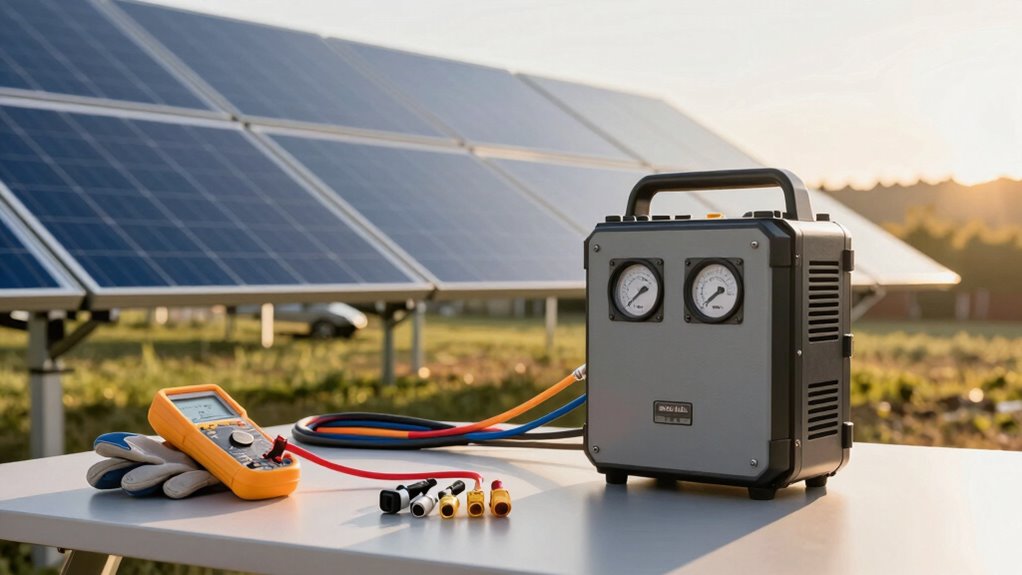
Voltage regulation is equally important. Solar panels generate varying voltage levels depending on sunlight intensity and angle. Without proper regulation, these fluctuations can overload your power station’s components or cause inconsistent power output. To prevent this, incorporate a voltage regulator or charge controller into your setup. A good charge controller stabilizes the voltage coming from your panels, ensuring it matches what your power station and batteries can safely handle. Many modern charge controllers feature built-in voltage regulation and compatibility checks, making it easier to connect panels safely. Always verify that the voltage output from your panels aligns with the input limits of your power station’s controller. If the voltage exceeds the recommended range, you risk damaging the internal circuitry or reducing the lifespan of your equipment. Additionally, understanding the impact of contrast ratio and other specifications on your system’s efficiency can help optimize your setup for better performance.
Frequently Asked Questions
Can I Connect Multiple Solar Panels to a Single Power Station?
Yes, you can connect multiple solar panels to a single power station, but you need to guarantee proper solar panel wiring and compatibility. Use appropriate wiring techniques, like series or parallel connections, depending on your panels and station. Check the power station’s specifications to confirm it handles the combined voltage and current. This ensures safe, efficient energy transfer without damaging your equipment or risking safety issues.
What Voltage Should My Solar Panels Output for Safe Pairing?
You should aim for a solar panel voltage output around 18-22 volts to ensure safe pairing with your power station. Notably, most power stations handle input voltages up to 30 volts, providing a safety margin. By matching your solar panel’s voltage with the station’s voltage compatibility, you prevent overloads and damage. Always check your device’s specifications to maintain safe operation, avoiding any risk of frying your equipment.
Do I Need a Special Inverter for Pairing Panels and Stations?
Yes, you need a compatible inverter designed for your solar panels and power station. Look for inverter compatibility that matches your panel’s voltage and current output, guaranteeing proper voltage regulation. An inverter with adjustable settings helps prevent voltage spikes that could damage your equipment. Choosing the right inverter ensures safe, efficient pairing, protects your devices, and optimizes power transfer without risking overloads or damage.
How Do I Prevent Overcharging During Sunlight Peaks?
Don’t let your system go overboard when the sun’s blazing. To prevent overcharging during sunlight peaks, use a reliable charge controller with built-in voltage regulation. This device acts like a gatekeeper, stopping excess current from reaching your station and protecting your equipment. Make sure your charge controller is properly rated for your solar panel setup. Regularly check connections and settings to keep everything running smoothly and avoid any surprises.
Is It Safe to Leave the System Unattended Overnight?
Yes, it’s safe to leave your system unattended overnight if you’ve prioritized battery safety and system monitoring. Confirm your charge controller and monitoring system are functioning correctly to prevent overcharging or discharging. Regularly check your system’s settings and alerts, and use safety features like automatic shut-off if needed. Staying vigilant helps protect your equipment and keeps your solar setup running smoothly while you’re away.
Conclusion
Just like Icarus needed careful wings to soar without melting, you must pair your solar panels and power stations wisely. Pay attention to voltage and current ratings, and always follow manufacturer guidelines. With a little caution, you’ll harness the sun’s power safely and efficiently. Remember, even Daedalus’ craftsmanship was about precision—so take your time, plan thoroughly, and enjoy the bright, safe energy future you’ve built.