To guarantee your solar setup is safe and efficient, choose the right cables and connectors carefully. Use 10 to 12 AWG wires for most systems, matching their gauge to the connector type like MC4, Anderson, or XT60. MC4 connectors are ideal for outdoor use and high current loads, while Anderson and XT60 connectors work for larger or DIY projects. Proper matching and installation prevent issues like resistance, overheating, and disconnections—keep exploring to learn more about making your system reliable and high-performing.
Key Takeaways
- Match wire gauge (10-12 AWG) with connector ratings like MC4 for safe, efficient solar connections.
- MC4 connectors are waterproof and ideal for outdoor solar systems, supporting up to 10-12 AWG wires.
- Anderson connectors are versatile, suitable for high current applications, and work with various wire sizes.
- XT60 connectors are reliable for DIY solar setups, compatible with moderate currents and common wire gauges.
- Proper installation, including correct crimping or soldering, ensures safety, durability, and optimal system performance.
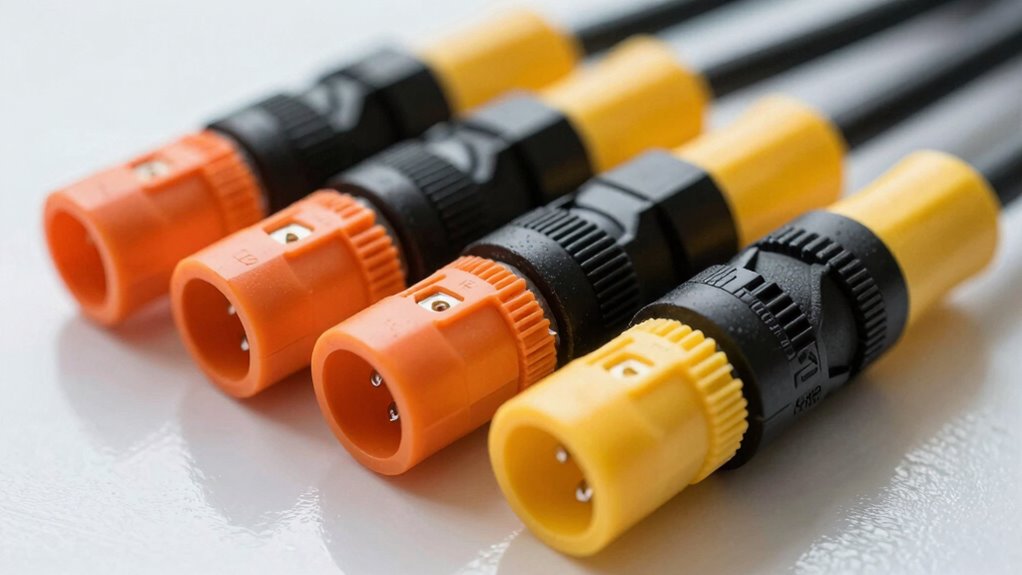
When designing or maintaining a solar power system, choosing the right cables and connectors is essential for ensuring efficiency and safety. The importance of selecting the correct wire gauge cannot be overstated. Thicker wires, with a lower gauge number, can handle higher currents without excessive voltage drops or overheating. For most residential solar setups, a wire gauge of 10 or 12 AWG is common, but larger systems or longer cable runs may require 8 AWG or thicker. Using the appropriate wire gauge guarantees your system operates at peak efficiency and minimizes energy loss. Equally important is connector compatibility. Different connectors are designed for specific wire gauges and current ratings, so matching the connector type to your wire size and system voltage is key. For example, MC4 connectors are widely used in solar installations because they are designed to accommodate specific wire gauges, typically 10 to 12 AWG, and are rated for high current loads. Using an incompatible connector can lead to poor connections, increased resistance, and potential safety hazards.
When selecting connectors like MC4, Anderson, or XT60, you need to think about not only their current ratings but also their compatibility with your cables. MC4 connectors are popular for their waterproof design and ease of connection, making them ideal for outdoor solar panels. They lock securely, preventing accidental disconnection, but you must ensure the connector matches your wire gauge to avoid loose or overstrained connections. Anderson connectors are versatile, often used in larger or portable systems, and are rated for high current loads. They come in different sizes, so double-check that your wire gauge is compatible with the connector’s specifications. XT60 connectors are commonly found in DIY projects and small-scale setups, especially for batteries and power distribution. While they’re reliable for moderate currents, they may not be suitable for very high-power systems.
In all cases, verify that the connector’s rated current and voltage align with your system’s requirements. Proper installation is key—crimping or soldering should be done correctly to ensure a solid, low-resistance connection. Using incompatible or poorly attached connectors can cause heat buildup, voltage drops, or disconnections, compromising your system’s safety and efficiency. Understanding the importance of wire gauge and connector compatibility is essential for a reliable solar power setup. Always consult manufacturer specifications for wire gauge limits and connector compatibility before installing. By carefully selecting your cables and connectors based on wire gauge and compatibility, you ensure your solar power system performs reliably, safely, and at peak efficiency for years to come.
Frequently Asked Questions
Are MC4 Connectors Compatible With All Solar Panel Brands?
Yes, MC4 connectors are compatible with most solar panel brands because of connector standardization in the industry. They’re designed to meet common solar panel compatibility requirements, making installation easier and more reliable. However, always double-check your specific panels’ connector types and specifications, as some brands may use different standards or proprietary connectors. Ensuring compatibility helps you achieve a safe, efficient, and seamless solar setup.
What Is the Maximum Current Rating for XT60 Connectors?
You might think XT60 connectors can handle anything, but they max out at a 60A current capacity, according to their connector specifications. That’s enough for most small to medium solar setups, but don’t push your luck. If you’re planning a high-power system, always double-check the maximum current rating and guarantee your wiring matches the XT60’s limits. After all, safety isn’t something to gamble with!
Can Anderson Connectors Be Used Underwater or in Wet Conditions?
You shouldn’t use Anderson connectors underwater or in wet conditions without proper waterproofing techniques. While some models feature weather-resistant designs, most are not fully waterproof. To guarantee safety and durability, consider connector material choices like sealed enclosures or waterproof adapters. Applying waterproofing techniques, such as dielectric grease or silicone seals, helps protect the connections from moisture, making them suitable for wet environments and prolonging their lifespan.
How Do I Prevent Corrosion on Solar Cable Connectors?
Think of your connectors as the heart of your solar system. To prevent corrosion, you must prioritize connector maintenance and corrosion prevention. Regularly clean your connectors with a damp cloth, apply dielectric grease, and ensure they’re snug to keep moisture out. Use weatherproof covers and store spare connectors properly. These simple steps safeguard your system, guaranteeing longevity and peak performance by stopping corrosion before it starts.
Are There Size Differences for Connectors Suitable for Small vs. Large Systems?
Yes, connector sizing varies with system scale. For small systems, you’ll typically use smaller connectors like MC4 or XT60, which handle lower current ratings. Larger systems require bigger connectors, such as Anderson, that support higher current loads. Always match connector size to your system’s current and voltage needs to guarantee safety and efficiency. Proper sizing prevents overheating and ensures reliable connections, especially as your system expands or becomes more complex.
Conclusion
Choosing the right cable and connector is vital for your solar setup’s efficiency and safety. Did you know that MC4 connectors are used in over 80% of residential solar systems worldwide? This highlights their reliability and popularity. By understanding the differences between MC4, Anderson, and XT60 connectors, you can make informed decisions that guarantee your system performs at its best. Invest in quality connectors today and keep your solar energy flowing smoothly!