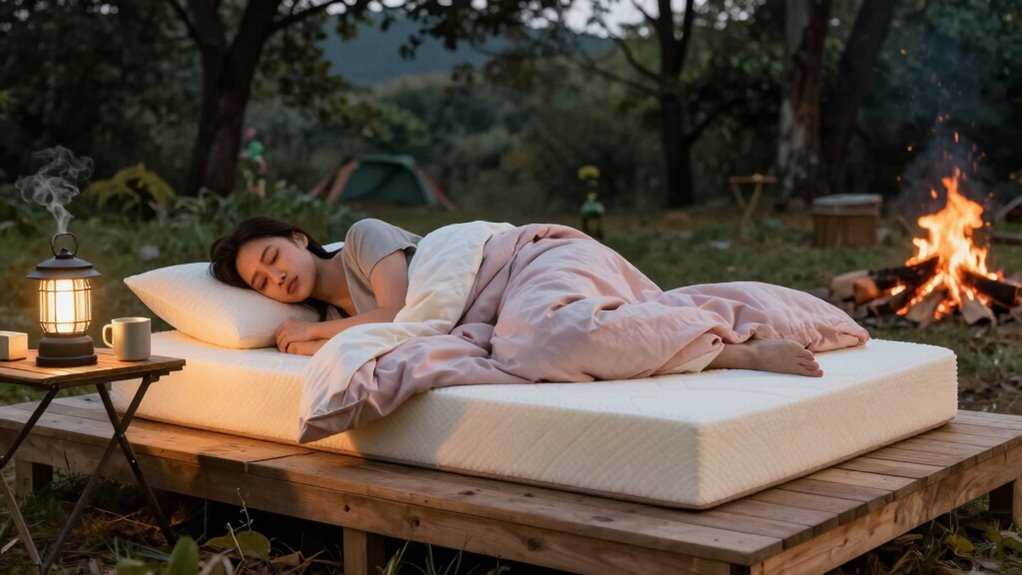

To stop hip pain as a side sleeper during camping, focus on creating a supportive, flat sleeping surface with extra pads or blankets to level uneven ground. Use an inflatable pad with adjustable firmness to maintain spinal alignment, and place a pillow between your knees to keep hips properly aligned. guarantee good tent ventilation to reduce moisture and discomfort. For more tips to enjoy restful sleep outdoors, keep exploring these helpful strategies.
Key Takeaways
- Use a supportive, adjustable sleeping pad to reduce hip pressure and improve spinal alignment.
- Incorporate pillows between knees to maintain proper hip and spinal positioning.
- Ensure tent ventilation to minimize condensation and maintain a comfortable sleeping environment.
- Clear uneven ground and add extra padding for a flat, supportive sleeping surface.
- Minimize movement during sleep and handle adjustments carefully to prevent hip strain.
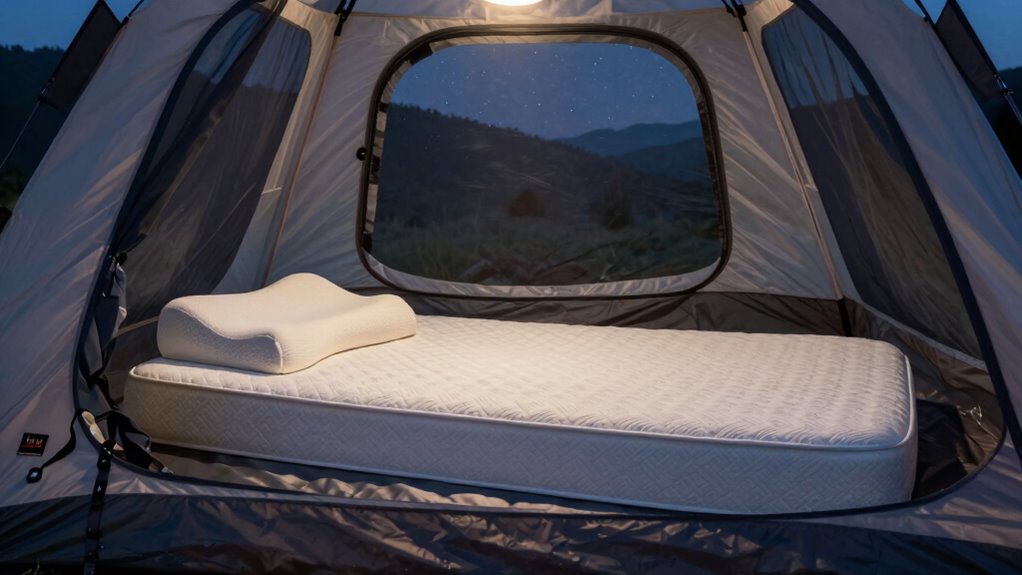
Sleeping comfortably while camping can be challenging, especially if you’re a side sleeper. Your usual sleeping posture, which often involves curling onto your side, can be hard to maintain on uneven ground or in a cramped tent. To prevent hip pain and guarantee restful sleep, you need to pay attention to how you set up your sleep area. One essential factor is tent ventilation. Good airflow helps regulate your body temperature and reduces moisture buildup, which can make you uncomfortable and disrupt your sleep. When your tent is well-ventilated, you’re less likely to wake up sweaty or cold, both of which can cause tossing and turning.
Proper tent ventilation reduces moisture and temperature swings, ensuring a comfortable, restful sleep while camping.
Your sleeping posture greatly influences how comfortable you’ll be during the night. As a side sleeper, you tend to put pressure on your hips and shoulders, which can lead to pain if your mattress or sleeping surface isn’t supportive enough. To counteract this, look for a sleeping pad that offers enough cushioning and support without being too soft. An inflatable pad with adjustable firmness allows you to customize your comfort level, helping maintain proper spinal alignment and reducing pressure points on your hips. Additionally, placing a sleeping pillow between your knees helps keep your hips aligned, alleviating strain and preventing discomfort.
When setting up your tent, consider how the layout affects your ability to find a supportive sleeping spot. Clear away rocks and roots to create a flat surface. If the ground isn’t level, use extra pads or blankets underneath your sleeping pad to even out your position. This stability helps maintain proper sleeping posture, which is crucial for side sleepers prone to hip pain. Ventilation plays a key role here too. Position your tent so that the door or windows face away from prevailing winds but still allow for cross-ventilation. This setup promotes airflow, keeps the interior dry, and reduces condensation that could make you feel clammy or cold.
Furthermore, pay attention to how you enter and exit your tent. Try to avoid disturbing your sleeping posture as much as possible. When getting in or out, do so carefully to prevent jarring your hips or twisting your spine. If you wake up during the night, adjust your position gently, using your pillow and support cushions to ease pressure on your hips. Incorporating proper sleeping posture and support methods can significantly enhance your comfort throughout the night. Always remember, good tent ventilation combined with a proper sleeping posture is essential to minimizing discomfort and waking up refreshed, even when sleeping on uneven ground. By making these adjustments, you’ll find camping becomes more comfortable, letting you enjoy the outdoors without hip pain or restless nights.
Frequently Asked Questions
Can I Use a Regular Mattress for Side Sleeper Camping?
Yes, you can use a regular mattress for side sleeping camping, but it’s not ideal. A camping mattress or foam pads provide better insulation, cushioning, and support, which help prevent hip pain and discomfort during the night. Regular mattresses may be too bulky, heavy, or lack the necessary insulation for outdoor use. For a comfortable sleep, opt for lightweight foam pads or a specialized camping mattress designed for side sleepers.
What Materials Are Best for Side Sleeper Camping Pillows?
You’d think choosing a pillow for camping would be simple, right? Think again. Memory foam pillows offer plush support and conform to your neck, making them great for side sleepers. Buckwheat hulls are a natural, adjustable option that mold to your shape and provide excellent support. Both materials help prevent hip pain, so pick what suits your comfort needs and enjoy a good night’s sleep under the stars.
How Do I Prevent Shoulder Pressure When Sleeping on My Side?
To prevent shoulder pressure while sleeping on your side, focus on proper pillow positioning. Use a supportive, adjustable pillow that fills the space between your neck and mattress, keeping your spine aligned. Incorporate shoulder relief techniques like placing a small pillow or cushion under your shoulder for extra support. This helps distribute pressure evenly, reduces strain, and guarantees a more comfortable, pain-free sleep during your camping trip.
Are There Specific Sleeping Bags for Side Sleepers?
Ever wonder if there are sleeping bags designed specifically for side sleepers? Yes, there are! Look for sleeping bags with features like extra room at the hips and shoulders, or those with a mummy or semi-rectangular shape that provide flexibility. Different sleeping bag types, such as insulated or layered options, can also offer better comfort. Choosing one tailored for side sleepers guarantees you stay comfy and avoid pressure points all night long.
How Do I Stay Warm Without Sacrificing Comfort?
To stay warm without sacrificing comfort, focus on thermal layering and choosing the right sleeping pad options. Layer your clothing with moisture-wicking base layers, insulating layers, and a waterproof outer shell. Use a high-quality sleeping pad that provides ample insulation and cushioning, especially for side sleepers. This combination traps heat, offers support, and keeps you comfortable throughout the night, ensuring you stay warm without feeling cramped or uncomfortable.
Conclusion
To truly enjoy comfortable camping as a side sleeper, try the theory that using a combination of a supportive pillow and a foam mattress topper aligns your hips and spine. Some experts suggest that this setup mimics your bed at home, reducing pain and improving sleep quality. Give it a shot—you might find that the right setup not only eases hip discomfort but also makes your outdoor adventure much more restful.