To set up a reliable portable solar system, start by choosing high-efficiency, weatherproof panels built for outdoor use. Select rugged, moisture-resistant cables to guarantee safe, efficient power transfer and organize them well to prevent damage. Opt for a compatible charge controller with overcharge and short-circuit protection, installing it in a weatherproof enclosure. Focus on securing all components properly for outdoor durability. Keep these essentials in mind, and you’ll be ready to master the entire setup process seamlessly.
Key Takeaways
- Select high-efficiency, weatherproof solar panels with durable frames for outdoor use.
- Use weatherproof cables of appropriate length and thickness to ensure safe, efficient power transfer.
- Choose robust batteries with protective casing, high cycle life, and outdoor durability for reliable storage.
- Install a compatible charge controller with protection features, mounted in a weatherproof enclosure.
- Secure all components properly, using weatherproof enclosures and organized wiring for long-term outdoor reliability.
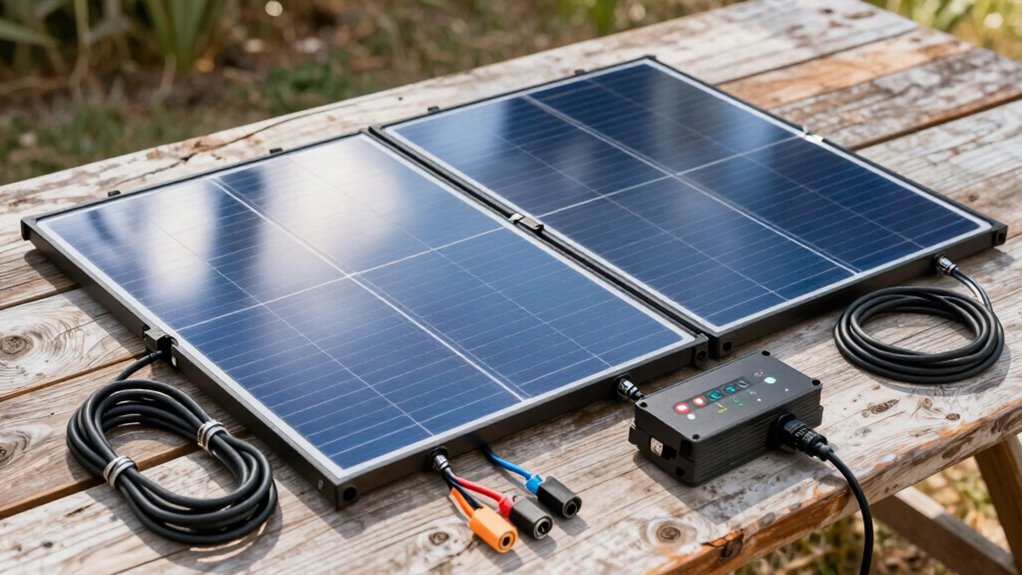
Setting up a portable solar system can be straightforward if you have a clear checklist to follow. The first step involves selecting the right solar panels, which are the core of your setup. Look for panels that offer high efficiency and are built to withstand outdoor conditions. Outdoor durability is essential since you’ll likely encounter varying weather, from rain and wind to intense sunlight. Choose panels with rugged, weatherproof casing and corrosion-resistant frames to guarantee they hold up over time. Once you’ve picked durable panels, focus on the battery storage component. A reliable battery backup allows you to store excess energy generated during sunny periods, so you have power when the sun isn’t shining. Opt for batteries that are designed for outdoor use—these typically have robust casing and protective features that prevent damage from moisture, dust, and temperature fluctuations. This outdoor durability ensures your battery storage remains functional regardless of weather conditions, giving you peace of mind during extended outdoor adventures or emergency situations. Additionally, selecting batteries with high cycle life can extend the overall lifespan of your system and improve long-term performance.
Next, you need the right cables to connect your panels to your controller and batteries. Use high-quality, weatherproof cables that can handle outdoor exposure without degrading. Proper cable management is critical; keep cables organized and protected from sharp edges, water, and dirt to avoid wear and tear over time. Pay attention to cable length and thickness, ensuring they’re sufficient to handle the current and distance between components. This prevents power loss and maintains system efficiency. The controller, often called a charge controller, is your system’s brain, regulating the flow of energy between the solar panels, batteries, and your devices. Choose a controller compatible with your panel wattage and battery type, and ensure it has protection features like overcharge and short-circuit protection. A good controller manages power flow effectively, prolonging the lifespan of your batteries and enhancing overall system performance. Installing all components properly and securely is essential for outdoor durability—use weatherproof enclosures where necessary, and ensure connections are tight and insulated to prevent corrosion and water ingress.
Frequently Asked Questions
How Do I Choose the Right Size Solar Panel for My Needs?
To choose the right size solar panel, start with a power requirement analysis of your devices and daily energy use. Solar panel sizing depends on how much energy you need and sunlight availability in your location. Measure your energy needs in watt-hours, then select a panel that can generate that amount within your sunlight hours. This guarantees your setup meets your power demands efficiently and reliably.
What Safety Precautions Should I Take During Installation?
When installing your portable solar setup, always prioritize safety. Wear personal protective equipment like gloves and safety goggles to prevent injuries. Guarantee proper electrical grounding to avoid shocks or fires. Keep the area dry and clear of obstacles. Turn off all equipment before making connections, and double-check wiring for correct polarity. By following these precautions, you reduce risks and ensure a safe, efficient installation process.
Can I Expand My Solar Setup Later?
Absolutely, you can expand your solar setup later to accommodate future upgrades. Just plan ahead by choosing a flexible system with extra capacity and compatible components, making it easier to add more panels or upgrade controllers down the line. Keep in mind that a little foresight now can save you time and effort later, ensuring your system grows smoothly as your energy needs increase.
What Maintenance Is Required for Portable Solar Panels?
You should regularly clean your portable solar panels to maintain ideal efficiency and support battery longevity. Use a soft cloth or sponge with mild water and gentle cleaning techniques, avoiding harsh chemicals that could damage the surface. Keep panels free of dirt, dust, and debris, and inspect for any damage. Proper maintenance ensures your portable solar setup performs well over time, maximizing energy output and extending the lifespan of your batteries.
How Do I Troubleshoot Common Solar Power System Issues?
To troubleshoot common solar power system issues, start by checking your wiring connections for any loose or corroded parts. Next, monitor your battery health; if it’s declining, your system might not be charging properly. Use a multimeter to test voltages and make certain your controller is functioning correctly. Regularly inspecting these components helps identify problems early and keeps your system operating efficiently.
Conclusion
Now that you have this portable solar setup checklist, you’re ready to harness the sun’s power on the go. Remember, a stitch in time saves nine—taking the time to set up properly guarantees you won’t face surprises later. Keep your panels clean, cables secure, and controllers calibrated. With these tips, you’ll be powering your adventures smoothly and sustainably. After all, the sun’s always shining somewhere—make sure you’re prepared to catch its rays!