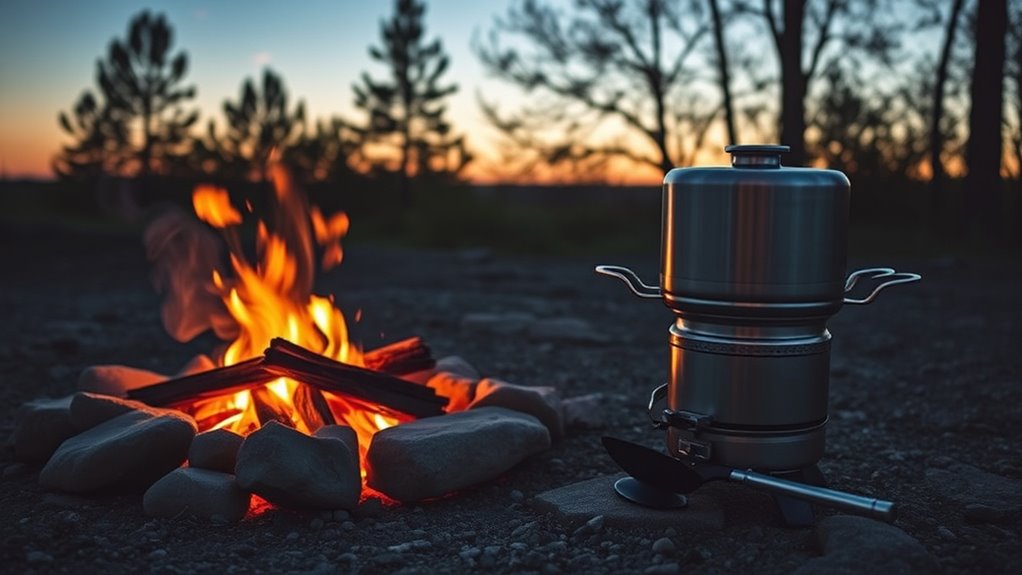

When choosing between campfires and stoves for low-impact cooking, stoves come out on top. They minimize environmental damage with less charred ground and ash. Stoves are fuel-efficient, controlled, and quick, saving you time and hassle. Plus, they reduce the risk of wildfires and align with Leave No Trace principles. While campfires provide a communal, traditional experience, stoves prioritize cleanliness and efficiency. There’s plenty more to think about when planning your outdoor cooking experience.
Key Takeaways
- Stoves produce less environmental impact by minimizing fuel consumption and avoiding charred ground and leftover ash compared to campfires.
- Stoves provide better heat control and efficiency for quick and hassle-free meal preparation, unlike the time-consuming process of building campfires.
- Using stoves reduces wildfire risks, aligning with safety regulations and “Leave No Trace” principles by minimizing campsite impact.
- Campfires create a communal experience and enhance the traditional camping ambiance, but they require mindful wood harvesting to minimize environmental footprint.
- Choosing between stoves and campfires depends on balancing efficiency and cleanliness with the desire for a natural, social outdoor experience.

When you’re out camping, how do you decide between a campfire and a stove for cooking? Both options offer a unique experience, but your choice can impact the environment and your overall efficiency. If you’re all about embracing nature while minimizing your footprint, you might lean toward a camp stove. Stoves are typically more fuel-efficient, allowing you to boil water or cook meals quickly without the hassle of gathering firewood.
Using a camp stove means you can control the heat better and reduce the risk of wildfires, especially in dry conditions. When you’re camping in areas where “Leave No Trace” principles matter, a stove presents a cleaner option. You won’t have to worry about charred ground or leftover ash from a campfire, which can disrupt the natural beauty of your campsite. Stoves often use propane or other fuel sources that burn cleanly, leaving little to no trace behind. Plus, you can pack your fuel canisters out with you, ensuring that you leave the area just as you found it. Additionally, using a stove can help you maintain water chemistry for safe cooking and drinking, especially when boiling water.
On the other hand, campfires have their own charm. There’s something primal about cooking over an open flame that brings a sense of camaraderie among campers. It’s perfect for roasting marshmallows or sharing stories under the stars. However, remember that building a fire requires gathering wood, which can sometimes lead to overharvesting branches or damaging trees—something that goes against Leave No Trace principles. If you choose a campfire, make sure to stick to already burned areas for firewood and follow local regulations about fire pits.
If you’re conscious about fuel efficiency, consider the time it takes to cook with both methods. Stoves heat up quickly and maintain a steady temperature, meaning you can get dinner on the table without waiting around. Campfires, while enjoyable, can take time to get started and require constant attention to keep the flames going.
Ultimately, your choice between a campfire and a stove should reflect your camping values and the environment you’re in. If you prioritize efficiency and minimizing your impact, a stove may be the better option. But if you’re looking to connect with nature in a more traditional way, a campfire can offer unforgettable memories, as long as you’re mindful of the principles that help us preserve our outdoor spaces.
Frequently Asked Questions
What Are the Environmental Impacts of Campfires Versus Stoves?
Campfires can markedly enhance wildfire risk, especially in dry conditions, while stoves generally pose less danger in this regard. However, both can contribute to air pollution, with campfires emitting more harmful particulates than stoves. When you choose a stove, you’re likely reducing your impact on air quality. It’s crucial to take these factors into account to make the best decision for the environment and guarantee safety during your outdoor cooking adventures.
Which Cooking Method Is More Efficient for Backpacking?
When you’re racing against the sunset to set up camp, think of cooking like a game of chess—every move counts. Stoves are more efficient for backpacking, offering better fuel efficiency and quicker setup convenience. You won’t waste precious time gathering firewood or waiting for flames to settle. Instead, a compact stove lets you boil water in minutes, ensuring you can enjoy a hot meal and still catch that breathtaking view before nightfall.
Can I Use a Campfire in All Weather Conditions?
You can’t always use a campfire in all weather conditions. Rain and strong winds can make it difficult to start and maintain a fire safely. Campfire safety is essential, so be mindful of local regulations and fire bans. Always check the weather forecast before planning a fire, as weather-dependent cooking can lead to unsafe situations. If conditions aren’t right, consider alternative methods to guarantee you stay safe and enjoy your meal.
Are There Specific Regulations for Campfire Use in National Parks?
Yes, there are specific regulations for campfire use in national parks. You need to check for fire bans, as these can change based on weather conditions and fire risks. Many parks also require a permit for campfires, especially in designated areas. Always guarantee you’re following the park’s guidelines to avoid fines and protect the environment. It’s best to plan ahead and stay informed about the rules before your trip.
How Do I Choose the Right Stove for My Needs?
When it comes to choosing the right stove, it’s like picking a companion for an adventure. Consider your cooking needs first. Are you boiling water or preparing gourmet meals? Think about fuel types; canister stoves are convenient, while liquid fuel offers versatility. Don’t forget portability; lightweight options are perfect for backpacking, while larger models suit car camping. Ultimately, select a stove that balances performance with your travel style, ensuring every meal’s a delight.
Conclusion
So, as you weigh the choice between campfires and stoves, consider the impact of your decision. One option ignites a primal connection to nature, while the other offers efficiency and convenience. But which path will you take? Will you revel in the crackling warmth of a fire under the stars, or will the sleek simplicity of a stove win you over? As you pack for your next adventure, the answer might just surprise you. What will you choose?