When you want to dispose of electronics responsibly on the road, look for nearby e-waste collection events, drop-off points, or retailer take-back programs. These options guarantee hazardous materials like mercury and lead are safely managed, preventing environmental contamination and health risks. Recycling keeps valuable resources in use and reduces landfill waste. Taking these simple steps makes a big difference—keep going to discover how proper disposal benefits everyone and the planet.
Key Takeaways
- Utilize local e-waste collection events or drop-off points for responsible disposal.
- Take advantage of manufacturer or retailer take-back programs for recycling electronics.
- Avoid discarding electronics in regular trash to prevent environmental contamination.
- Ensure devices are properly drained of batteries and personal data before disposal.
- Support community initiatives and educate others on the importance of responsible e-waste recycling.
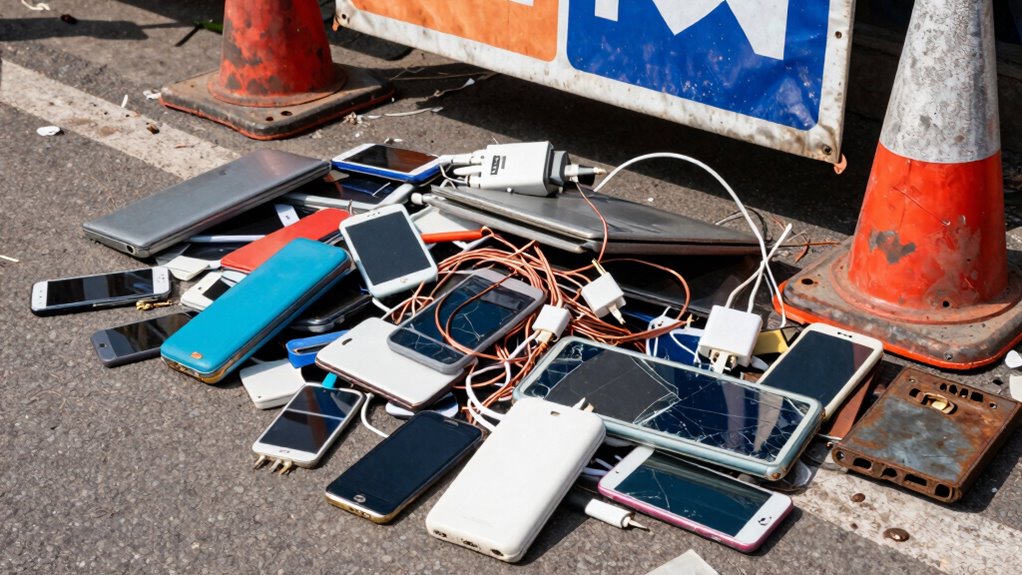
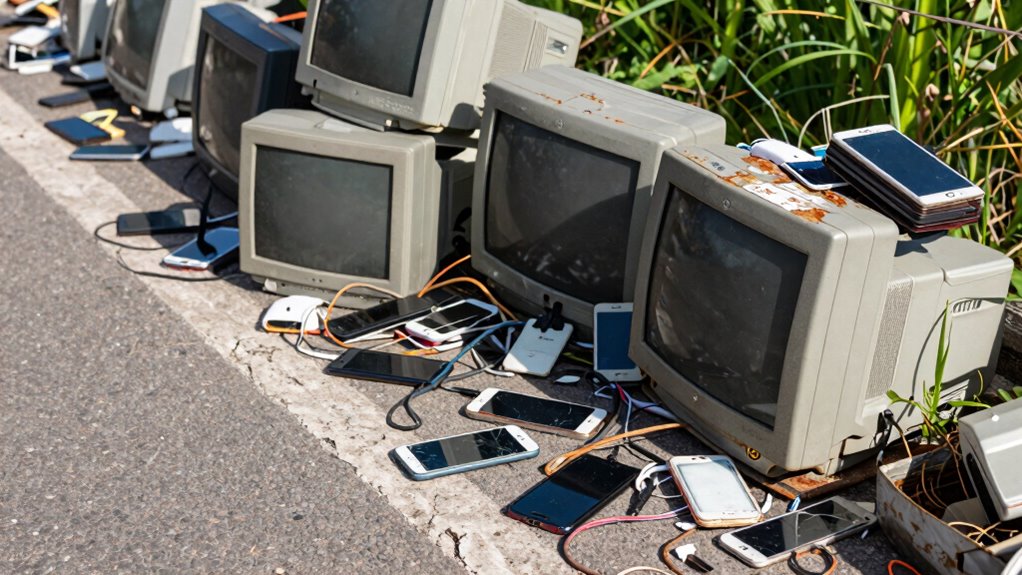
Have you ever wondered what happens to your old electronics once you toss them out? Many people don’t realize that simply throwing away gadgets like smartphones, laptops, or batteries can have serious environmental consequences. Instead, you should consider participating in recycling programs designed specifically for electronic waste. These programs guarantee that your devices are handled properly, reducing the risk of harmful substances leaking into the environment. When you take your electronics to a designated recycling center, trained professionals safely dismantle and process the components, extracting valuable materials like metals and plastics. This process prevents hazardous materials from ending up in landfills, where they can seep into soil and water, posing health risks to communities and wildlife alike.
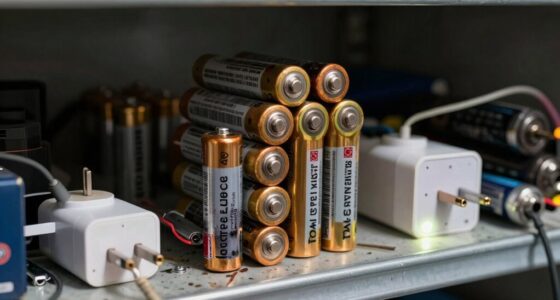
Recycling programs are essential because electronics contain hazardous materials that can be dangerous if not disposed of correctly. For instance, many devices include chemicals like mercury, lead, cadmium, and certain flame retardants. When these substances are improperly discarded, they can contaminate the environment and even enter the food chain. That’s why responsible disposal through certified recycling programs is vital. These programs follow strict safety procedures to isolate and manage hazardous materials safely. By doing so, they prevent potential health hazards and promote environmental sustainability. Plus, recycling helps conserve natural resources by reusing valuable components, reducing the need for mining and manufacturing new materials. Additionally, understanding the importance of contrast ratio and color accuracy can help consumers make more environmentally conscious choices when selecting electronics, as more efficient and longer-lasting devices tend to generate less waste over time.
You should also be aware that many communities offer special e-waste collection events or drop-off points where you can bring your old electronics without hassle. These initiatives make it easier for you to do the right thing and keep hazardous materials out of landfills. In addition, some retailers and manufacturers have take-back schemes, allowing you to return old devices when you buy new ones. This not only guarantees proper disposal but also encourages recycling and reuse. Remember, even small efforts can make a big difference. By choosing recycling programs over trashing your electronics, you’re actively protecting the environment and public health.
Frequently Asked Questions
How Can I Identify Hazardous Materials in Electronics?
You can identify hazardous materials in electronics by checking for chemical hazards through material identification labels or safety data sheets. Look for symbols or warnings indicating the presence of substances like lead, mercury, or cadmium. Always handle electronics carefully and research specific components if you’re unsure. Staying informed about chemical hazards helps you safely manage and dispose of electronics, reducing environmental impact and health risks.
Are There Any Local Regulations for E-Waste Disposal?
Yes, you should verify your local policies and disposal laws for e-waste. Many areas have specific regulations on how to properly dispose of electronics, including designated drop-off sites or recycling programs. You’re responsible for following these rules to prevent environmental harm and legal issues. Visit your city or county’s official website or contact local waste management authorities to get the most current information and ensure responsible e-waste disposal.
What Are the Environmental Impacts of Improper E-Waste Disposal?
If you improperly dispose of e-waste, you risk chemical leachates contaminating soil and water, harming wildlife and human health. For example, a landfill case showed toxic chemicals seeped into groundwater, disrupting local habitats. These actions cause habitat disruption and pollution, worsening environmental degradation. Always recycle electronics responsibly to prevent these impacts, protecting ecosystems and communities from hazardous chemical exposure and long-term ecological damage.
Can I Recycle Electronics at Home Safely?
Yes, you can recycle electronics at home safely by practicing DIY disposal and safe handling. First, remove any batteries and store or dispose of them separately. Then, find a certified e-waste recycling program or drop-off point nearby. Handle devices carefully to avoid damage or leaks, and always follow manufacturer instructions for disposal. This way, you guarantee your electronics are recycled responsibly, minimizing environmental harm.
How Do Donation Programs Handle E-Waste Responsibly?
You might find it surprising, but electronics donation programs handle e-waste responsibly by refurbishing usable devices and recycling the rest. When you donate, they often partner with certified recycling facilities to guarantee responsible disposal of non-functional parts. This way, your electronics donations extend their life or prevent hazardous materials from polluting the environment. By choosing reputable programs, you actively contribute to responsible disposal and reduce the harmful impact of e-waste.
Conclusion
Remember, your discarded electronics are more than just broken gadgets—they’re seeds of tomorrow’s responsibility. When you dispose of e-waste properly, you nurture a future where innovation grows from mindful choices rather than waste. Think of each responsible action as planting a tree in the forest of sustainability, offering shade and life to generations to come. Your decisions today become the roots that support a cleaner, brighter world—don’t let them go to waste.