
To manage greywater responsibly, start by filtering it with simple mesh screens or specialized filters to remove debris and soap scum, ensuring safe reuse or disposal. When disposing, divert it to your garden or drain field using biodegradable soaps, and always check local regulations to stay compliant. During travel, use portable systems and eco-friendly soaps to minimize pollution. Keep maintenance up and follow eco-friendly practices—learning more will help you master clean, pollution-free greywater management.
Key Takeaways
- Use simple filtration systems like mesh screens to remove debris before reuse or disposal.
- Divert greywater to gardens or designated drain fields, avoiding contaminated water sources.
- Employ biodegradable soaps to minimize environmental impact during greywater use or travel.
- Check and comply with local regulations to ensure eco-friendly greywater disposal practices.
- Maintain portable filtration and diversion systems regularly for safe, pollution-free travel and outdoor reuse.
Greywater, which is lightly used wastewater from sources like sinks, showers, and washing machines, offers a sustainable way to conserve freshwater. Instead of letting this water go to the sewer, you can implement water recycling methods that reuse greywater for outdoor irrigation or other non-potable purposes. This approach not only reduces your reliance on municipal water supplies but also helps decrease the load on treatment plants. When you think about eco-friendly disposal, it’s essential to manage greywater carefully to prevent pollution and protect your local environment. Properly filtering and directing greywater ensures it doesn’t contaminate groundwater or nearby water bodies, making your efforts truly sustainable.
To start, you need effective filtration systems that remove hair, soap scum, and other debris from greywater. Using simple filters like mesh screens or specialized greywater filters can considerably improve water quality before it’s reused or disposed of. These filters prevent blockages and keep your irrigation systems running smoothly. Once filtered, you can choose appropriate disposal methods that align with eco-friendly practices. For outdoor use, greywater can be diverted to your garden or landscape, provided you avoid harmful chemicals or soaps. This not only conserves freshwater but also nourishes your plants, reducing your overall water footprint.
When traveling, especially if you’re staying in places with limited water infrastructure, managing greywater responsibly becomes even more critical. Portable greywater systems or biodegradable soaps make it easier to handle waste without polluting local waterways. Always check local regulations before disposing of greywater, as rules differ depending on the region. In many areas, eco-friendly disposal involves diverting greywater to designated drain fields or using composting methods that prevent contamination. By doing this, you help protect the environment and ensure your travels leave minimal ecological impact.
Furthermore, integrating water recycling practices into your routine involves choosing biodegradable soaps and cleaning products that won’t harm plants or soil when greywater is reused. Regular maintenance of filtration and diversion systems guarantees they work efficiently, preventing potential health hazards. Educating yourself about local laws and best practices around greywater disposal ensures you remain compliant and environmentally responsible. Ultimately, managing greywater wisely allows you to contribute meaningfully to water conservation efforts, reduces pollution risks, and promotes a more eco-friendly lifestyle whether at home or on the go.
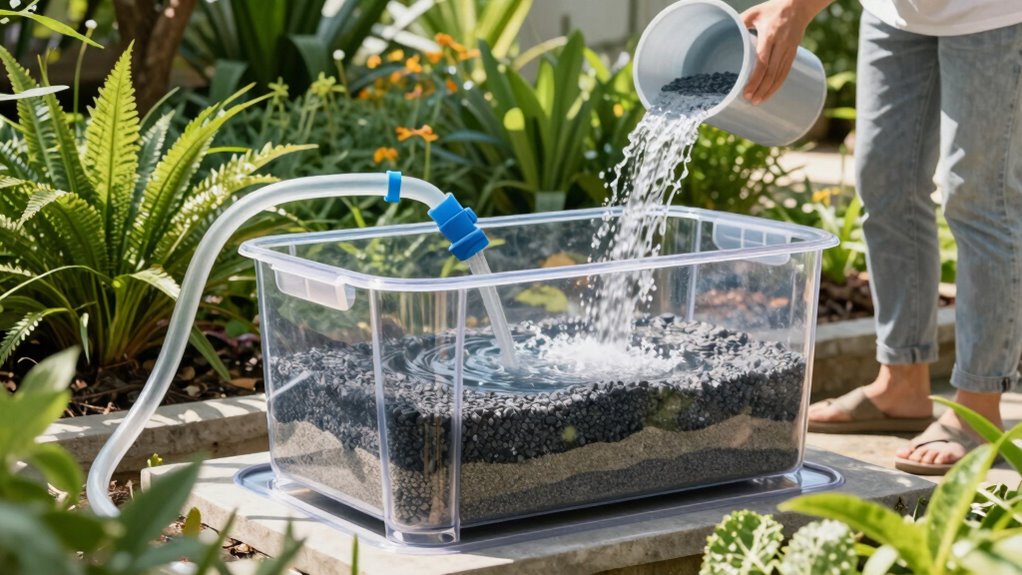
A proper filtration system is crucial for ensuring greywater is safe for reuse and disposal.
Frequently Asked Questions
Can Greywater Be Safely Used for Outdoor Plants?
Yes, you can safely use greywater for outdoor plants, but you should take precautions to guarantee garden irrigation is safe for plant safety. Filter the greywater to remove contaminants, and avoid using water containing harsh chemicals or pathogens. Always test the greywater first, use it sparingly, and direct it away from edible parts of plants. Properly managed greywater helps promote healthy garden growth without harming your plants or the environment.
What Are the Legal Regulations for Greywater Disposal?
Sure, ignoring regulations compliance and legal restrictions might seem daring, but it’s a surefire way to invite trouble. You need to check local laws before disposing of greywater. Many places have strict rules to prevent pollution, so staying informed about legal restrictions helps you avoid fines or penalties. Play it safe, follow the regulations, and keep your greywater practices environmentally responsible—because breaking the rules isn’t as fun as it sounds.
How Long Can Greywater Be Stored Before Treatment?
You should not store greywater for more than 24 hours, as greywater aging can lead to bacterial growth and odors. To prevent health risks and pollution, treat or dispose of greywater promptly within this storage duration. If you need to hold it longer, guarantee proper storage conditions and consider initial filtration. Regularly check your greywater system to maintain safety and avoid environmental contamination.
Are There Eco-Friendly Greywater Filtration Systems Available?
You might worry that eco-friendly filtration systems aren’t effective, but many options actually excel at greywater recycling. These systems utilize natural or biological processes, making them sustainable and safe. Eco-friendly filtration methods, like sand or biofilter systems, effectively remove contaminants while minimizing environmental impact. Investing in such solutions allows you to recycle greywater responsibly, reducing pollution and conserving water without sacrificing efficiency.
What Are Common Mistakes to Avoid When Handling Greywater?
When handling greywater, avoid common mistakes like improper disposal, which can lead to greywater hazards and environmental harm. Always guarantee you filter greywater properly before disposal, and never pour it into storm drains or natural water sources. Be mindful of contaminants like soaps and chemicals, as they increase pollution risks. By being cautious and informed, you prevent pollution and protect your health and the environment.
Conclusion
By understanding how to filter and dispose of greywater responsibly, you can travel sustainably without harming the environment. Some believe that properly treated greywater can even be reused safely, reducing waste and conserving resources. While this theory holds promise, it is crucial to follow local regulations and best practices. When you take these steps, you not only protect natural water sources but also contribute to a healthier planet for future adventures.