
In cities, pack a first aid kit with bandages, antiseptic wipes, pain relievers, and CPR face shield for quick response to common injuries. For backcountry adventures, include sterile dressings, elastic bandages, splints, insect repellent, and thermal blankets to handle serious, unpredictable injuries. Regularly check and update your supplies based on your environment. Staying prepared is key—discover more tips to optimize your kit for any situation.
Key Takeaways
- Urban first aid kits should include basic supplies like bandages, antiseptic wipes, and pain relievers for common injuries.
- Wilderness kits require additional items such as sterile dressings, splints, thermal blankets, and insect repellent for serious injuries.
- Tailor your kit contents to environmental risks; urban kits focus on quick response, while wilderness kits prepare for unpredictable injuries.
- Regularly inspect and update supplies, replacing expired items and adding environment-specific tools to maintain readiness.
- Proper storage and quick access are crucial; ensure your kit is tailored, well-maintained, and suited for either city or backcountry emergencies.
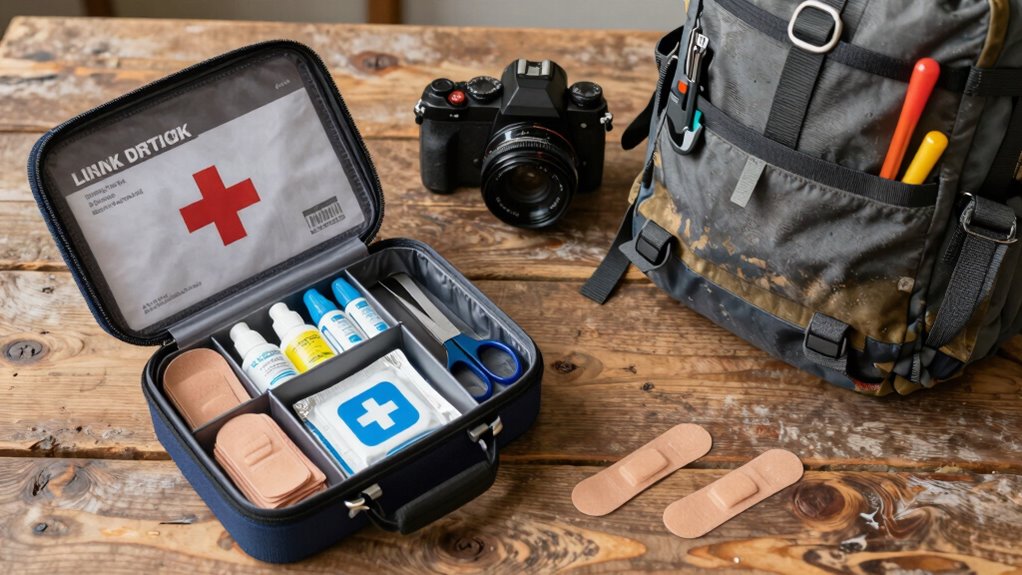
Have you ever considered how prepared you are for minor injuries or emergencies? Whether you’re steering busy city streets or exploring remote wilderness, having the right first aid kit can make all the difference. Urban emergencies, like cuts from broken glass, sprains from slipping on icy sidewalks, or sudden allergic reactions, require quick access to specific supplies. In the city, your kit should include essentials like bandages in various sizes, antiseptic wipes, antibiotic ointment, pain relievers, and a CPR face shield. It’s also wise to have items like tweezers for splinters, a thermometer, and perhaps a small flashlight. Keep your kit easily accessible at home, in your car, or at work, because emergencies don’t wait for convenient moments.
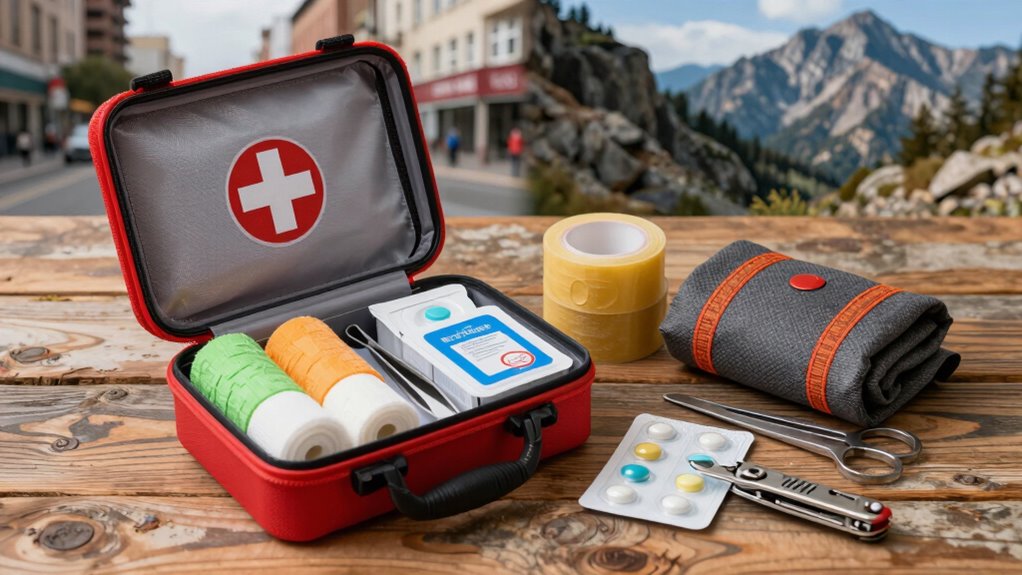
When you’re out in the wilderness, injuries tend to be more severe and less predictable. Wilderness injuries such as cuts from branches, sprains from uneven terrain, or even insect bites demand a different set of supplies. Your backcountry first aid kit should be more extensive. Pack sterile dressings, elastic bandages for sprains, a thermal blanket, and insect repellent. Including a splint can be essential if someone sustains a fracture, and having antiseptic solutions like iodine or alcohol wipes helps prevent infection. Don’t forget to bring extra gloves and a whistle for signaling for help. Since medical help could be hours away, your kit must also contain extra supplies like pain medication, antihistamines, and even a small, manual pair of scissors. Planning ahead means you’re prepared for wilderness injuries that might require more advanced care until professional help arrives.
No matter where you are, the key is tailoring your first aid kit to your environment. For urban settings, focus on quick-response items for common injuries and emergencies. For wilderness trips, prioritize items that handle more serious, less predictable injuries, and include tools that help you stabilize an injured person until help arrives. Regularly check and update your kit, replacing expired supplies and adding new items as needed. Remember, a well-stocked first aid kit is a fundamental part of your safety plan, whether you’re steering city streets or venturing into the backcountry. Being prepared not only boosts your confidence but could also be the difference between a minor setback and a major emergency. Additionally, understanding the importance of projector contrast ratios can be helpful if you want to create a comfortable and effective emergency shelter or setup in outdoor environments.
Frequently Asked Questions
How Often Should I Update My First Aid Kit Contents?
You should review and update your first aid kit at least every six months. Follow a refill schedule to replace used or expired items, and check expiration date management regularly to make sure medicines and ointments stay effective. Also, inspect your kit after trips or emergencies. Keeping it current guarantees you’re prepared with fresh supplies when accidents happen, whether you’re in the city or backcountry.
Are There Specific Items for Children or Infants?
You should include child-specific supplies like pediatric bandages, child-safe antiseptic wipes, and oral pain relief, along with infant care items such as nasal aspirators, gentle antiseptic creams, and extra diapers. Make certain these items are easily accessible and clearly labeled. Regularly check expiration dates and replace used or expired supplies. Having the right child-specific and infant care items guarantees safe and effective first aid tailored to their unique needs.
Can I Customize a Kit for Allergy or Medication Needs?
Imagine tailoring your kit like a bespoke suit, fitting your unique needs. Yes, you can customize your kit with allergy medication or specific remedies, ensuring you’re prepared for any surprise. It’s simple—just add your preferred allergy meds or essential prescriptions, and keep them easily accessible. Kit customization allows you to carry your personal safety net, giving you peace of mind wherever your adventures take you, city streets or remote trails.
What Legal Considerations Exist for Carrying a First Aid Kit?
You should be aware that carrying a first aid kit involves legal considerations like legal liability and regulatory compliance. Make certain your kit meets local laws, especially if you’re in a regulated environment like a workplace or public space. Keep records of supplies and training, and use the kit responsibly. By following these rules, you reduce legal risks and demonstrate compliance, helping you provide effective aid without legal repercussions.
How Do I Sterilize Reusable First Aid Supplies?
Ever wondered how to keep your reusable supplies safe? To sterilize reusable first aid supplies, you can use techniques like boiling them in water for at least 10 minutes or applying heat in an oven at 160°C (320°F) for about an hour. You might also consider chemical sterilization, like soaking in alcohol or bleach solutions. Proper sterilization prevents infection and guarantees your supplies stay clean and safe to use.
Conclusion
Remember, a well-packed first aid kit is your trusted compass in any journey. Whether in bustling cities or remote backcountry, you’re the captain steering through unexpected storms. Pack wisely, stay prepared, and let your kit be the steady lighthouse guiding you back to safety. Like a seasoned explorer, trust in your supplies to turn uncertainty into confidence. Because in life’s adventures, being ready is your greatest ally—your own personal North Star.