
When souvenir shopping, you should avoid items that exploit local cultures or traditions, like mass-produced replicas that lack authenticity. Steer clear of souvenirs made from endangered resources, and don’t buy religious artifacts as mere decorations. Instead, respect local beliefs by choosing items that genuinely honor the culture and support local artisans. Each purchase has an impact, so it’s essential to make mindful choices. There’s more to contemplate about responsible shopping practices waiting for you.
Key Takeaways
- Avoid purchasing items that exploit local traditions or sacred symbols, as they can undermine cultural significance.
- Steer clear of mass-produced souvenirs lacking authentic craftsmanship, and opt for locally made items instead.
- Refrain from buying souvenirs made from endangered resources, such as ivory or coral, to protect the environment.
- Do not select religious artifacts intended for decoration, as this disrespects local beliefs and cultural practices.
- Ensure that souvenirs tell a meaningful story and reflect your respect for the culture and community.
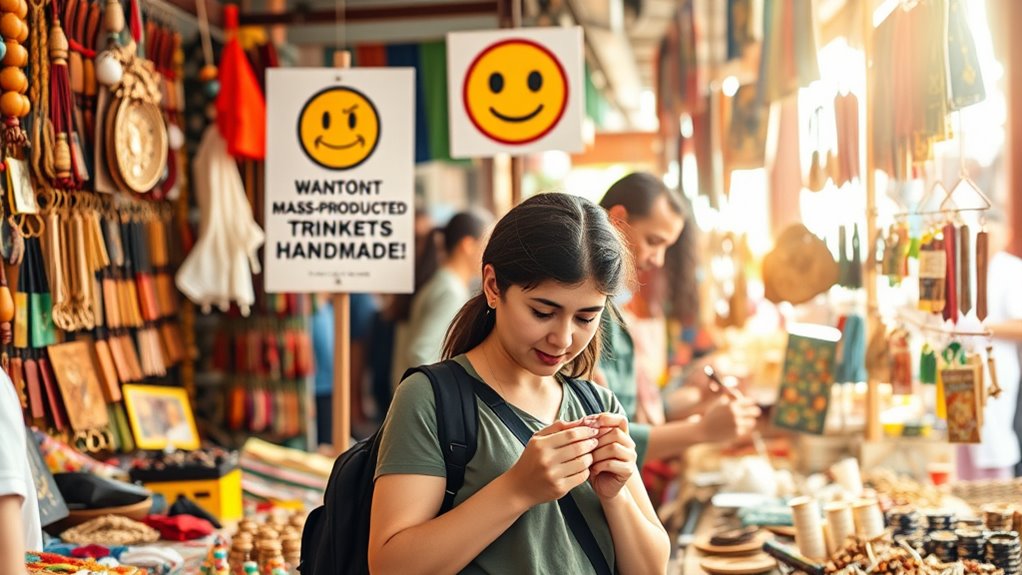
When you travel to new places, it’s easy to get caught up in the excitement of souvenir shopping, but being mindful about your choices can make a big difference. Many travelers often overlook the impact of their purchases, leading to cultural insensitivity and environmental issues. By being aware of what you buy, you can ensure your souvenirs reflect respect for the local culture and environment.
One common mistake is buying items that exploit local traditions or sacred symbols. You might find trinkets that mimic cultural artifacts but lack authentic meaning. These replicas can undermine the significance of the original items, trivializing the culture they represent. Before you grab that colorful mask or intricate sculpture, take a moment to consider its origins. Is it crafted by local artisans, or is it mass-produced elsewhere? Supporting local craftspeople not only promotes cultural appreciation but also helps sustain traditional practices.
Be mindful of your souvenirs; choose items that honor local traditions and support authentic craftsmanship.
Also, think about the materials used in your potential purchases. Many souvenirs are made from endangered resources or materials that harm the environment. For instance, items made from ivory or certain types of coral can contribute to the decline of wildlife populations. You wouldn’t want to bring back a piece of art that carries a hidden cost to the ecosystem, so always check for sustainable options. Look for products labeled as eco-friendly materials or made from recycled materials. This conscious choice helps reduce your environmental impact and supports responsible practices.
Moreover, be cautious about purchasing items that may be considered offensive or inappropriate. Some cultures have specific customs and taboos that outsiders might not fully understand. For example, buying religious artifacts as mere decoration can come off as disrespectful. It’s essential to respect local beliefs and practices. Instead, focus on items that genuinely celebrate the culture, such as handmade textiles or locally sourced food products.
In the end, respectful souvenir shopping is about making choices that reflect your values. You want your mementos to tell a story, one that respects the culture and environment of the places you visit. By being informed and thoughtful about your purchases, you can enjoy the thrill of souvenir hunting while leaving a positive impact on the communities you explore. Remember, every choice counts, and your souvenirs can carry the essence of your travels in a meaningful way.
Frequently Asked Questions
What Types of Souvenirs Are Considered Disrespectful in Different Cultures?
Certain souvenirs can be disrespectful due to cultural sensitivities. For instance, items that mock or misrepresent cultural symbols, like sacred artifacts or religious figures, often offend. You should avoid buying items made from endangered species or those that exploit local traditions. Ethical considerations also come into play, as purchasing goods that perpetuate stereotypes or commodify cultural practices can harm communities. Always research and respect local customs before making your choices.
How Can I Identify Locally Made Products When Shopping?
When you’re shopping, look for signs that indicate locally made products. Check for labels that mention local artisans or traditional techniques. Talk to the sellers; they often share stories about their crafts. Recognizing counterfeit goods can be tricky, so focus on unique items that reflect the culture. Identifying authentic crafts often involves examining the quality and craftsmanship, ensuring you’re supporting local artists instead of mass-produced imitations. Trust your instincts and enjoy the experience!
Are There Specific Symbols I Should Avoid Purchasing?
You should avoid purchasing items featuring culturally taboo or inappropriate symbols. These can include representations of sacred figures, religious icons, or symbols tied to historical trauma. Not only can they offend locals, but they can also misrepresent the culture. Instead, look for souvenirs that celebrate the community’s heritage respectfully. Engaging with local artisans can also guide you in choosing items that honor the culture authentically.
What Are Some Tips for Negotiating Prices Respectfully?
When negotiating prices, practice cultural sensitivity and follow proper bargaining etiquette. Start with a friendly greeting and show genuine interest in the product. Offer a price that’s fair but lower than the asking price, and be willing to engage in a back-and-forth discussion. If the seller seems uncomfortable, back off gracefully. Remember, it’s about building rapport and respect, so be polite and patient throughout the process to reach a mutually satisfying agreement.
How Can I Ensure My Souvenir Shopping Supports the Local Economy?
To support the local economy while shopping, seek souvenirs that showcase sustainable sourcing and fair trade certification. By prioritizing products from local artisans, you’re ensuring your purchases benefit the community. Look for labels that highlight ethical practices; these can include handmade crafts or locally sourced goods. Engaging with local markets and asking vendors about their sourcing can enhance your experience and deepen your connection to the culture.
Conclusion
In the tapestry of travel, souvenirs are the threads that weave your memories together. By choosing respectful options, you not only honor the culture but also enrich your own experience. Avoid items that exploit or misrepresent, as they can unravel the beauty of your journey. Instead, seek pieces that tell a story and celebrate authenticity. Remember, each choice you make is a stitch in the fabric of global respect and understanding, creating a masterpiece of shared humanity.