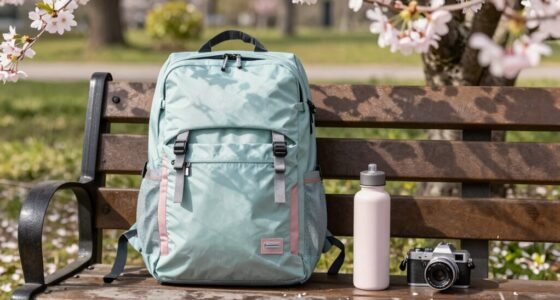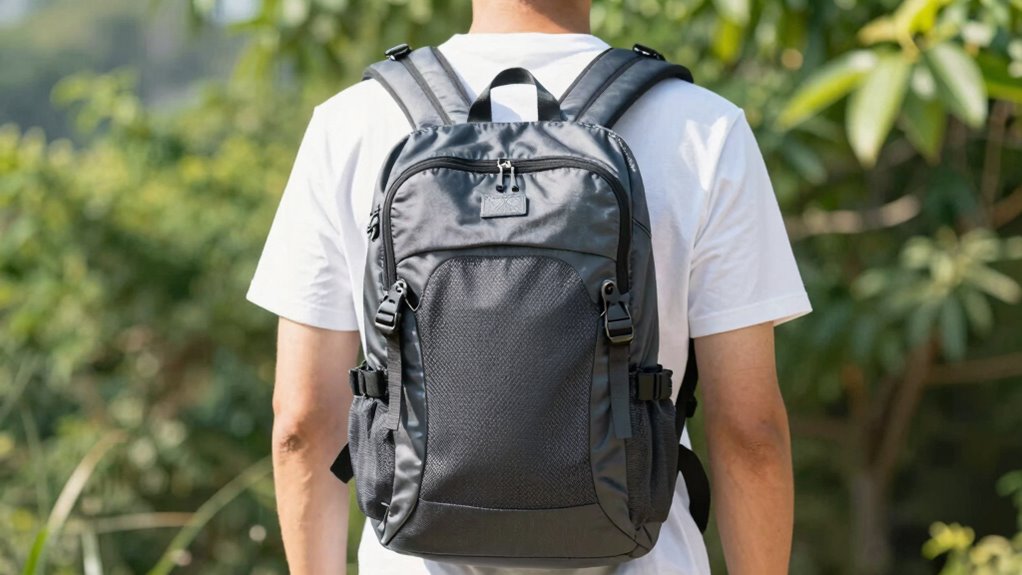

To choose a travel backpack that won’t hurt your back, focus on models with well-padded, adjustable shoulder straps and a sturdy hip belt to evenly distribute weight. Look for backpacks with ergonomic back panels that follow your natural curves and multiple compartments to prevent gear shifting. Use durable, water-resistant materials for long-term protection. Prioritize comfort and durability, and you’ll find a pack that keeps your back safe and your belongings organized—discover more tips to make your travels easier.

Get travel and outdoor gear delivered free with Prime
- Fast, free delivery on millions of items
- Prime Video, Amazon Music and more included
- Member-only deals all year
Key Takeaways
- Select a backpack with padded, adjustable shoulder straps and a sturdy hip belt to evenly distribute weight.
- Choose a pack with an ergonomic back panel that conforms to your body’s natural curves for enhanced comfort.
- Opt for durable materials like ripstop nylon or ballistic polyester to withstand wear and maintain support over time.
- Ensure the backpack has multiple compartments to organize gear and prevent shifting that can cause discomfort.
- Avoid bulky, heavy models; prioritize lightweight designs that offer proper fit and support for your travel needs.

Are you ready to select the perfect travel backpack? If so, you need to focus on how well it balances weight distribution and the material durability. These two factors play a pivotal role in ensuring your backpack doesn’t hurt your back during your adventures. A well-designed backpack distributes weight evenly across your shoulders and hips, preventing strain and discomfort. When shopping, pay attention to the straps and back panel. Look for padded, adjustable shoulder straps that can be customized to fit your body comfortably. A sturdy hip belt helps transfer some of the load from your shoulders to your hips, which are better suited to carry weight for extended periods. Proper weight distribution is key because it keeps your spine aligned and reduces pressure points, making your travel experience much more comfortable. Additionally, proper weight distribution can help prevent long-term musculoskeletal issues caused by carrying uneven loads over time.
Choose a backpack with balanced weight distribution and durable materials for comfortable, injury-free travel.
Material durability is equally important because your backpack endures wear and tear every time you travel. Opt for high-quality materials like ripstop nylon, ballistic polyester, or reinforced canvas. These fabrics are resistant to abrasions, tears, and water, ensuring your belongings stay protected and your backpack remains intact over time. Durable material also means fewer replacements and repairs, which saves you money and hassle in the long run. When inspecting a backpack, check the stitching and the zippers as well. Reinforced seams and heavy-duty zippers indicate a higher level of craftsmanship and resilience, especially if you plan on carrying heavy loads. A durable backpack can withstand the rigors of travel, whether you’re navigating crowded airports or rugged outdoor trails.
In addition to weight distribution and material durability, consider the overall design and features. Multiple compartments help organize your gear efficiently, preventing you from overpacking or shifting contents around, which can imbalance the load. Look for adjustable straps and ergonomic back panels that follow your natural curves, providing additional support. Remember, the goal is to find a backpack that fits your body comfortably and holds up under travel conditions. Avoid overly bulky models that can add unnecessary weight or restrict movement. Instead, choose a lightweight yet sturdy pack that aligns with your travel needs.
Ultimately, selecting a travel backpack that won’t hurt your back involves prioritizing proper weight distribution and material durability. When you find a pack that balances these elements, you’ll enjoy your trips more and avoid painful backaches. Investing in quality now will pay off every time you hit the road, making your travel experience smoother and more enjoyable.
Frequently Asked Questions
Can a Lightweight Backpack Still Provide Good Support?
Yes, a lightweight backpack can still offer good support if it features proper weight distribution and strap adjustability. When you choose one, look for padded shoulder straps and a supportive back panel to evenly distribute weight. Adjust the straps to fit snugly, preventing strain on your shoulders and back. Even lightweight bags, when designed with these features, can keep you comfortable and well-supported during your travels.
How Do I Measure My Torso for a Backpack Fit?
To measure your torso for the right backpack sizing, stand straight and find the bony bump at the base of your neck, known as the C7 vertebra. Then, measure down to the top of your iliac crest (hip bones). Use this torso measurement to compare with the backpack’s size chart. Proper fitting guarantees comfort and support, reducing back strain during travel.
Are There Specific Features to Prevent Back Pain?
You’ll want a backpack with ergonomic padding and adjustable straps to prevent back pain. These features align the pack with your body, reducing strain and ensuring comfort. When the padding supports key areas and straps are customizable, you avoid awkward postures that cause discomfort. It’s a coincidence how these small details make a big difference, helping you carry loads effortlessly and stay pain-free during your travels.
How Often Should I Replace My Travel Backpack?
You should replace your travel backpack every three to five years, depending on backpack durability and how often you travel. If you notice frayed straps, broken zippers, or significant wear, it’s time for a new one. Consider style considerations too—if your backpack no longer matches your travel needs or looks worn out, upgrading will enhance your comfort and style. Regularly evaluating its condition helps ensure your back stays protected.
What’s the Best Way to Pack to Reduce Back Strain?
Imagine balancing a stack of books versus a single, well-organized load—that’s your packing strategy. To reduce back strain, pack heavier items close to your spine and distribute weight evenly across all compartments. Use compression straps to stabilize your load, and keep essentials accessible. By focusing on proper weight distribution and a smart packing strategy, you’ll minimize strain and enjoy your travels comfortably.
Conclusion
Choosing the right travel backpack ensures comfort and prevents back pain, so don’t settle for the first one you see. Prioritize adjustable straps, proper weight distribution, and quality support. While some might think a stylish bag is enough, investing in ergonomic design truly pays off during long journeys. Remember, a well-chosen backpack not only protects your back but also lets you enjoy your adventures fully—without discomfort or worry.
Evergreen bestsellers Picks
bestsellers
As an affiliate, we earn on qualifying purchases.