
When you start cooking on the road with an induction cooktop, you’ll be surprised how compact, quick, and safe it is compared to traditional methods. But you’ll also discover the importance of reliable power sources like high-capacity batteries or portable generators to keep it running smoothly. Safety features such as automatic shut-off help prevent accidents, but understanding these details is key. Keep exploring to uncover more tips that’ll help you master mobile induction cooking effortlessly.
Key Takeaways
- Many new buyers are surprised by the need for high-capacity portable power sources to run induction cooktops effectively.
- Safety features like automatic shut-off and overheating protection are vital but often overlooked initially.
- Compact, lightweight models are popular but require careful selection to match power needs and portability.
- Proper ventilation and safety precautions are essential in mobile or limited-space cooking environments.
- Understanding power requirements and compatible portable batteries or generators is crucial for uninterrupted cooking on the road.
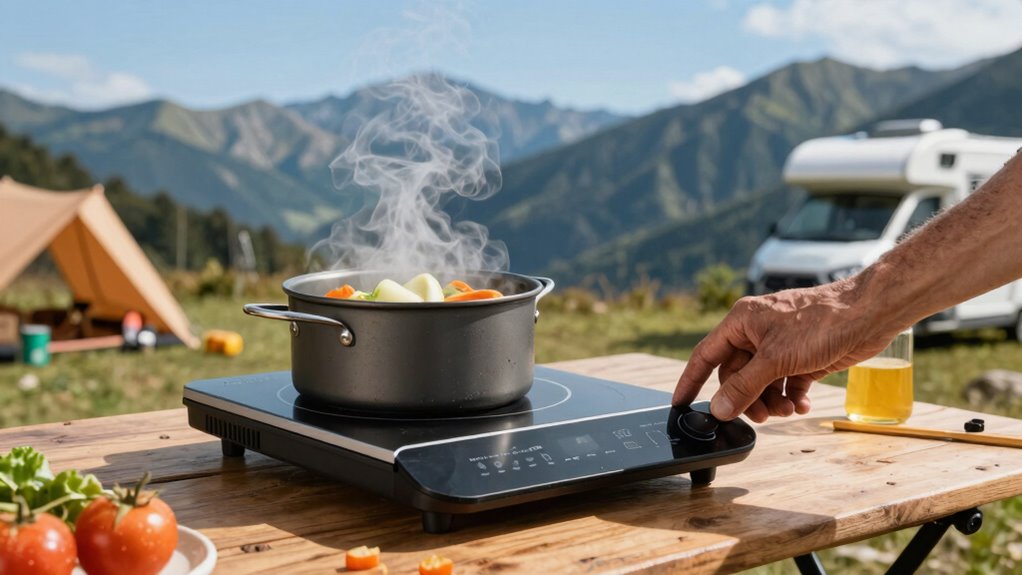
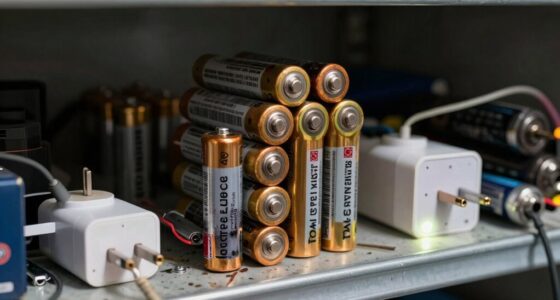
When you’re traveling and craving home-cooked meals, induction cooking offers a practical solution. It’s compact, energy-efficient, and quick, making it ideal for mobile kitchens. But as you start exploring induction options, you might be surprised by the significance of portable power. Unlike traditional stovetops, induction cooktops require a reliable power source that can handle high energy demands. If you’re camping or staying in places without standard outlets, you’ll need to invest in portable power solutions, like high-capacity batteries or portable generators. Ensuring your power setup can supply consistent energy is essential; otherwise, your cooking sessions could be interrupted or compromised. Many portable power units now offer USB and AC outlets, making it easier to connect your induction cooktop safely and efficiently. Remember, choosing the right power source isn’t just about capacity – safety precautions are critical too. You want to avoid overloading your power supply, which can cause overheating or damage to your equipment. Always check the wattage requirements of your induction cooker and match them with your portable power device’s output. Using surge protectors or power strips designed for high power loads can also add a layer of safety, protecting both your device and your power source. Additionally, always operate your induction cooker in well-ventilated areas. While induction cooking is generally safer than open flames, it still generates heat and can produce fumes if used improperly. Keep flammable materials away and never leave your cooktop unattended during operation. It’s also a good idea to familiarize yourself with safety precautions specific to your model. Many induction cooktops have automatic shut-off features if they overheat or detect issues, but understanding how to use these features can prevent accidents. When you’re on the road, portability and safety go hand in hand. You want a lightweight, compact setup that doesn’t sacrifice safety features for convenience. Choose models with built-in safety measures, and always follow manufacturer guidelines for setup and use. Proper understanding of power supply requirements is crucial for safe and efficient operation in mobile settings. Additionally, staying informed about portable power solutions can help you optimize your setup and ensure reliable performance during your travels. Being aware of safety precautions specific to your induction cooktop can further help prevent accidents and extend the lifespan of your equipment. Knowing how to properly operate your induction cooker and maintain it can also increase its longevity and performance.
portable induction cooktop with safety features
As an affiliate, we earn on qualifying purchases.
As an affiliate, we earn on qualifying purchases.
Frequently Asked Questions
Can Induction Cooktops Be Used Outdoors Safely?
Yes, induction cooktops can be used outdoors safely if you prioritize outdoor safety and weather resistance. Make certain the cooktop is designed for outdoor use, with a sturdy, weatherproof casing. Keep it on a stable, flat surface away from rain, snow, or extreme weather. Avoid exposing it to moisture or direct sunlight for extended periods. Proper precautions ensure safe, efficient outdoor cooking with your induction cooktop.
What Power Sources Are Compatible With Portable Induction Cooktops?
When it comes to compatible power sources, portable induction cooktops typically work with 110-120V outlets or dedicated RV hookups. These options guarantee energy efficiency and safety features keep your cooking smooth and secure. Don’t put all your eggs in one basket—check the wattage and connector types before plugging in. With the right setup, you’ll find outdoor cooking both convenient and safe, even when you’re on the move.
How Do I Clean and Maintain Induction Cooktops on the Road?
To keep your induction cooktop in top shape while on the road, follow simple cleaning tips and maintenance routines. After each use, wipe the surface with a damp cloth and a mild cleaner to remove spills and stains. Avoid abrasive materials. Regularly check for loose connections or damage, and keep vents clear. Proper care guarantees your cooktop stays efficient, safe, and ready for your next adventure.
Are There Size Restrictions for Travel-Friendly Induction Cooktops?
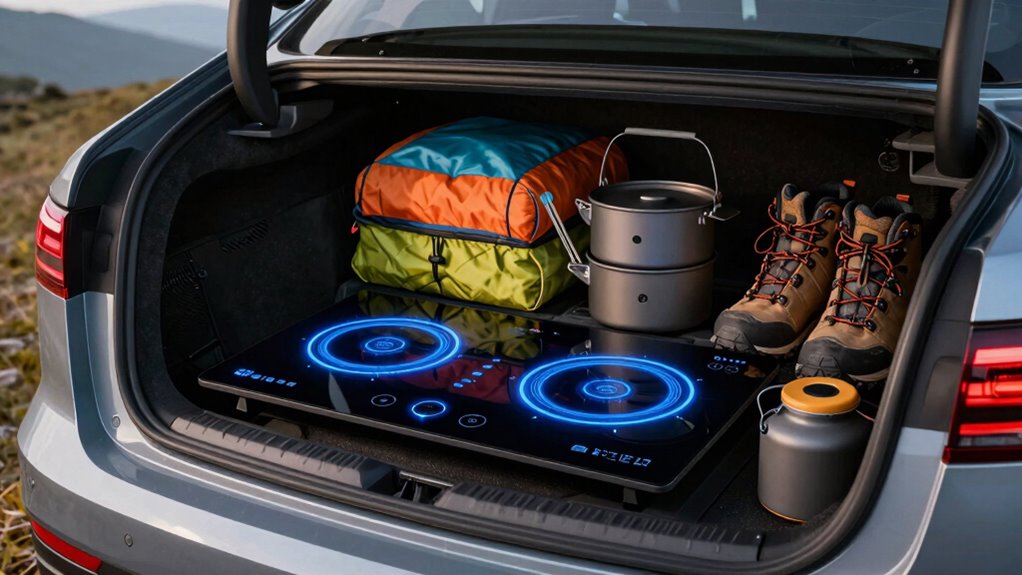
Imagine you’re packing for a road trip and wonder about size restrictions for your induction cooktop. Generally, travel-friendly models are compact, with size limitations designed for portability considerations—usually fitting easily into a backpack or small kitchen space. For example, a 12-inch portable induction stove works well for most RV kitchens, but larger models may be less convenient. Always check the specific dimensions to guarantee it suits your space and travel needs.
Do Induction Cooktops Work in Different Countries With Varying Voltages?
Induction cooktops often have voltage compatibility issues when traveling internationally. You’ll need to check if your device supports different voltages, typically 110V or 220V, or use a travel adapter that converts plug types. However, some models are dual voltage, making them more versatile. Always verify your cooktop’s voltage specifications before travel, and carry suitable travel adapters to guarantee it works seamlessly in various countries.
Conclusion
As you hit the road with your induction cooker, remember it’s like a trusty compass—designed to guide your culinary adventures smoothly. Just like my friend who thought her portable stove was a hassle until she realized it cooked faster than her traditional one, you’ll soon see it’s a game-changer. Embrace the surprises, and you’ll find that cooking on the go becomes effortless, turning every trip into a delicious journey.