When camping, managing greywater is essential for hygiene and protecting the environment. Designate a disposal area at least 200 feet from water sources and only use biodegradable soaps. Always filter your greywater to remove food particles and prevent pests. Transport it safely using containers and never pour it directly into natural water bodies. By following local regulations and maintaining proper handling practices, you promote a cleaner campsite. Keep exploring for more tips on responsible greywater management!

Get travel and outdoor gear delivered free with Prime
- Fast, free delivery on millions of items
- Prime Video, Amazon Music and more included
- Member-only deals all year
Key Takeaways
- Designate a specific greywater disposal area at least 200 feet from water sources to prevent contamination.
- Use biodegradable and eco-friendly soaps to minimize environmental impact while maintaining hygiene.
- Filter greywater to remove food particles before disposal, reducing pest attraction and contamination risk.
- Regularly check and maintain greywater containers to ensure safe transport and prevent odors.
- Follow local regulations for greywater disposal to promote a cleaner, healthier camping environment.
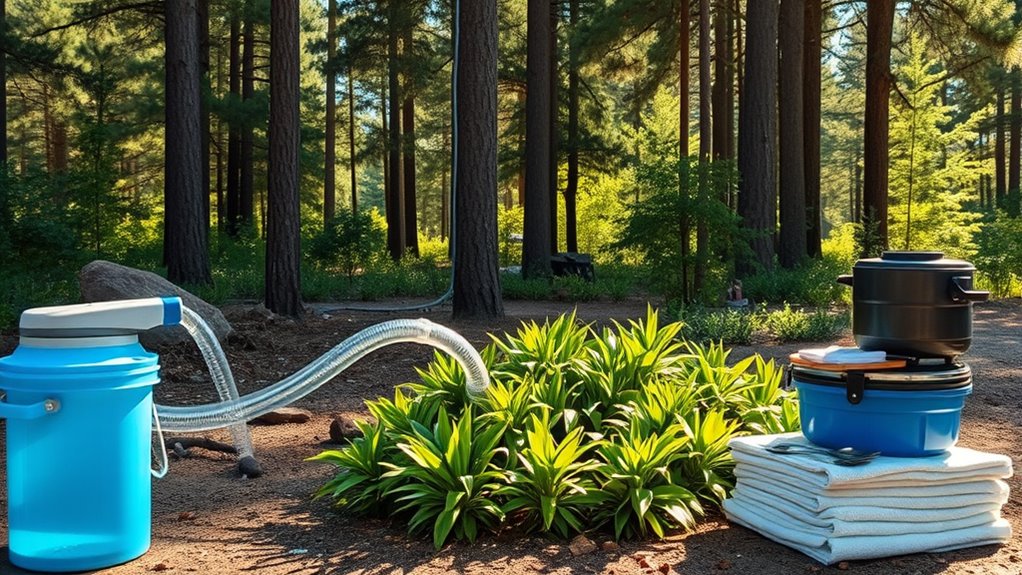
When you’re out camping, managing greywater effectively is essential for maintaining hygiene and protecting the environment. Greywater, which is the wastewater generated from washing dishes, bathing, and other non-toilet uses, can quickly pile up if not handled properly. You want to guarantee that your campsite remains clean and safe, not just for yourself, but also for fellow campers and the surrounding nature. Understanding basic campsite sanitation practices will help you achieve that.
Start by designating a specific area for greywater disposal. This area should be at least 200 feet away from water sources to prevent contamination. You don’t want to pollute rivers or lakes with harmful substances that can come from soaps and detergents, even if they’re biodegradable. Remember, what goes into the ground can seep into nearby water bodies, so proper planning is key. Using a simple bucket or portable greywater container makes it easier to manage and transport your greywater to the designated disposal site.
Designate a greywater disposal area at least 200 feet from water sources to prevent contamination and protect the environment.
When it comes to wastewater treatment, think about the products you’re using. Opt for biodegradable soaps and detergents whenever possible. They’re much better for the environment and minimize the impact on local ecosystems. This not only helps you maintain campsite sanitation but also guarantees that your camping experience is harmonious with nature. You can even take it a step further by using natural cleaning agents like vinegar or baking soda for washing dishes and personal hygiene. Additionally, using products that have high critical acclaim can ensure you are utilizing effective and environmentally-friendly options.
It’s also important to filter out any food particles from your greywater before disposal. You can do this by using a small strainer or simply letting the water sit for a bit so that solids settle at the bottom. This makes the greywater less likely to attract pests and reduces the risk of contamination. After filtering, you can safely dispose of the water in your designated area, allowing it to percolate into the soil.
Lastly, always follow local regulations regarding greywater disposal. Some campsites have specific guidelines about how to handle wastewater treatment, and it’s essential to adhere to these rules. They’re there for a reason—to protect the environment and guarantee that everyone has a pleasant camping experience. By practicing good campsite sanitation and managing greywater responsibly, you’ll contribute to a cleaner, healthier outdoor space for everyone to enjoy. So, gear up, plan ahead, and make your camping trip both fun and eco-friendly!
Frequently Asked Questions
What Is Greywater and How Is It Generated?
Greywater is wastewater generated from activities like washing dishes, showering, and laundry, excluding toilet waste. In a camp setting, you’ll create greywater when you use water for cleaning or bathing. Effective greywater management is vital for maintaining camp sanitation, as improper disposal can lead to health hazards. By understanding how greywater is produced and implementing proper disposal methods, you can guarantee a healthier environment for everyone at your campsite.
Can Greywater Be Reused for Drinking Water?
No, greywater shouldn’t be reused for drinking water without proper treatment. While greywater filtration can clean it to some extent, it’s often not safe for consumption due to potential contaminants. Instead, focus on using greywater for irrigation or non-potable purposes, which can enhance camp sanitation. Always prioritize safety by ensuring that any water you drink meets health standards, and explore alternative sources for potable water in your camping setup.
What Are the Health Risks Associated With Greywater?
When you think of greywater, imagine a bustling campfire that attracts both warmth and unwanted pests. Greywater contamination can lead to serious health risks, like skin infections or gastrointestinal illnesses. If you don’t practice proper camp hygiene, you’re inviting trouble. Always handle greywater carefully, ensuring it doesn’t come into contact with food or drinking water. Simple actions, like using designated disposal areas, can markedly reduce the risk of disease in your camp.
How Can I Treat Greywater for Safe Use?
To treat greywater for safe use, you can implement greywater filtration systems that effectively remove contaminants. Start by using a camp shower system designed for greywater collection, which helps in filtering out soaps and debris. You might consider using sediment filters, activated carbon filters, or biological treatments to enhance the purification process. Always guarantee the treated greywater meets safety standards before reuse, especially for irrigation or other non-potable applications.
Are There Legal Regulations for Greywater Disposal?
Yes, there are legal regulations for greywater disposal, and you should definitely be aware of them. Many areas enforce strict disposal regulations to ensure public health and environmental protection. You need to check your local laws, as they vary widely. Legal compliance isn’t just about avoiding fines; it’s also about safeguarding your community and ecosystem. So, before you handle greywater, make sure to understand the rules that apply to your location.
Conclusion
In the dance of outdoor life, managing greywater isn’t just a chore; it’s a rhythm that keeps your camp in harmony with nature. By treating greywater with care, you’re not just protecting the environment; you’re weaving a tapestry of respect and responsibility. So, as you pack up your gear, remember: every drop counts, and with a little mindfulness, you can leave no trace but the memories of your adventure. Let your camp hygiene sing a song of sustainability.
Fall Picks
fall essentials
As an affiliate, we earn on qualifying purchases.