
Many sleeping bag temperature ratings can mislead you because manufacturers often use different testing standards or don’t follow strict protocols, making labels unreliable. They may advertise a bag as suitable for a certain temperature, but real-world conditions, insulation type, and personal preferences can vary widely. It’s important to understand how these ratings work and what factors influence comfort. Keep exploring to learn how to choose a bag that truly matches your outdoor needs.
Key Takeaways
- Ratings like “comfort” or “limit” are tested under ideal conditions and may not reflect real-world performance.
- Different brands often follow varying testing standards, making direct comparisons unreliable.
- Insulation type (down vs. synthetic) significantly impacts temperature ratings and real-world warmth.
- Environmental factors like wind, moisture, and personal sleep habits can cause ratings to be misleading.
- User reviews and personal experience are essential to understanding a sleeping bag’s true suitability beyond labels.
Understanding sleeping bag temperature ratings is essential for choosing the right gear for your outdoor adventures. These ratings give you a quick idea of how cold a sleeping bag can keep you comfortable, but they can also be misleading if you don’t understand what they really mean. The key lies in knowing about insulation types and rating standards, which influence how these ratings are determined and how reliable they are.
Insulation types play a significant role in a sleeping bag’s temperature performance. There are two main types: down and synthetic. Down insulation is lightweight, compressible, and offers excellent warmth-to-weight ratio, but it loses its insulating properties when wet. Synthetic insulation is bulkier and less compressible but retains heat better in damp conditions. The insulation type affects the bag’s rated temperature because different insulations have varying abilities to trap heat. Manufacturers often test bags with specific insulation types, but the ratings might not be directly comparable if you switch between down and synthetic options.
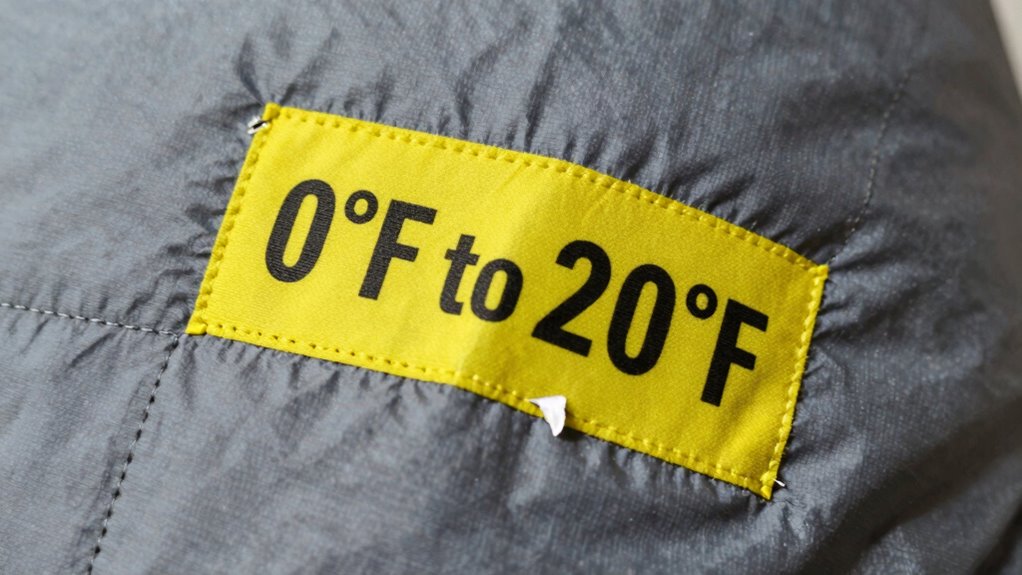
Rating standards are another critical factor. Some brands follow strict testing protocols, like the European EN 13537 standard, which classifies bags into comfort, limit, and extreme temperatures. These standards are designed to provide consistent, reliable ratings, but not all manufacturers adhere to them. Other brands create their own testing procedures, which can be less rigorous or more optimistic. This inconsistency makes it tricky to compare ratings across different brands and models. You might see a bag rated as suitable for 20°F, but actual comfort can vary based on your sleep system, clothing, and personal warmth.
Many people assume the numbers on the label are absolute truths, but they’re more like guidelines. For example, a bag rated for 20°F might be perfect for mild conditions but inadequate in windy, damp environments. The ratings often assume ideal conditions and a specific sleeping pad and clothing system. If you’re a cold sleeper or facing unexpected weather, those ratings can give a false sense of security. It’s wise to look beyond the label and read user reviews, consider your own sleep habits, and account for environmental factors.
Additionally, understanding the different rating standards and their testing methods can help you make more accurate comparisons and select a sleeping bag that truly meets your needs.
Frequently Asked Questions
How Do I Choose the Right Sleeping Bag for Extreme Cold?
To select the appropriate sleeping bag for extreme cold, prioritize insulation types like down or synthetic, which offer better warmth. Look for bags rated for temperatures below your lowest expected environment. Use layering strategies, such as adding a sleeping pad or wearing thermal layers inside, to boost warmth. Also, consider a bag with a snug fit to minimize heat loss and ensure you stay warm throughout the night.
Are Temperature Ratings Consistent Across Different Brands?
It’s like comparing apples to apples in a fruit stand—brand consistency isn’t guaranteed across different brands. Temperature ratings often vary because labeling standards aren’t strictly regulated, leading to discrepancies. You can’t rely solely on a bag’s label; instead, check independent reviews and test results. Always consider your own comfort and experience, rather than trusting the ratings blindly. That way, you’ll stay warm and dry, no matter which brand you pick.
How Should I Interpret Comfort Versus Limit Ratings?
You should interpret comfort ratings as the temperature where you’ll stay cozy with typical layering strategies and insulation types, while limit ratings indicate when you might start feeling cold. Consider your activity level and insulation choices, like down or synthetic, to adjust your layering strategies accordingly. Always remember that individual comfort varies, so use these ratings as guidelines rather than strict rules, and test your sleeping bag in conditions similar to your trip.
Do Sleeping Bag Labels Account for Insulation Compression?
Ever wonder if those labels truly reflect real-world conditions? Insulation compression can drastically affect a sleeping bag’s warmth, often making labels less accurate than you think. Most labels don’t fully account for how compression during packing or use reduces insulation effectiveness. So, when choosing a bag, don’t rely solely on the label—test and adjust for insulation compression to make sure it keeps you warm when it counts most.
What Environmental Factors Affect Sleeping Bag Warmth?
Environmental factors like insulation degradation and ambient humidity directly impact your sleeping bag’s warmth. When insulation degrades over time or gets compressed, it loses its effectiveness, reducing warmth. High humidity can cause moisture buildup, which diminishes insulation properties and makes you feel colder. You should store your sleeping bag properly, keep it dry, and avoid compression when not in use to maintain its insulating power and stay warm during your adventures.
Conclusion
Don’t trust the labels blindly. Don’t assume comfort is guaranteed. Don’t ignore the real conditions you’ll face. Instead, educate yourself, test your gear, and prepare for the unexpected. By understanding the truth behind temperature ratings, you protect yourself from discomfort and danger. Embrace awareness, prioritize safety, and stay warm no matter where your adventures take you. Because in the wilderness, knowledge is your best defense against the lie of false ratings.