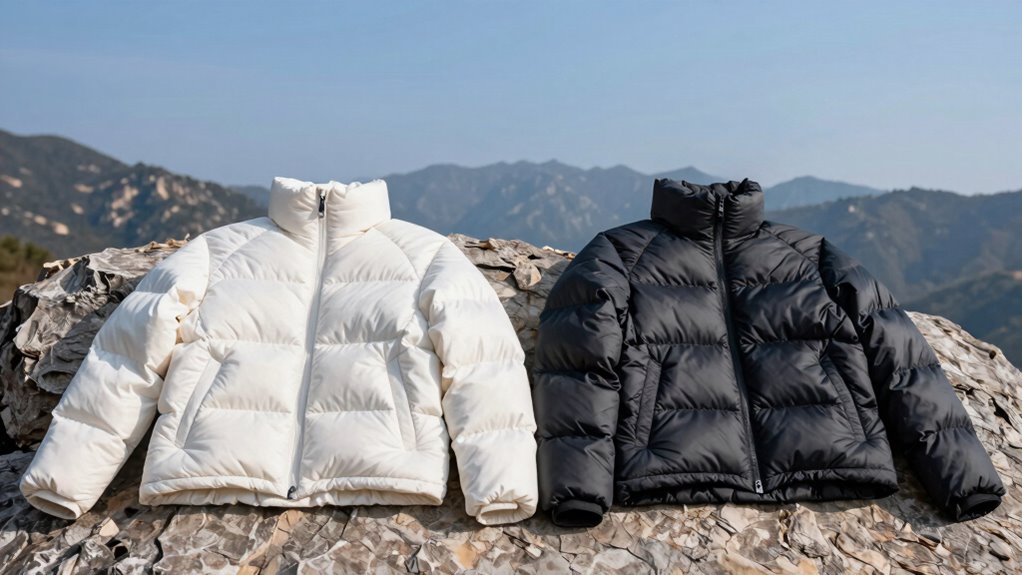

When choosing between down and synthetic insulation for travel, consider how moisture affects each. Down traps heat when dry but loses insulation when wet, making it less ideal for damp climates. Synthetic insulates better in wet conditions, dries faster, and resists compression. Down is lightweight and highly packable, perfect for dry, minimal bulk travel. If you want to explore the details, there’s more to uncover about which option suits your adventures best.
Key Takeaways
- Down offers superior warmth-to-weight ratio and compressibility, ideal for minimalist travel in dry conditions.
- Synthetic insulation resists moisture, making it better suited for wet environments and unpredictable weather.
- Down loses insulating properties when wet and takes longer to dry, while synthetic dries faster and retains warmth when damp.
- Down is natural and biodegradable, but synthetic options can include recycled materials and have a lower environmental impact overall.
- Synthetic insulation is generally more durable and easier to maintain, providing reliable performance for various travel environments.
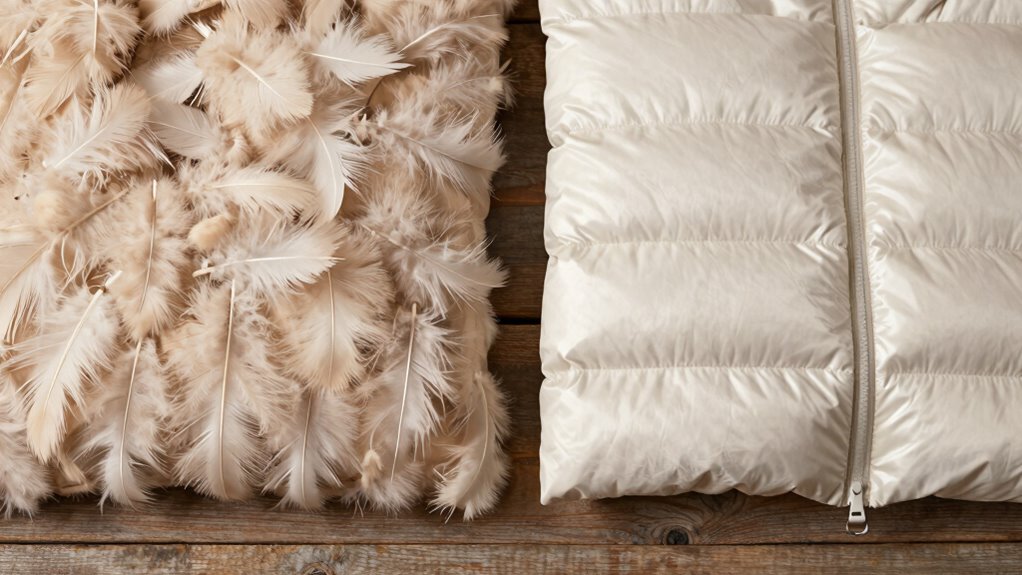
When choosing between down and synthetic insulation, understanding their differences can help you pick the best option for your needs. One of the key factors to contemplate is moisture management. Down insulation, made from the fluffy clusters of waterfowl, is excellent at trapping heat when dry. However, it struggles when it gets wet, losing its insulating properties and taking longer to dry. This means if you’re traveling in damp or humid environments, down might not be the best choice unless you’re willing to take extra care to keep it dry. Synthetic insulation, on the other hand, is designed to resist moisture better. It retains warmth even when wet and dries faster, making it a reliable option for unpredictable weather conditions. If you plan to venture into rainforests, snowy mountains, or areas with high humidity, synthetic insulation can help you stay warmer without the hassle of constant drying or worry about dampness.
Another important aspect to think about is the environmental impact of your insulation choice. Down is a natural, biodegradable material, and when sourced responsibly, it can be a more sustainable option. Many brands now adhere to ethical sourcing standards, ensuring that the down is collected without harm to animals. However, the production process of synthetic insulation often involves petrochemicals, which have a higher environmental footprint. Still, some newer synthetic products are made with recycled materials, reducing their ecological impact. When eco-consciousness is a priority, it’s worth researching brands that emphasize sustainable practices in both down and synthetic options.
In terms of travel convenience, both insulations have their merits. Down packs down into a compact size, making it easier to carry in your backpack or luggage. It’s lightweight and highly efficient, providing excellent warmth-to-weight ratios. Synthetic insulation, while sometimes bulkier, is often more durable and resistant to compression over time. This means it can withstand the rigors of travel better, especially if you’re frequently packing and unpacking your gear. Additionally, synthetic options typically require less delicate care and can be washed more easily without losing their insulating properties.
Ultimately, your choice depends on your travel style and environment. If you’re heading somewhere dry and want maximum warmth with minimal bulk, down could be your best bet. But if you’re planning a trip to wet climates or want a more weather-resistant and eco-friendly option, synthetic insulation might serve you better. Weighing moisture management and environmental impact will help you make a smarter, more informed decision for your adventures.
Frequently Asked Questions
How Does Moisture Affect Insulation Performance During Travel?
Moisture can considerably reduce your insulation’s performance during travel. When insulation absorbs moisture, it causes insulation degradation, trapping heat less effectively. Down insulation is especially vulnerable, losing loft and warmth when wet. Synthetic insulation handles moisture better, drying faster and maintaining insulation properties longer. To stay warm, keep your gear dry during travel, and consider choosing synthetic options if you expect to face damp conditions.
Are Synthetic Insulations More Environmentally Friendly Than Down?
Synthetic insulations are generally more environmentally friendly than down, especially considering the eco-friendliness debate. They’re made from synthetic fibers, reducing reliance on animal products and addressing animal welfare considerations. Plus, they’re often produced with fewer resource-intensive processes. While down is biodegradable, synthetic options typically have a lower environmental impact during manufacturing and disposal. So, if eco-friendliness is a priority, synthetic insulation might be the better choice for you.
What Is the Best Insulation for Humid Travel Destinations?
For humid travel destinations, synthetic insulation is your best bet. It offers superior moisture resistance, preventing dampness from compromising warmth. While some believe natural down is superior, it loses insulation durability when wet, making it less reliable in humid climates. Synthetic options maintain their insulating properties even when damp, ensuring you stay warm and comfortable. So, if humidity’s a concern, choose synthetic for reliable, durable warmth on your travels.
How Do Weight and Packability Compare Between Down and Synthetic?
When comparing weight and packability, synthetic insulation often wins for packing efficiency because it compresses well and stays lightweight, making it ideal for travel. Down insulation, while lighter per ounce, can become bulkier when compressed, reducing packability. You’ll find synthetic options easier to pack efficiently, especially if space and weight are critical factors. So, for travel, synthetic insulation usually offers better packing convenience and a favorable weight comparison.
Can Synthetic Insulation Mimic the Warmth of Down Effectively?
Synthetic insulation can effectively mimic the warmth of down, especially with improved water resistance and compressibility. You don’t have to worry about moisture compromising its insulation, making it ideal for wet conditions. Its ability to compress easily means you can pack it efficiently for travel. While it might not be quite as warm per ounce, advances in synthetic materials guarantee you stay warm and dry, no matter the weather.
Conclusion
Choosing between down and synthetic insulation is like selecting the right partner for your adventure—each has its own strengths. Down offers unmatched warmth and compressibility, while synthetic resists moisture and dries quickly. Think of it as a dance—sometimes light and graceful, other times steady and reliable. Ultimately, the best choice depends on your travel plans and priorities. Whichever you pick, know that your gear’s performance will be the compass guiding your journey through the coldest terrains.