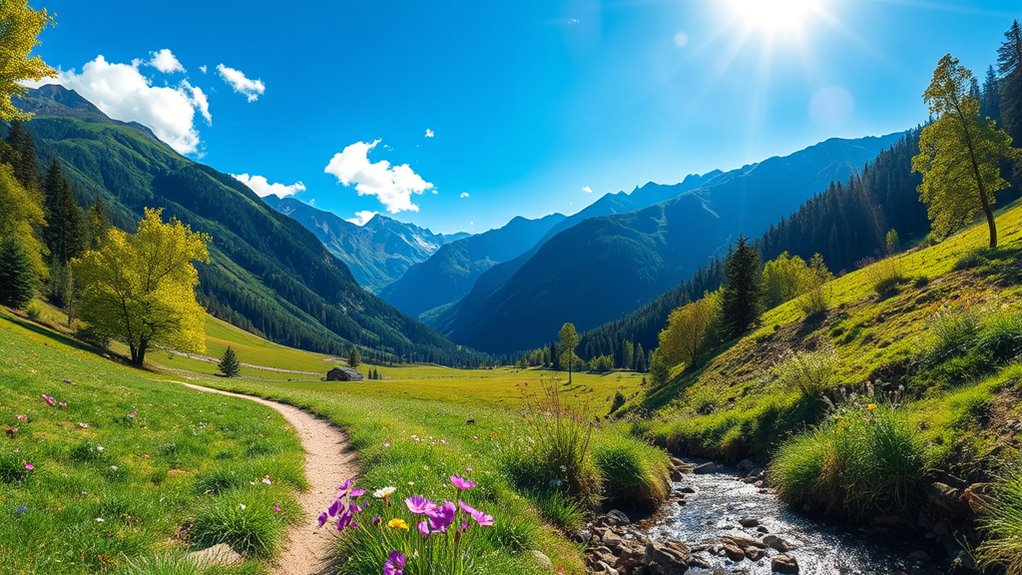

To read a landscape for Leave No Trace, observe the growth patterns of trees and the flow of water. Notice areas with healthy vegetation and those that are barren. Stick to established trails to prevent erosion, and keep away from sensitive water sources. Be mindful of your footpath, avoiding delicate plants and widening trails. Your choices affect the environment for future generations, so understanding these elements will enhance your outdoor experiences. There’s more to discover about sustainable practices.
Key Takeaways
- Observe tree growth patterns and land contours to understand the ecosystem and navigate effectively.
- Choose established trails to minimize environmental impact and avoid damaging fragile areas.
- Stay on designated paths to prevent erosion and protect delicate vegetation from trampling.
- Maintain a respectful distance from water sources and clean up responsibly to prevent pollution.
- Reflect on your choices and their impact on future generations while exploring natural landscapes.
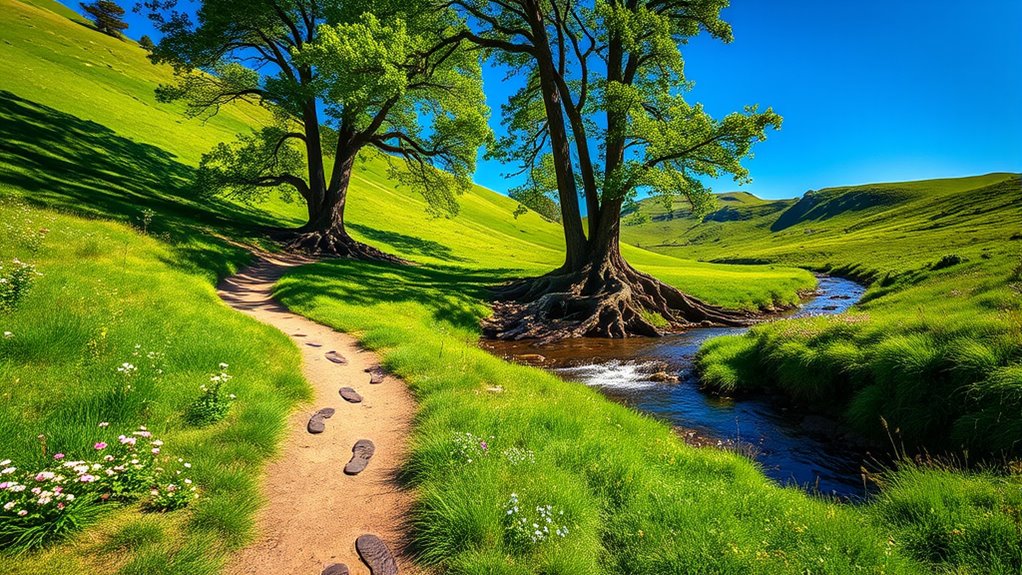
Have you ever wondered how to truly connect with nature while minimizing your impact? Understanding how to read a landscape not only heightens your appreciation of the natural world but also helps you make responsible choices that protect it. The key lies in observing landscape features and recognizing how your presence might affect them. By being mindful of trail impact, you can enjoy your outdoor adventures without leaving a lasting footprint.
Start by taking a moment to absorb your surroundings. Look at the different landscape features: the way the trees grow, the contours of the land, and even the patterns of water flow. Each element plays a role in the ecosystem. For instance, notice how vegetation thrives in certain areas while other spots may be barren. These observations can guide you in choosing the best paths to take. Opt for established trails whenever possible. They’re designed to minimize impact on the surrounding environment, while veering off into unmarked areas can lead to erosion and habitat destruction.
Take a moment to observe your surroundings; each landscape feature guides you toward responsible exploration while minimizing your impact.
When you’re on a trail, pay attention to where you step. Your feet can cause significant trail impact, especially in delicate ecosystems. Avoid trampling on fragile plants by sticking to the path. If the trail widens due to heavy foot traffic, that’s often a sign that you need to tread carefully and keep to the defined route. If you notice trail braiding—where paths split and multiply—consider this a cue to stay centered on the original trail. This helps preserve the landscape features you’ve come to admire.
As you explore, also be aware of water sources and wildlife. Waterways are particularly sensitive, and any disturbance can lead to pollution and habitat loss. Keep a respectful distance from these areas, and never wash dishes or bathe in them. Instead, carry biodegradable soap and clean up at least 200 feet away from any water source. This small adjustment protects water quality and the creatures that rely on it.
Additionally, it’s wise to check for the hours of local services that may assist you during your outdoor adventures. Finally, take a few moments to reflect on your experience. Connecting with nature isn’t just about what you see; it’s also about how you interact with the environment. By observing landscape features and understanding trail impact, you’re not only enjoying the beauty around you but also ensuring that it remains for future generations. So next time you head out, remember: your choices matter, and reading the landscape is the first step toward responsible exploration.
Frequently Asked Questions
What Should I Do if I Encounter Wildlife While Hiking?
If you encounter wildlife while hiking, stay calm and observe their behavior from a safe distance. Don’t approach or feed them, as this can stress the animals and provoke defensive actions. Use binoculars to get a better view without getting too close. If the wildlife seems agitated or approaches you, back away slowly and quietly, giving them space. Remember, respecting their territory keeps both you and the animals safe.
How Can I Identify Fragile Ecosystems in a Landscape?
You can identify fragile ecosystems by looking for signs of soil stability and plant diversity. If you notice bare patches or eroded soil, that’s a clue you’re in a delicate area. Check for a variety of plants; low diversity often indicates stress. Coincidentally, if you spot certain species thriving, like ferns or moss, they might signal a sensitive environment. Pay attention to these details, and you’ll recognize the fragility of the landscape around you.
Are There Specific Plants to Avoid When Camping?
Yes, there are specific plants to avoid when camping. You should steer clear of invasive species, as they can harm local ecosystems and outcompete native plants. Common offenders include Japanese knotweed and garlic mustard. On the other hand, familiarize yourself with native plants in the area, as they’re typically more suited to the environment and less likely to cause issues. Always check local guidelines to identify any plants that might pose a risk to you or the ecosystem.
What Are the Best Practices for Disposing of Human Waste?
“When nature calls, answer wisely.” For proper waste management, dig a hole at least six to eight inches deep, away from water sources and trails. Make certain you’re following sanitation practices by covering the waste with soil and packing out any toilet paper. If you’re in a crowded area, consider using a portable toilet or waste bags. Remember, respecting the environment keeps it beautiful for everyone, so leave no trace behind!
How Does Weather Affect My Leave No Trace Practices?
Weather considerably affects your Leave No Trace practices. Seasonal changes can alter terrain, making certain areas more susceptible to erosion or habitat disruption. For instance, during heavy rains, you should avoid trails that could become muddy or damaged. Similarly, understanding weather patterns helps you time your outings, ensuring you’re not impacting wildlife during sensitive periods. Always adjust your plans based on current and forecasted conditions to minimize your environmental footprint.
Conclusion
By understanding how to read a landscape, you’re not just exploring; you’re also protecting. Remember, “Take only pictures, leave only footprints.” Pay attention to the environment around you, respect wildlife, and follow the Leave No Trace principles. Your awareness and actions can preserve these beautiful spaces for future generations to enjoy. So, the next time you venture out, make sure you’re leaving nature just as you found it—or even better. Happy exploring!