When practicing Leave No Trace in urban settings, you should plan your visit carefully, stick to designated trails, and avoid disturbing wildlife or damaging plants. Dispose of all trash properly, recycle where possible, and minimize noise to respect others. Stay on paths and keep experiences quiet to preserve the natural feeling. By following these responsible habits, you’ll help protect city green spaces. If you keep exploring, you’ll discover how to make your urban adventures even more eco-friendly.
Key Takeaways
- Dispose of trash properly and pack out all waste to prevent pollution.
- Stay on designated paths and avoid disturbing wildlife or removing plants.
- Keep noise levels low and respect quiet zones to minimize disturbance.
- Use appropriate tools like binoculars for wildlife viewing and observe animals quietly from a distance.
- Educate others about responsible behavior and lead by example to promote urban conservation efforts.
Understanding the Importance of Leave No Trace in Cities

Even in urban environments, practicing Leave No Trace is essential because cities are as vulnerable to environmental damage as remote wilderness areas. Urban etiquette plays a pivotal role in preserving our shared spaces, encouraging responsible behavior like proper waste disposal and respecting public parks. When you follow Leave No Trace principles, you help support city conservation efforts, ensuring parks, sidewalks, and green spaces remain clean and healthy for everyone. Small actions—like picking up trash, avoiding graffiti, and staying on designated paths—make a big difference. Recognizing that urban areas are ecosystems too highlights your responsibility to minimize your impact. Incorporating grocery savings strategies into your routine can also reduce waste and promote sustainability. By practicing Leave No Trace, you contribute to sustainable city living, fostering cleaner, greener environments for yourself and future generations.
Planning Your Urban Outing to Minimize Impact

When planning your urban outing, choose accessible locations that are designed for visitors to enjoy responsibly. Make sure to pack out all your waste to keep the area clean and prevent pollution. Being intentional about these choices helps minimize your impact and preserves the city’s natural beauty. Incorporating leave no trace principles into your plans can further reduce environmental impact.
Choose Accessible Locations
Choosing accessible locations for your urban outing is essential to minimizing your environmental impact. Opt for places like accessible parks and urban gardens, which are designed to accommodate visitors efficiently and with minimal disturbance. These areas often have established pathways and facilities that help you stick to designated trails, reducing trampling and soil erosion. By selecting locations that are easy to reach by foot, bike, or public transit, you decrease your carbon footprint and avoid the need for extra transportation, which can cause pollution. Accessible parks and urban gardens also tend to be well-maintained, making it easier to follow Leave No Trace principles. Planning your visit to these inclusive spaces ensures you enjoy nature while respecting the environment and local community. Additionally, choosing accessible locations helps ensure that you can adhere to safety guidelines and enjoy your outing responsibly.
Pack Out All Waste
After selecting accessible locations that help minimize your impact, focus on packing out all waste to leave the space better than you found it. Practicing litter prevention is essential; bring reusable bags or containers to reduce waste and avoid single-use items. Be mindful of waste reduction by planning ahead—carry only what you need and dispose of trash properly. Always carry a trash bag or portable container to collect your waste, ensuring no litter is left behind. This simple step prevents pollution, protects wildlife, and maintains the area’s cleanliness. Incorporating eco-friendly dog breeds into your planning can also promote responsible pet ownership during outdoor activities. By committing to packing out all waste, you demonstrate respect for the environment and fellow visitors. Your efforts help preserve urban spaces, making them enjoyable and sustainable for everyone.
Proper Waste Disposal and Recycling Practices
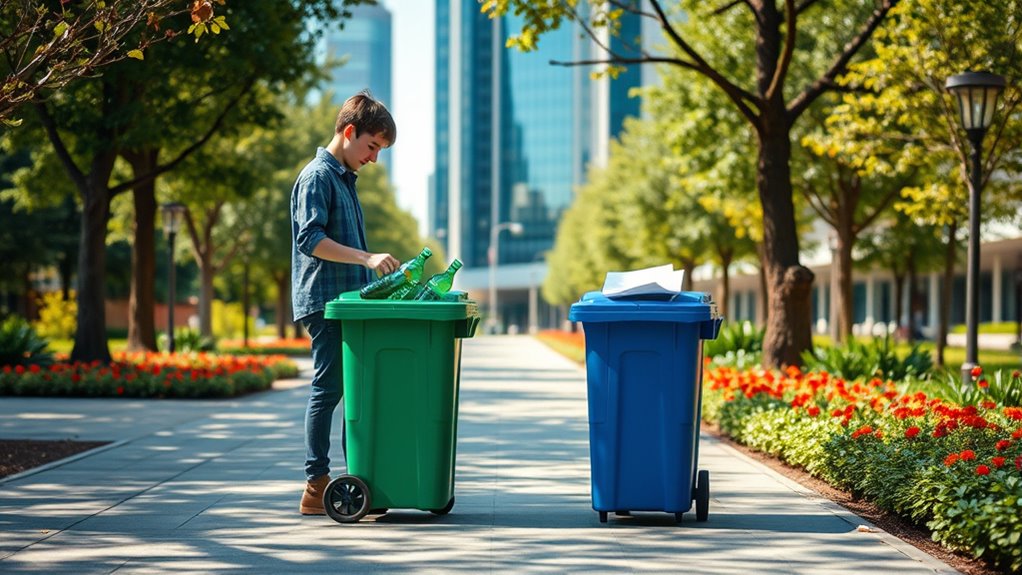
Proper waste disposal and recycling are essential for maintaining clean and healthy urban environments. Your recycling habits directly impact waste management efficiency and reduce landfill waste. Always sort recyclables correctly, rinsing containers and avoiding contaminants. Use designated bins for plastics, paper, and metals, and ensure trash goes into appropriate waste containers. Here’s a quick guide:
| Recycling Tip | Waste Management Benefit |
|---|---|
| Rinse recyclables thoroughly | Prevents contamination |
| Separate recyclables at home | Simplifies collection |
| Avoid overfilling bins | Ensures proper collection |
| Follow local recycling rules | Reduces waste in landfills |
| Reduce single-use plastics | Lowers environmental impact |
Additionally, understanding the importance of proper filtration and pump protection can help maintain the efficiency of equipment used in recycling facilities.
Respecting Local Wildlife and Vegetation

To truly appreciate urban nature, you need to respect local wildlife and vegetation. By doing so, you support native plant preservation and enhance urban wildlife observation. Stay on designated paths to avoid trampling fragile plants and disturbing habitats. Refrain from picking flowers or removing plants, as it can harm local ecosystems. Observe animals quietly from a distance, ensuring you don’t scare or disrupt their routines. Remember, every plant and creature plays a crucial role in the urban environment. Using proper tools like binoculars can help you spot birds and insects without startling them. Avoid feeding wildlife, which can make animals dependent on human food and disrupt natural behaviors. Keep your distance from nests and burrows to prevent stress or abandonment. Respecting these elements ensures urban spaces remain vibrant and healthy for everyone—humans and wildlife alike.
Keeping Noise Levels Considerate in Public Spaces

Maintaining considerate noise levels in public spaces helps preserve a peaceful environment where everyone can enjoy their surroundings. Sound pollution can quickly disrupt the tranquility, affecting both residents and visitors. To stay within noise boundaries, keep conversations at a moderate volume and avoid loud music or shouting. Be mindful of time, especially during early mornings or late evenings, when noise is more disruptive. Respect signage indicating quiet zones or noise restrictions. If you’re in a park or community area, lower your voice when passing by others, especially families or groups seeking relaxation. By being conscious of your noise, you help create a respectful space for everyone. Additionally, understanding city dynamics can help you anticipate quieter times and spaces, enhancing your ability to be considerate. Remember, small actions like these contribute notably to maintaining a harmonious urban environment.
Staying on Designated Trails and Paths
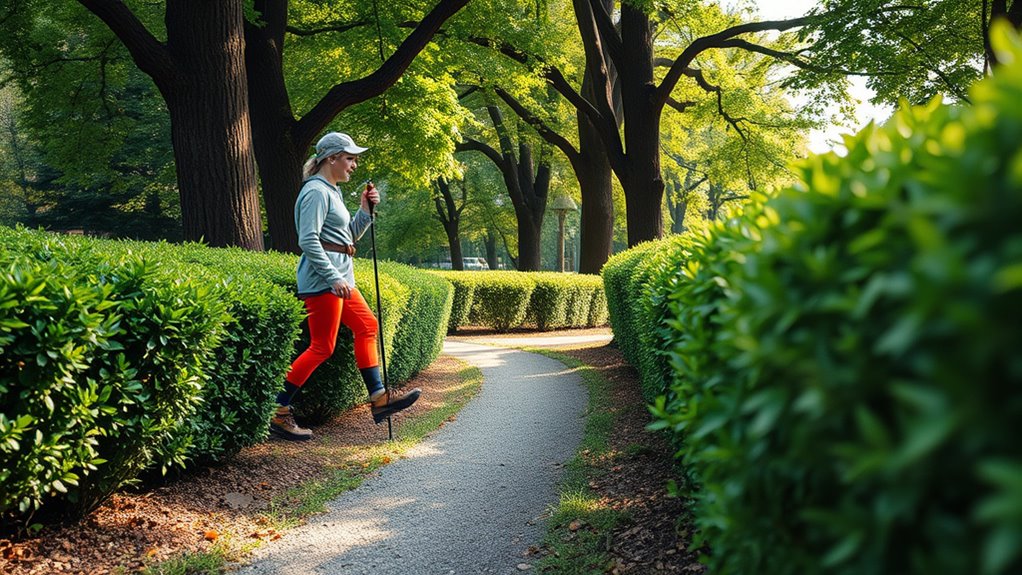
Staying on designated trails and paths is essential to protect natural habitats and prevent erosion. When you follow this rule, you help maintain the integrity of urban green spaces and support trail etiquette. Wandering off can damage delicate plants and disturb wildlife. Plus, it complicates path maintenance efforts, leading to costly repairs. Being mindful of environmental impact ensures that these spaces remain beautiful and accessible for everyone to enjoy.
Avoiding Damage to Urban Green Spaces
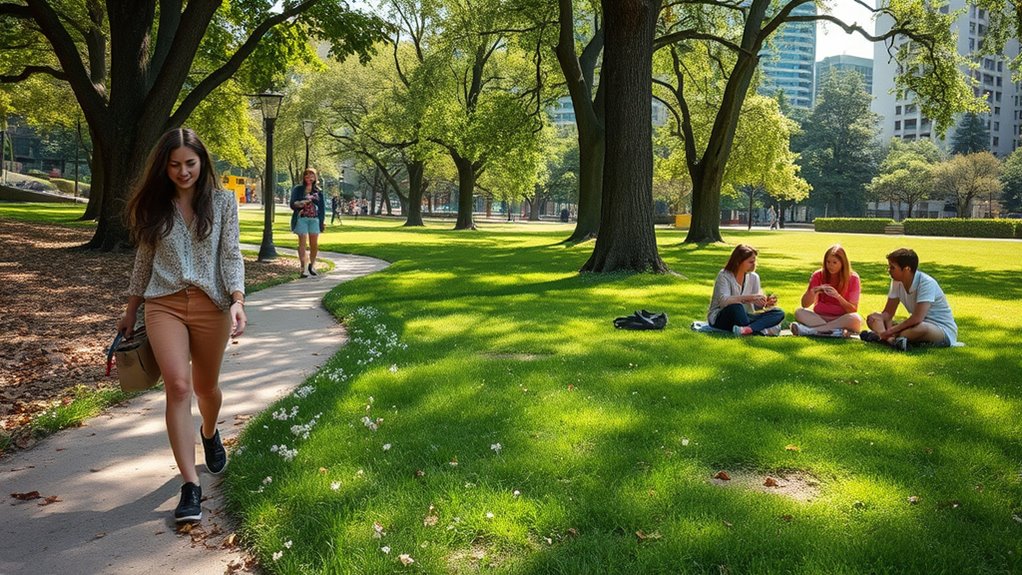
Avoiding damage to urban green spaces requires you to be mindful of how your actions impact the environment around you. Respect the delicate urban flora by sticking to established paths and avoiding trampling plants. Stay on designated trails to prevent soil compaction and root damage that can harm native vegetation. Be aware that city noise can disturb wildlife and other visitors, so keep noise levels low and voices quiet. Avoid picking flowers or disturbing wildlife, as these actions can disrupt local ecosystems. Dispose of trash properly and avoid leaving any litter behind. Additionally, understanding return policies can help you make responsible choices when purchasing or disposing of outdoor gear or plants. By practicing these habits, you help preserve the health and beauty of urban green spaces, ensuring they remain vibrant and accessible for everyone and the urban flora that depends on a healthy environment.
Educating Others About Responsible Recreation
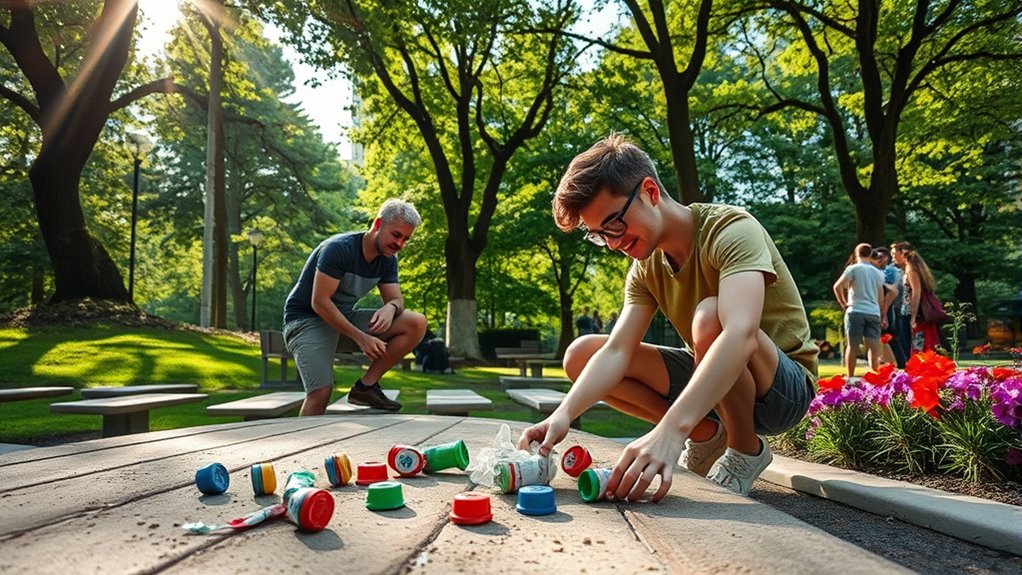
Educating others about responsible recreation is essential for preserving urban green spaces. When you share your knowledge, you help foster a community that values and protects these areas. You can lead by example and encourage friends, family, or neighbors to follow Leave No Trace principles. Imagine a group picnicking without leaving trash, children exploring without trampling plants, and neighbors organizing cleanups to keep parks vibrant.
- Sharing tips on proper waste disposal and minimizing impact
- Demonstrating respectful behavior around wildlife and plants
- Organizing educational events or discussions about urban conservation
- Regularly assessing and rotating belongings to prevent clutter buildup and reduce environmental impact
Supporting Community Efforts to Preserve Urban Nature
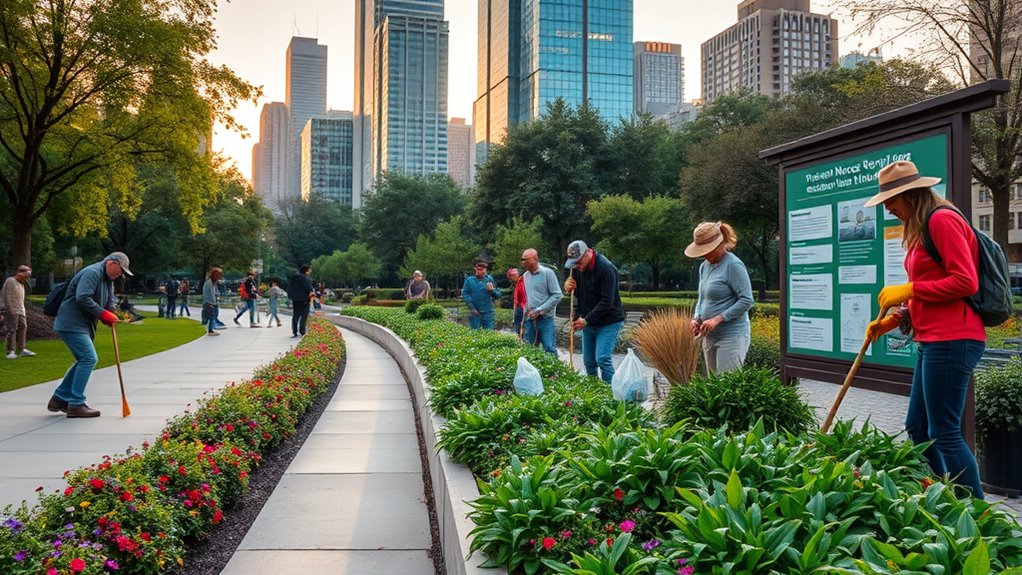
Supporting community efforts is essential for preserving urban nature because collective action amplifies individual impact. When you engage in community initiatives, you help strengthen urban conservation efforts, making green spaces healthier and more accessible for everyone. Participating in local clean-ups, planting trees, or advocating for protected areas fosters a sense of shared responsibility. Your involvement encourages others to contribute, creating a ripple effect that enhances urban ecosystems. Community engagement also helps ensure that conservation priorities reflect local needs and values. By supporting neighborhood groups or city programs dedicated to urban nature, you contribute to sustainable change. Your active participation not only preserves natural spaces but also builds stronger, more connected communities committed to maintaining the ecological health of urban environments.
Frequently Asked Questions
How Can I Identify Eco-Friendly Urban Activities?
To identify eco-friendly urban activities, look for options promoting urban conservation and eco-friendly commuting. You can bike or walk instead of driving, reducing emissions and supporting sustainability. Check if local parks and community spaces focus on conservation efforts, like planting native plants or cleaning up. Choose public transportation or carpooling whenever possible. These activities help protect the environment, conserve resources, and create a healthier city for everyone.
What Are Common Mistakes to Avoid When Practicing Leave No Trace?
You might think you’re doing well, but avoid common mistakes like leaving urban trash behind or neglecting graffiti prevention efforts. These actions damage the environment and diminish community beauty. Always carry out what you bring in, dispose of waste properly, and respect public spaces. By being mindful, you help preserve urban areas for everyone, ensuring they stay clean and welcoming. Your small efforts make a big difference in maintaining a healthy, vibrant city.
How Can I Encourage Others to Follow Leave No Trace Principles?
You can encourage others to follow Leave No Trace principles by engaging your community through events or volunteer cleanups, making it fun and educational. Use social media outreach to share tips, success stories, and visuals that inspire responsibility. Lead by example, showing how small actions make a difference. Your enthusiasm and consistent messaging can motivate others to adopt eco-friendly habits and protect shared spaces.
Are There Specific Tools or Supplies Recommended for Urban Eco-Awareness?
Imagine carrying a sleek, reusable container in your bag, ready to replace single-use plastics, or slipping eco-friendly gear into your pocket before heading out. These tools help you stay mindful of your environmental impact. In urban settings, having reusable containers, eco-friendly gear, and compact trash bags keeps your space clean and reduces waste. These simple supplies make eco-awareness practical and stylish, encouraging others to follow your lead.
How Does Leave No Trace Benefit Urban Community Health and Well-Being?
Practicing Leave No Trace in urban settings benefits community health and well-being by preserving urban biodiversity, which supports cleaner air and natural beauty. When you leave no trace, you help reduce pollution and waste, fostering a safer, more resilient community. This awareness encourages responsible behavior, strengthens community resilience, and creates a healthier environment where everyone can enjoy nature’s benefits, ultimately improving quality of life for residents and visitors alike.
Conclusion
By practicing Leave No Trace in urban settings, you’re like a gardener tending to a delicate ecosystem. Every choice you make helps preserve the city’s natural beauty and vibrant life. When you respect wildlife, dispose of waste properly, and stay on paths, you’re nurturing this shared space for everyone to enjoy. Remember, your actions are the seeds that can grow a healthier, greener city—so keep tending with care and awareness.