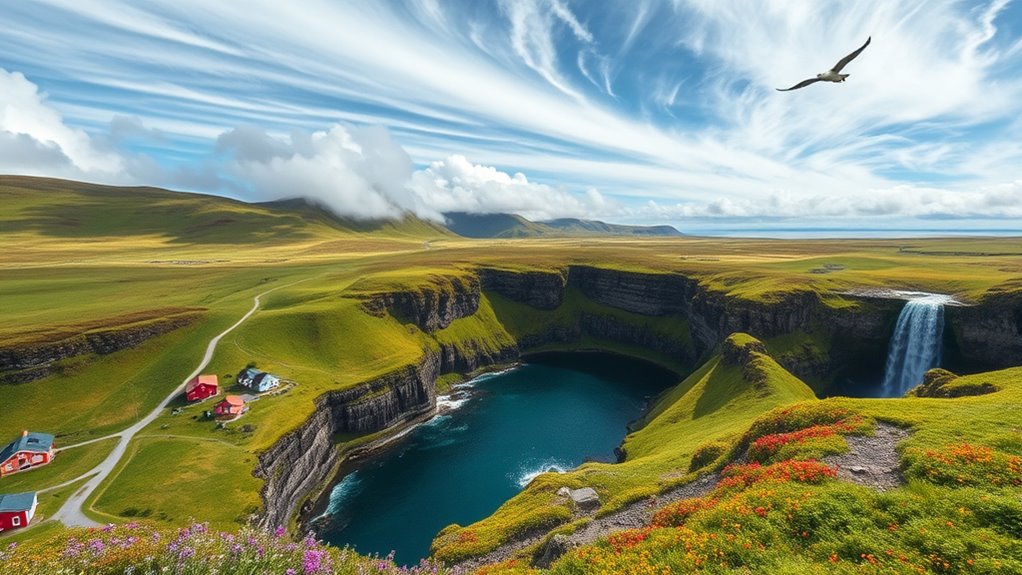

The Faroe Islands are perfect for sustainable travelers seeking stunning landscapes and rich culture. You’ll find eco-friendly accommodations that blend with nature and support local farms. Use public transportation or bike to explore the breathtaking scenery while minimizing your carbon footprint. Engage in conservation efforts or attend workshops to connect with the community’s dedication to sustainability. There’s so much more to discover about this unique destination and its responsible practices just ahead!
Key Takeaways
- Explore the Faroe Islands’ stunning landscapes while utilizing eco-friendly accommodations that prioritize sustainability and traditional hospitality.
- Rely on renewable energy sources like wind and hydroelectric power for a low-carbon travel experience.
- Use public transportation, biking, or walking to minimize your carbon footprint while discovering the islands’ natural beauty.
- Participate in conservation initiatives and cultural engagement programs to support local communities and preserve the environment.
- Enjoy wildlife observation opportunities, such as puffins and seals, while promoting habitat preservation and biodiversity.
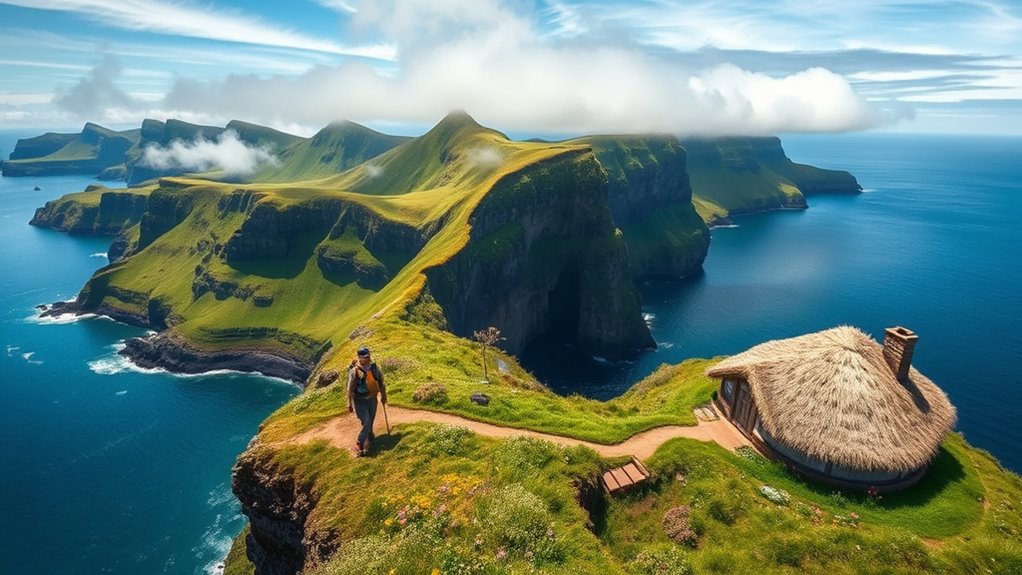
If you’re looking for a unique travel experience, the Faroe Islands offer breathtaking landscapes and a rich cultural heritage, all while promoting sustainability. Nestled in the North Atlantic, this archipelago is a paradise for nature lovers and eco-conscious travelers. As you explore these rugged islands, you’ll find that both the stunning scenery and the commitment to sustainable practices make it a must-visit destination.
The Faroe Islands combine stunning landscapes with a rich cultural heritage, making it a top destination for eco-conscious travelers.
One of the best ways to immerse yourself in the local culture is by staying at local eco lodges. These accommodations prioritize environmental responsibility and often use sustainable materials in their construction. You’ll enjoy the warmth of traditional Faroese hospitality while minimizing your ecological footprint. Many of these lodges are designed to blend seamlessly with the surrounding landscape, providing you with a cozy retreat after a day of hiking or exploring. You’ll often find that they source their food from local farms, ensuring that what you’re eating is fresh, seasonal, and supports the island’s agricultural practices.
While you’re in the Faroe Islands, you’ll also notice the numerous renewable energy initiatives that the locals have embraced. The islands primarily rely on wind and hydroelectric power, making substantial strides towards a sustainable energy future. You can take pride in knowing that your stay is not only enjoyable but also contributes to a greener planet. As you wander through charming villages and pristine nature, you’ll see how the community prioritizes sustainability in their everyday lives and employs effective fraud prevention tools to ensure the security of local businesses.
Getting around the islands is another opportunity to support eco-friendly practices. Opt for public transportation, which is efficient and minimizes your carbon footprint. You might even consider biking or walking, especially in areas where the scenery is simply breathtaking. As you traverse the landscape, keep your eyes peeled for the stunning wildlife that calls these islands home, from puffins to seals.
As you plan your trip, remember to engage with local initiatives that promote conservation and cultural preservation. Participate in guided eco-tours, volunteer for community projects, or attend workshops on traditional crafts. These experiences will deepen your understanding of the Faroe Islands and the dedication of its people to sustainability. By choosing to travel thoughtfully, you’ll not only create unforgettable memories but also contribute to the preservation of this remarkable destination for future generations.
Frequently Asked Questions
What Is the Best Time to Visit the Faroe Islands?
The best time to visit the Faroe Islands is during the summer months, from June to August. You’ll enjoy the best weather, with milder temperatures and longer daylight hours. This is also the peak season, ideal for hiking, birdwatching, and exploring the stunning landscapes. However, if you prefer fewer crowds, consider visiting in late spring or early autumn, when you can still experience the beauty without the hustle and bustle of peak tourist times.
Are There Any Health Precautions for Travelers?
Yes, there are health precautions you should take when traveling. Familiarize yourself with wildlife safety, especially if you plan to explore nature. Always maintain a safe distance from animals. Also, be aware that while medical facilities are available, they can be limited in rural areas. It’s wise to pack a basic first aid kit and ensure you have adequate travel insurance that covers health emergencies. Staying informed keeps your trip safe and enjoyable.
What Currency Is Used in the Faroe Islands?
The local currency in the Faroe Islands is the Danish Krone (DKK). Notably, about 90% of all transactions in the islands are done electronically, highlighting a strong preference for cashless payments. When you’re planning your trip, make sure to check currency exchange rates, as they can vary. You’ll find that most places accept credit cards, but it’s handy to have some cash on hand for smaller purchases or local markets.
Can I Use My Mobile Phone in the Faroe Islands?
Yes, you can use your mobile phone in the Faroe Islands. Mobile coverage is generally good, especially in the larger towns. You’ll also find reliable internet access in most places, including cafes and hotels. Just make sure to check with your provider about international roaming charges, as they can vary. Downloading maps and translation apps before your trip can be helpful, too, ensuring you stay connected while exploring the beautiful scenery.
Are There Any Specific Entry Requirements for Travelers?
Traveling to the Faroe Islands feels like stepping into a storybook, but before you pack your bags, check the entry requirements. If you’re from the EU, you don’t need a visa; just bring your passport. For non-EU travelers, a travel visa may be necessary, so verify in advance. Confirm your documents are in order, and you’ll be ready to embrace the breathtaking landscapes and rich culture waiting for you!
Conclusion
As you explore the breathtaking Faroe Islands, remember that sustainable travel is key to preserving this unique environment for future generations. Did you know that the islands aim to achieve 100% renewable energy by 2030? By making conscious choices, like supporting local businesses and minimizing waste, you can contribute to this ambitious goal. So, pack your bags, tread lightly, and enjoy the stunning landscapes and rich culture of the Faroe Islands while leaving a positive impact.