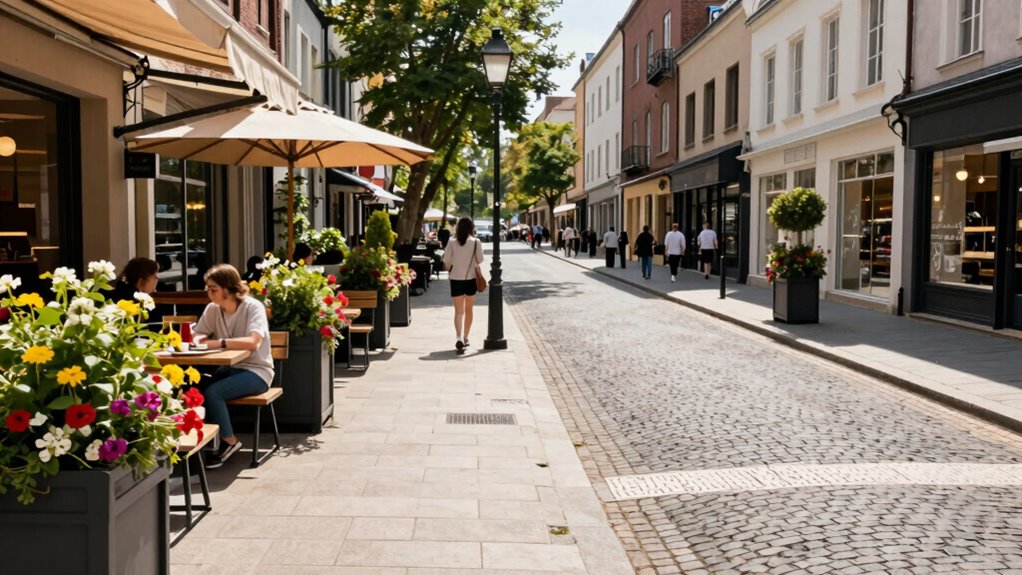

To spot destinations built for walking, look for continuous, well-maintained sidewalks that connect seamlessly throughout the area. Check for clearly marked crosswalks, pedestrian signals, and safety islands that make crossing streets safe and easy. Notice amenities like benches, shade trees, and signs that encourage lingering and community interaction. Observe whether streets have shorter blocks, traffic-calming measures, and interconnected layouts that prioritize foot traffic. Keep exploring to discover even more features that make walking enjoyable and accessible.

Get travel and outdoor gear delivered free with Prime
- Fast, free delivery on millions of items
- Prime Video, Amazon Music and more included
- Member-only deals all year
Key Takeaways
- Look for continuous, wide sidewalks with pedestrian-friendly features like curb cuts and curb extensions.
- Check for clearly marked crosswalks, pedestrian signals, and safety islands indicating emphasis on foot traffic.
- Observe if the street layout includes short blocks, grid patterns, and traffic-calming measures promoting walkability.
- Notice nearby amenities such as shops, parks, and transit stops within easy walking distance.
- Identify urban design elements like benches, shade trees, signage, and public spaces that encourage pedestrian use.
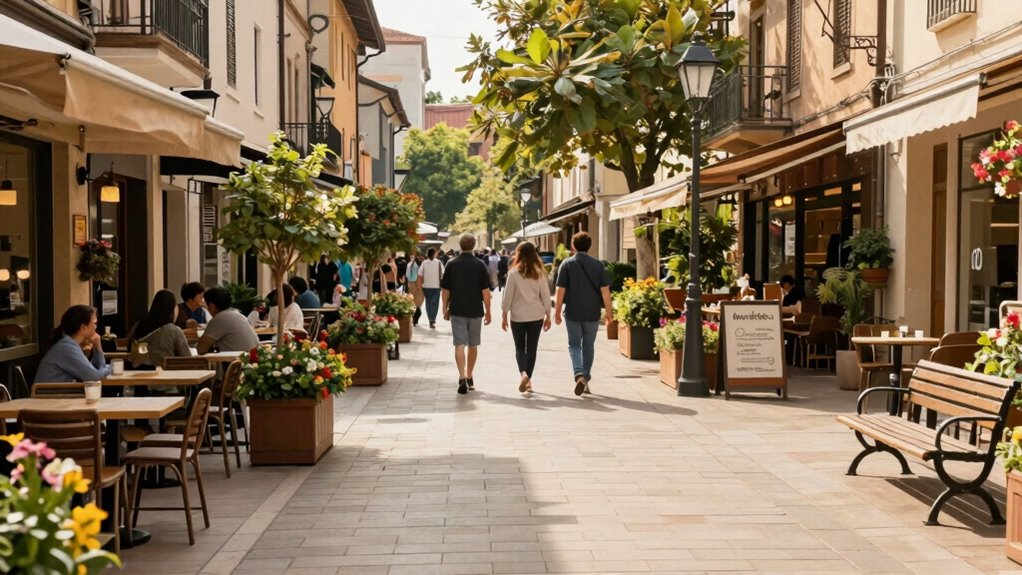
Ever wondered how to tell if a destination is truly built for walking? It’s a question that often comes to mind when you’re exploring new places or planning outings. The answer lies in observing how the area is designed and whether it encourages pedestrians to move comfortably and safely. Urban design plays an essential role here, shaping streets, sidewalks, and public spaces to prioritize people over cars. When a place is built with pedestrians in mind, you’ll notice that the infrastructure supports walking in multiple ways.
Start by looking at the sidewalks. Are they wide, well-maintained, and continuous? Pedestrian-friendly features include curb cuts, curb extensions, and clearly marked crosswalks that make crossing streets safe and straightforward. These elements signal that the area values pedestrians and has been thoughtfully planned for foot traffic. Additionally, the presence of pedestrian signals, countdown timers, and safety islands shows a focus on making walking a convenient and secure experience.
Next, pay attention to the street layout and urban design. In a walkable destination, streets tend to be more connected, with shorter blocks that make navigation easier. You’ll find a grid pattern or well-planned intersections that reduce the need for long detours. Traffic-calming measures such as speed bumps, narrowed lanes, or chicanes also indicate that the area is designed to slow down vehicles, making it safer for pedestrians. These features help create a shared space where walking feels natural and stress-free. Recognizing these features can also help you differentiate between places that are inherently pedestrian-oriented versus those that are merely accessible by car.
Another key indicator is the presence of pedestrian-friendly features like benches, shade trees, and outdoor amenities. These elements show that the area encourages linger time and social interactions, which are hallmarks of walkable communities. Visible signage promoting pedestrian pathways or local landmarks also enhances the walkability experience, guiding you effortlessly through the space. Recognizing the importance of urban design can help you better assess whether a destination truly prioritizes pedestrians over drivers.
Finally, consider the proximity of amenities, shops, parks, and public transportation options. When everything is within easy walking distance, it suggests the urban design actively promotes pedestrian activity. A destination built for walking doesn’t just rely on car access; it integrates various urban elements to create a lively, accessible environment. If you notice all these features working together, you’re likely in a place that’s intentionally designed for pedestrians, not just drivers. It’s a space where walking isn’t an inconvenience but an inviting, integral part of the experience.
As an affiliate, we earn on qualifying purchases.
Frequently Asked Questions
Are Walkable Destinations More Expensive to Visit?
Walkable destinations aren’t necessarily more expensive to visit. In fact, their cost comparison often depends on factors like transportation and accessibility features. You might save money by walking instead of relying on taxis or rental cars. Plus, destinations designed for pedestrians usually offer more affordable dining, shopping, and entertainment options nearby. So, if you choose walkable spots, you could enjoy a richer experience without overspending.
How Do I Find Walkable Neighborhoods in Unfamiliar Cities?
To find walkable neighborhoods in unfamiliar cities, look for areas with clear local signage that guide you effortlessly through streets and attractions. Pay attention to pedestrian infrastructure—wide sidewalks, crosswalks, and pedestrian-friendly crossings. These features indicate a neighborhood’s focus on walking, making your exploration safer and more enjoyable. Trust your instincts, explore on foot, and seek out lively streets where pedestrian infrastructure and local signage create a welcoming, walkable environment.
What Safety Tips Should I Follow When Walking in New Areas?
When walking in new areas, prioritize pedestrian safety by staying alert and avoiding distractions like phone use. Wear visible walking gear, such as reflective clothing or a flashlight, especially at night. Stick to well-lit, populated streets and cross at designated crosswalks. Trust your instincts—if something feels off, head to a safe, busy place. Always carry essentials like water and a charged phone for emergencies.
Do Walkable Cities Have Better Public Transportation Options?
Yes, walkable cities usually have better public transit options. You’ll find extensive public transit systems that connect key neighborhoods, making it easier to get around without a car. These cities also invest in pedestrian infrastructure, like wide sidewalks and crosswalks, making walking safer and more enjoyable. Good pedestrian infrastructure encourages public transit use, reducing traffic and promoting a more sustainable, accessible urban environment.
How Can I Prepare for a Walking-Heavy Travel Itinerary?
To prepare for a walking-heavy itinerary, choose comfortable local footwear suited for extended walks and uneven terrains. Plan your routes around scenic paths to maximize enjoyment and avoid busy streets. Research local attractions accessible on foot and map out your days to include parks, historic districts, or waterfronts. Packing a small backpack with essentials like water, snacks, and a map will keep you energized and ready for a day exploring on foot.
Conclusion
So next time you’re wandering through a city that actually seems to want you there, savor every sidewalk café and pedestrian-friendly nook. Because unlike those sprawling wastelands built solely for cars, these places invite you to linger, explore, and maybe even forget your GPS. Remember, a true walking destination isn’t just a place to pass through—it’s a city that secretly wants you to stay, sip coffee, and maybe even find your new favorite alleyway.
Halloween Picks
halloween
As an affiliate, we earn on qualifying purchases.