Dehumidifiers in RVs help when you’re dealing with excess moisture, mold risk, or musty odors, especially during damp seasons or in humid climates. They effectively reduce interior humidity and protect your RV’s surfaces and electronics. However, they’re less useful if water intrusion isn’t fixed or if the environment is already very dry. To keep your RV healthy, it’s best to use them along with good ventilation and leak repairs—discover how to make the most of them.
Key Takeaways
- Dehumidifiers help prevent mold and moisture buildup in RVs, especially in humid or damp environments.
- They are less effective in dry climates where indoor humidity is already low.
- Proper size and capacity are essential; oversized or undersized units may not work efficiently.
- Dehumidifiers should be used alongside ventilation, leak repairs, and moisture prevention strategies.
- Overuse in dry conditions can lead to overly dry air, causing discomfort and potential interior damage.

Living in an RV can be a fantastic adventure, but managing humidity levels is essential to keep your space comfortable and prevent damage. Excess moisture can lead to a range of issues, from mold growth to structural deterioration. That’s where dehumidifiers come in—they help with moisture control, making your RV a healthier and more comfortable environment. When used correctly, they markedly reduce the risk of mold prevention, which is critical in small, enclosed spaces where humidity can quickly become a problem. Proper moisture control is the key to maintaining a safe and healthy environment inside your RV.
Managing humidity in your RV is key to preventing mold and maintaining a healthy, comfortable space.
If you’re dealing with high humidity levels, a dehumidifier can be a game-changer. It pulls moisture from the air, helping to maintain a balanced indoor environment. This moisture control is especially important during damp seasons or in areas with high ambient humidity. By reducing excess moisture, you not only stay comfortable but also protect your RV’s interior surfaces, furniture, and electronics from water damage. Mold, which thrives in moist conditions, becomes less likely to develop, saving you from potential health issues and costly repairs. Proper moisture control is the key to preventing mold buildup, which can cause musty odors and health concerns like allergies or respiratory problems.
However, dehumidifiers aren’t always the perfect solution. If your RV already has significant leaks or water intrusion issues, simply running a dehumidifier won’t fix the root cause. In such cases, addressing the source of water infiltration is essential before relying on a dehumidifier. Additionally, if you’re parked in an extremely dry climate, a dehumidifier might not be necessary or even helpful. Overusing one in such environments can lead to overly dry air, causing discomfort and potential issues with wood or rubber components. Understanding the climate conditions where you camp can help determine whether a dehumidifier will be beneficial or unnecessary.
Choosing the right dehumidifier depends on your RV’s size, climate, and how often you use it. Smaller units work well for compact spaces, but larger models may be needed if your RV has multiple living areas. It’s also important to monitor humidity levels regularly—aim for around 30-50% relative humidity—to keep moisture in check without making the air too dry. Some dehumidifiers come with built-in hygrometers, making it easier to maintain ideal conditions. Remember, a dehumidifier is a tool to support moisture control, not a cure-all. Combining it with good ventilation, routine maintenance, and fixing leaks will give you the best results in preventing mold and keeping your RV’s interior in top shape.
Frequently Asked Questions
Can Dehumidifiers Be Used While Driving the RV?
Yes, you can use a dehumidifier while driving your RV, but it’s not always practical. You’ll want to take into account ventilation strategies to prevent excess moisture buildup during travel. Keep in mind, dehumidifiers consume power, so they may drain your RV’s batteries faster if not plugged into shore power. It’s best to run them when parked or ensure your power sources can handle the additional load to avoid issues on the road.
How Often Should I Run My RV Dehumidifier?
You should run your RV dehumidifier daily until humidity levels stay between 40-50%, then reduce usage. Keep an eye on humidity levels with a hygrometer, and adjust based on seasonal changes or weather. Your dehumidifier’s capacity influences how long it runs—larger units may need less frequent operation. Regularly empty the water tank and clean the filter to guarantee peak performance and prevent mold growth.
Are There Portable Dehumidifiers Suitable for Small RVS?
Yes, there are portable options perfect for small RVs. Look for compact designs that easily fit in limited space, making them ideal for travel and storage. These units are lightweight, energy-efficient, and simple to operate, helping you control humidity levels without bulk. Choosing a portable dehumidifier guarantees you stay comfortable and dry on the road, especially in humid climates or during rainy seasons.
Do Dehumidifiers Remove Odors Besides Moisture?
Yes, some dehumidifiers also remove odors through odor absorption and air purification. They trap smells like cooking or mildew in their filters, leaving your RV smelling fresher. Look for models with activated carbon or HEPA filters, as they are especially effective at eliminating odors and improving air quality. Keep in mind, though, that not all dehumidifiers have these features, so check specifications before buying.
What’s the Best Placement for a Dehumidifier in an RV?
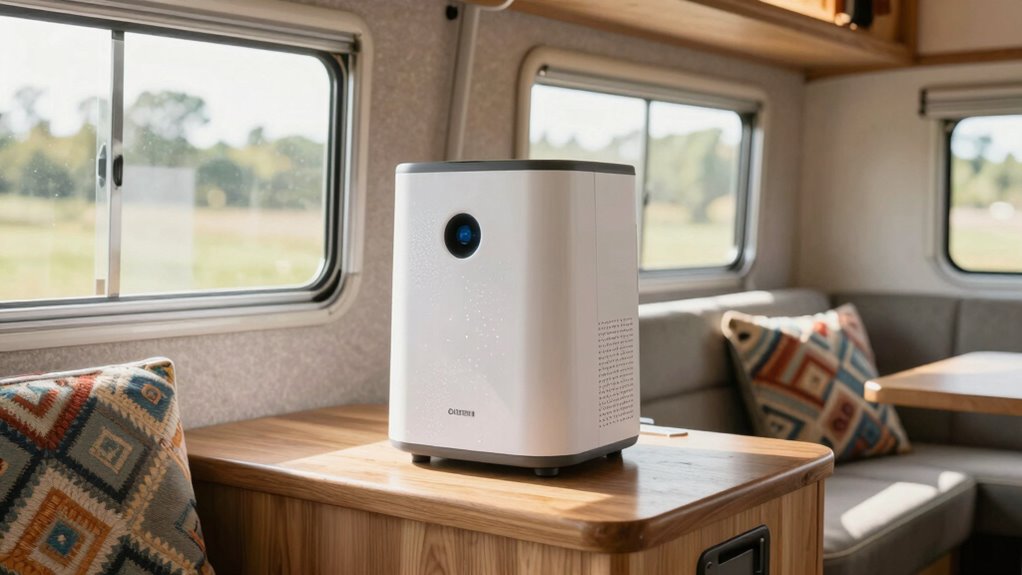
You should place your dehumidifier in an open, central spot in your RV for ideal positioning. Avoid corners or cramped areas, as these limit airflow. Position it near sources of moisture, like the bathroom or kitchen, to maximize efficiency. Keep it away from walls or furniture to ensure proper circulation. Regularly check its position to maintain the best dehumidification and prevent mold or odors effectively.
Conclusion
So, the next time you see a dehumidifier quietly working in your RV, remember it’s more than just a machine — it’s your shield against dampness, especially when a sudden rainstorm leaves puddles on the driveway. As you pack up for your adventure, that tiny device might just be the quiet hero, ensuring your cozy space stays dry and inviting, no matter what weather surprises you encounter. Sometimes, it’s the little things that make the biggest difference.