When you see “non-toxic” on cleaning labels, know it doesn’t mean free of all risks or harmful chemicals. It often isn’t strictly regulated, so ingredients can be vague or include hidden hazards. Look for products with transparent labels, safe ingredients like vinegar or baking soda, and reputable certifications. To truly choose safe options, you need to understand what ingredients are safe or unsafe and how to spot genuine efficacy—if you keep exploring, you’ll learn how to make smarter choices.
Key Takeaways
- “Non-toxic” labels are not strictly regulated; always check ingredient lists for transparency and potential hazards.
- Safe cleaning ingredients include vinegar, baking soda, and essential oils; avoid ammonia, chlorine bleach, and synthetic fragrances.
- True safety depends on ingredient transparency, certifications, and testing, not solely on “non-toxic” claims.
- Marketing labels can be misleading; understand that natural doesn’t always mean harmless and verify ingredient safety.
- Choose products with clear ingredient disclosures, eco-friendly packaging, and reputable certifications for safer cleaning options.
What Does “Non-Toxic” Really Mean on Cleaning Labels?
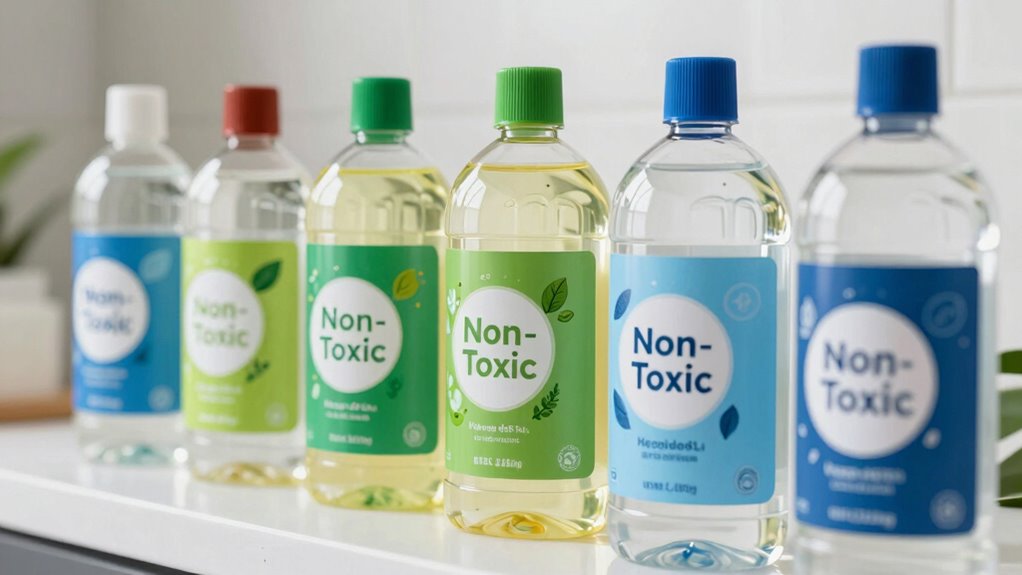
When you see “non-toxic” on a cleaning label, it might sound reassuring, but the term can be misleading. Many household myths surround these labels, making you think they’re completely safe. However, the phrase “non-toxic” isn’t regulated strictly, so manufacturers can use it even if their products contain harmful chemicals. Reading chemical labels carefully is essential because they often hide ingredients under vague terms. Just because a product claims to be non-toxic doesn’t mean it’s free of all risks. It’s easy to assume that these labels guarantee safety, but that’s not always the case. Always do your own research and don’t rely solely on marketing claims. Understanding what these labels really mean helps you make better choices for your health and your home. Additionally, chemical labels can sometimes conceal the true nature of ingredients, emphasizing the importance of understanding the regulatory standards of household products. Being aware of ingredient disclosures allows consumers to identify potentially hazardous substances that might not be immediately obvious.
Which Ingredients Are Safe or Unsafe in Non-Toxic Cleaners?
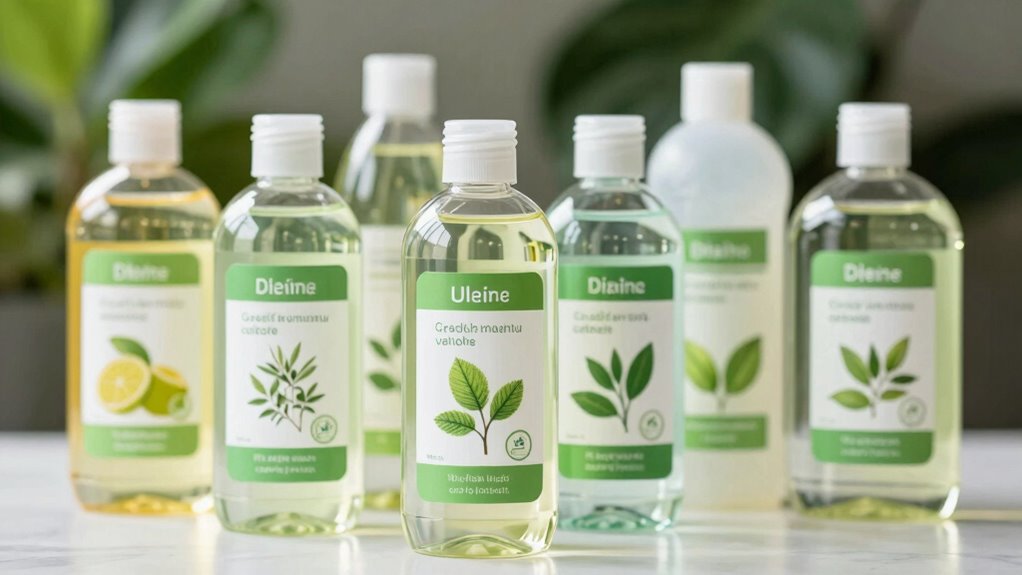
Are all ingredients in non-toxic cleaners truly safe? Not necessarily. While natural ingredients are often promoted as safe, some may pose chemical risks, especially if you have sensitivities or allergies. It’s important to understand which components are safe and which might be harmful. Here’s a quick overview:
| Safe Ingredients | Unsafe Ingredients |
|---|---|
| Vinegar | Ammonia |
| Baking soda | Phthalates |
| Lemon juice | Synthetic fragrances |
| Essential oils | Chlorine bleach |
| Castile soap | Artificial dyes |
Stick with natural ingredients like vinegar and baking soda, but watch out for hidden risks in certain synthetic chemicals. Always read labels carefully to protect your health.
How Can I Tell If a Cleaning Product Is Truly Safe and Effective?

Knowing which ingredients are safe in cleaning products helps you make smarter choices, but safety alone isn’t enough. To truly determine if a product is safe and effective, look for clear chemical labeling and ingredient transparency. Reputable brands openly list all ingredients, so you can verify they contain non-toxic, effective substances. Avoid products with vague labels like “chemical agents” or “fragrance,” which hide potential hazards. Check for certifications from trusted organizations that verify safety and efficacy. Test the product’s performance by reading reviews or trying it on small areas first. Remember, a truly safe and effective cleaner balances transparency with proven results, so don’t settle for vague claims or unclear labeling. Your informed choices lead to safer, healthier cleaning routines. Additionally, understanding air quality factors can help you select cleaning products that contribute to a healthier indoor environment. Being aware of indoor air quality factors can also guide you toward choosing cleaning methods that minimize airborne pollutants, further supporting your overall well-being. Proper air purifier maintenance and timely filter replacements play a crucial role in reducing airborne contaminants and maintaining a healthy indoor space. Knowing about VOC emissions from cleaning products can help you avoid substances that may degrade indoor air quality.
What Are the Most Common Myths About Non-Toxic Cleaning Products?
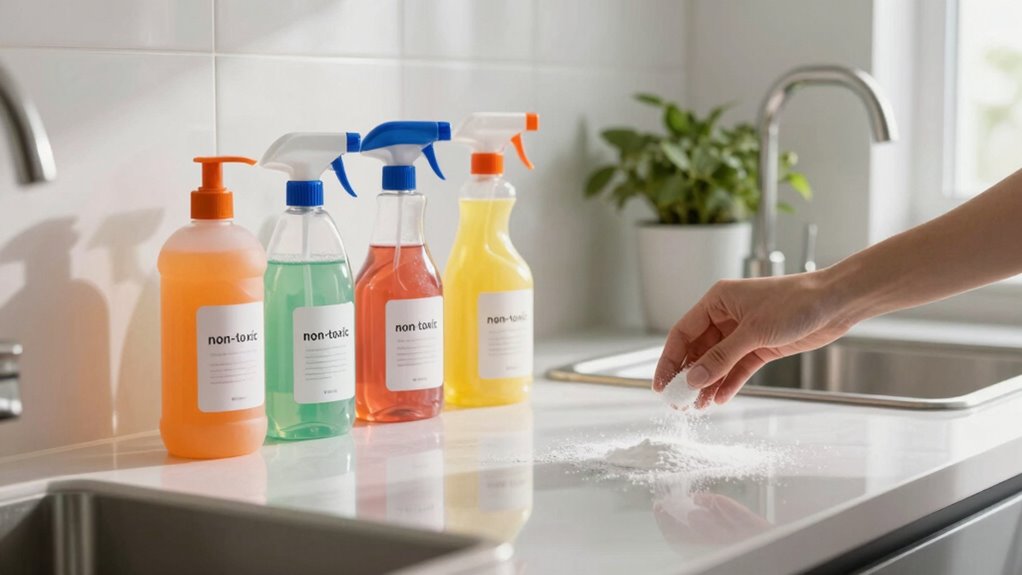
Many people believe that non-toxic cleaning products are completely risk-free, but that’s a common myth. Myth debunking shows that “non-toxic” doesn’t mean completely hazard-free, just safer than traditional options. One ingredient misconception is thinking all natural ingredients are harmless; some plant extracts can cause allergies or irritation. Conversely, synthetic ingredients aren’t automatically dangerous. Another myth is that if a product is labeled “chemical-free,” it’s automatically safe—yet, many natural substances can be harmful in concentrated forms. It’s essential to understand that “non-toxic” refers to products with ingredients that pose minimal health risks, not zero risk. Educating yourself on ingredient misconceptions helps you make better choices and avoid falling for marketing claims that oversimplify what “non-toxic” truly means. Recognizing the difference between natural and synthetic ingredients can help consumers make more informed decisions regarding safety and efficacy. Additionally, understanding ingredient safety assessments can provide deeper insights into how products are evaluated for health risks. Being aware of the impact of concentration levels of various substances is also crucial in assessing their potential toxicity. Moreover, understanding regulatory standards can help clarify how safety claims are verified and communicated to consumers.
How Can I Easily Choose Safer, Non-Toxic Cleaning Solutions?

Choosing safer, non-toxic cleaning solutions doesn’t have to be complicated; instead, it begins with reading labels carefully and understanding ingredient lists. Look for products that emphasize eco friendly packaging, which reduces environmental impact. Focus on cleaning solutions made with plant based ingredients, as these are often safer for your family and the planet. Avoid harsh chemicals by checking for natural certifications or labels that specify non-toxic, biodegradable, or cruelty-free formulas. Additionally, opt for brands committed to transparency about their ingredients. Many eco-friendly companies now highlight their use of sustainable packaging and plant derived components, making it easier to choose products aligned with your values. When selecting products, consider the Gold IRA market, as some brands align their values with transparency and trustworthiness. Being aware of potential vulnerabilities in cloud services can also guide you toward companies that prioritize security and transparency. Incorporating scientific skepticism into your research can help distinguish genuinely safe products from those with misleading claims. Understanding the importance of piercing care and hygiene can also help you select cleaning products that are gentle enough for sensitive skin and avoid irritation. Recognizing the benefits of Floating on Water can inspire you to explore natural, water-based cleaning methods that minimize chemical use. With a little research, you can confidently select safer, non-toxic cleaning solutions that protect your home and the environment.
Frequently Asked Questions
Are There Certifications That Guarantee a Cleaning Product Is Truly Non-Toxic?
Yes, there are certifications that guarantee a cleaning product is truly non-toxic. Look for certification standards like EPA Safer Choice, Green Seal, or USDA Organic, which set safety benchmarks for non-toxic ingredients. These labels ensure the product meets strict safety and environmental criteria, giving you confidence that you’re using a genuinely non-toxic cleaner. Always check the certification details to verify the product’s safety claims before purchasing.
How Do Natural Ingredients Compare to Synthetic Ones in Safety?
Natural ingredients generally offer better chemical safety because they’re often less harsh and more biodegradable. You can usually trust ingredient transparency with natural options, making it easier to understand what’s in your cleaner. Synthetic ingredients might pose more risks, especially if they contain undisclosed chemicals. Always check labels and certifications to guarantee safety, but natural ingredients tend to be gentler and safer for your home and the environment.
Can Non-Toxic Cleaners Effectively Disinfect as Well as Conventional Products?
Non-toxic cleaners can effectively disinfect if they have proper chemical efficacy and ingredient transparency. You should check labels for proven disinfectant ingredients like essential oils or natural compounds with antimicrobial properties. While they might not work as quickly as conventional products, many non-toxic options are suitable for everyday disinfecting needs. By understanding ingredient transparency, you can confidently select non-toxic cleaners that maintain safety without sacrificing disinfecting power.
Are There Specific Brands Known for Reliable Non-Toxic Cleaning Options?
You’ll find that some brands, like Seventh Generation and Ecover, stand out for their reputation in reliable non-toxic cleaning options. Ironically, their transparency about ingredients makes them trustworthy, unlike many traditional brands hiding behind vague labels. When choosing, look for those with a strong reputation and clear ingredient lists. This way, you guarantee you’re cleaning safely without sacrificing effectiveness—proof that transparency truly matters in non-toxic cleaning.
How Should I Store Non-Toxic Cleaning Products Safely at Home?
You should store non-toxic cleaning products in a secure, child-proof cabinet away from food and drinks to guarantee storage safety. Keep them in their original containers with clear labels, and avoid transferring them to unmarked bottles. Always make sure lids are tight to prevent accidental ingestion. Regularly check for leaks or damages, and educate everyone in your household about the importance of safe storage to avoid accidents.
Conclusion
Knowing what “non-toxic” truly means helps you make safer choices for your home and family. Remember, over 60% of cleaning products contain chemicals linked to health issues. By understanding labels and ingredients, you can avoid harmful substances and select effective, safer options. Stay informed and cautious—your health is worth it. Making smarter cleaning choices today can lead to a healthier home tomorrow.