
To charge LiFePO4 batteries safely from shore power, make certain you use a charger with a proper LiFePO4-specific profile that includes bulk, absorption, and float stages. Always verify your BMS and charger are working correctly and monitor voltage, current, and temperature during charging. Avoid equipment not designed for LiFePO4 to prevent damage and shorten battery life. Following these guidelines helps maximize lifespan and safety—continue exploring to learn more about optimizing your charging setup.
Key Takeaways
- Use a charger with a LiFePO4-specific profile to ensure proper charging stages and prevent overcharging.
- Verify that the BMS is functioning correctly to monitor voltage, current, and temperature during shore power charging.
- Avoid using chargers designed for lead-acid batteries; select equipment compatible with LiFePO4 chemistry.
- Regularly monitor charging parameters to detect and address issues early, safeguarding battery health.
- Follow recommended charging stages—bulk, absorption, float—and adhere to manufacturer guidelines for safe operation.
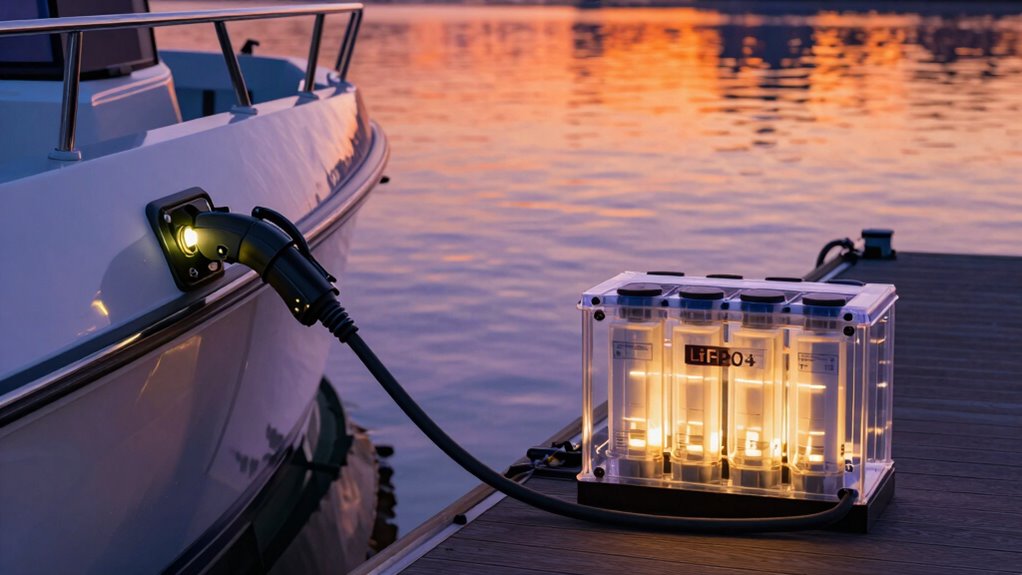
Switching your shore power system to LiFePO4 batteries offers a reliable and efficient way to enhance your boat’s energy management. These batteries are known for their safety, longevity, and stable performance, but to maximize their benefits, proper battery management and adherence to appropriate charging protocols are essential. When you connect your boat to shore power, you need to guarantee that the charging process respects the specific needs of LiFePO4 chemistry to prevent damage and extend battery life.
First, understanding battery management is vital. LiFePO4 batteries require a well-designed battery management system (BMS) that monitors voltage, current, temperature, and state of charge. This system protects against overcharging, over-discharging, and overheating—conditions that could shorten your battery’s lifespan or cause safety issues. When you’re plugged into shore power, your BMS should automatically regulate charging, but it’s still wise to verify that your setup includes proper safeguards. This way, you can avoid potential issues like thermal runaway or capacity fade, ensuring your batteries stay healthy for years to come.
Charging protocols are equally important. Unlike lead-acid batteries, LiFePO4 batteries have specific charging curves. They typically require a three-stage charging process: bulk, absorption, and float. During the bulk phase, your charger delivers maximum current until the battery reaches a set voltage threshold. In the absorption stage, the charger reduces current to safely top off the batteries without pushing voltage too high. Finally, the float stage maintains a steady voltage to keep the batteries topped up without overcharging. Many modern chargers are equipped with LiFePO4-specific profiles, making it easier for you to follow the correct protocols. If your charger isn’t compatible, you risk damaging the batteries or reducing their lifespan.
Additionally, choosing chargers with proper charge profiles designed for LiFePO4 batteries can significantly improve their longevity and safety. It’s also important to avoid common mistakes, like using chargers designed for lead-acid batteries or failing to set the correct charging parameters. Using equipment not optimized for LiFePO4 can lead to overcharging, which damages the cells, or undercharging, which reduces capacity over time. Regularly monitoring your system’s data—voltage, current, and temperature—helps you catch issues early. Many advanced chargers and battery monitors provide real-time feedback, so you can make adjustments if necessary.
Frequently Asked Questions
Can I Use a Standard Household Outlet for Shore Power?
Yes, you can use a household outlet for standard charging of your LiFePO4 batteries, but you need to make sure it provides the right voltage and current. Avoid overloading the outlet, and consider using a proper charger designed for LiFePO4 batteries. Always follow manufacturer instructions to prevent damage or safety issues. Using a standard household outlet is convenient, but safety precautions are essential to protect your batteries and electrical system.
How Do Temperature Changes Affect Lifepo4 Charging Safety?
Temperature changes impact LiFePO4 charging safety by affecting thermal management and voltage regulation. When it’s too hot, batteries risk overheating, which can shorten lifespan or cause safety issues. Cold temperatures can slow charging or cause uneven voltage regulation. To keep safe, monitor thermal conditions closely, use proper thermal management systems, and verify your charger adjusts voltage according to temperature. This way, you maintain safe, efficient charging regardless of weather variations.
What Are Signs of Overcharging or Undercharging Lifepo4 Batteries?
You’ll notice overcharging signs like excessive heat, swelling, or a sudden voltage spike, while undercharging shows as reduced capacity, sluggish performance, or persistent low voltage readings. To prevent these issues, prioritize battery management and continuously monitor voltage levels. Stay vigilant for any irregularities, and guarantee your charger’s settings are correct. Regularly checking your battery’s status helps maintain safe, ideal performance while extending its lifespan.
Is Special Wiring Needed for Shore Power Connections?
You don’t need special wiring for shore power connections to LiFePO4 batteries, but using proper marine wiring is essential for safety. Make sure your wiring is rated for the current load and is corrosion-resistant to withstand marine environments. Always follow safety precautions, like installing circuit breakers and proper grounding, to prevent electrical hazards. Consulting a marine electrician can help you set up a safe, reliable connection that protects your batteries and boat.
How Often Should I Check My Battery’s Health During Charging?
An ounce of prevention is worth a pound of cure. You should check your battery’s health at least once a month during charging. Regular battery maintenance helps catch issues early and guarantees safe, efficient charging. Keep an eye on voltage and temperature, and look for signs of deterioration. By monitoring your LiFePO4 battery regularly, you extend its lifespan and keep your power system running smoothly.
Conclusion
Switching to shore power for your LiFePO4 batteries is a smart move, but some worry about damaging them. Rest assured, with proper charging practices and quality equipment, you won’t shorten their lifespan. By following recommended voltage and current limits, you’ll enjoy safe, reliable power without risking battery health. Don’t let fears hold you back—embrace this efficient, eco-friendly solution and keep your batteries running smoothly for years to come.