Greywater and water reuse in eco lodges involve collecting wastewater from activities like showers and laundry, then treating it with systems that include filtration, biological treatment, and natural filtration like wetlands or soil beds. These systems allow you to safely reuse water for landscape irrigation, reducing overall water consumption and environmental impact. Implementing proper capture, treatment, and reuse methods helps make certain of safety and sustainability, and there’s much more to explore to optimize these eco-friendly practices.
Key Takeaways
- Greywater from baths, sinks, and laundry is collected separately for reuse, excluding toilet waste.
- Natural filtration systems like wetlands and soil beds treat greywater, removing contaminants biologically and physically.
- Biological treatment with beneficial bacteria helps break down organic matter, enhancing water purity.
- Treated greywater is safely reused for irrigation, landscaping, or greywater gardens, reducing freshwater demand.
- Proper system design, ongoing monitoring, and adherence to regulations ensure safe, effective water reuse in eco lodges.
What Is Greywater and Why Is It Important for Eco Lodges?

Greywater is the wastewater generated from activities like bathing, washing dishes, and laundry, excluding sewage from toilets. It’s a valuable resource for eco lodges aiming to reduce water use and environmental impact. Proper greywater regulation guarantees safe collection and reuse, preventing contamination and health issues. To succeed, you need to prioritize guest education, so visitors understand the importance of conserving water and following guidelines. Clear signage, informational materials, and gentle reminders help guests participate actively in your eco-friendly practices. By managing greywater effectively, you minimize waste, conserve freshwater, and promote sustainability. This approach aligns with eco lodge goals, demonstrating your commitment to environmental stewardship while optimizing resource efficiency. Educating guests fosters cooperation, making greywater reuse seamless and environmentally responsible.
What Are the Main Components of Greywater Recycling Systems?

A greywater recycling system typically includes several key components that work together to treat and reuse wastewater efficiently. First, a collection point gathers greywater from sinks, showers, and laundry. Next, a filtration system removes debris and solids, preventing clogs and ensuring effective greywater treatment. A biological or chemical treatment stage follows, further purifying the water for reuse. Storage tanks hold the treated greywater, making it available for irrigation or other non-potable uses. Pumps facilitate water movement through the system, while control valves help manage flow and prevent contamination. These components work collectively to optimize water conservation, reducing reliance on fresh water sources. Incorporating total-cost clarity into planning ensures long-term affordability and maintenance efficiency. Proper system design also considers initial setup expenses to balance quality and cost-effectiveness. Additionally, understanding the regulatory framework is crucial for compliant and sustainable greywater reuse practices. Considering technology integration can further enhance system performance and adaptability to different environments. Moreover, integrating monitoring systems can help ensure the system operates efficiently and safely over time.
How Do Eco Lodges Capture and Treat Greywater?
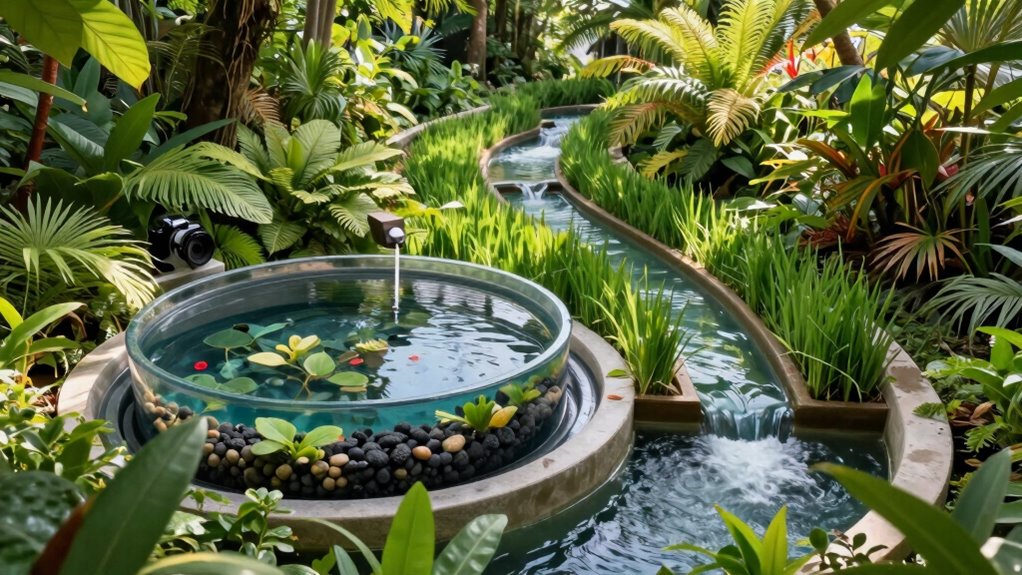
Eco lodges use specialized greywater collection systems to gather wastewater from sinks, showers, and laundry. They rely on natural filtration processes, like wetlands or soil beds, to clean the water effectively. Once treated, the greywater is safely discharged or reused for irrigation, minimizing environmental impact. Implementing Proper system maintenance is essential to ensure the longevity and effectiveness of these eco-friendly water management solutions. Incorporating sustainable water practices can further enhance the ecological benefits of greywater reuse systems, such as integrating natural filtration methods to reduce chemical usage. Understanding wiring basics can be helpful when installing or maintaining these systems to ensure safety and proper function. Additionally, applying water conservation techniques can optimize the overall efficiency of greywater systems and support sustainable living.
Greywater Collection Systems
Many eco lodges actively capture greywater from sinks, showers, and laundry to reduce their reliance on fresh water sources. These collection systems are designed to promote water conservation and minimize ecological impact. You’ll find that they often use specially installed pipes and tanks to direct greywater away from septic systems or sewage, storing it for reuse. The setup is simple yet effective, ensuring greywater is separated from black water and safely diverted. By implementing these collection systems, eco lodges can reuse greywater for irrigation or other non-potable purposes, markedly reducing water consumption. This approach not only conserves resources but also lessens the strain on local water supplies, supporting sustainable tourism practices that prioritize ecological health. Additionally, some systems incorporate water treatment methods to ensure greywater is safe for reuse, further enhancing sustainability practices and environmental protection. Incorporating water recycling techniques can further optimize greywater use and improve overall efficiency. For example, using natural filtration methods can help remove contaminants, making greywater even safer for reuse and reducing the need for chemical treatments. Implementing water monitoring systems can also help eco lodges track the effectiveness of their greywater reuse, ensuring continuous improvement in sustainability efforts.
Natural Filtration Processes
Building on their greywater collection systems, eco lodges often incorporate natural filtration processes to treat the water before reuse. You’ll find plant-based filtration systems, where plants like reeds and grasses absorb nutrients and trap debris, helping to clarify the water naturally. These plants not only filter out contaminants but also provide oxygen to support microbial treatment. This microbial treatment involves beneficial bacteria breaking down organic matter in the greywater, further purifying it. This combination of plant-based filtration and microbial treatment creates a sustainable, chemical-free way to clean greywater. As water passes through the roots and soil, impurities are naturally removed, making it safe for reuse in irrigation or other non-potable applications. Understanding water reuse is essential for implementing effective natural filtration systems in eco lodges. Additionally, biological filtration enhances the overall purification process by working harmoniously with natural elements to maintain water quality. Incorporating natural filtration methods can also reduce reliance on mechanical systems and promote eco-friendly operations, supporting sustainable water management practices.
Safe Discharge Methods
To guarantee greywater is safely discharged, eco lodges implement specialized capture and treatment methods that prevent environmental contamination. They often use septic systems or constructed wetlands designed to handle biodegradation challenges, ensuring organic matter breaks down efficiently. These systems help control odors by incorporating aeration and biological filters, preventing unpleasant smells from escaping. Regular maintenance is essential to address potential clogging or buildup that could compromise treatment effectiveness. Some lodges utilize biofilters or natural soil infiltration to further treat greywater before it reaches groundwater. Proper maintenance protocols are vital for sustaining the effectiveness of these systems over time. Additionally, employing advanced treatment technologies can enhance greywater purification, further supporting environmental safety. Incorporating biological processes into treatment systems is crucial for breaking down organic contaminants effectively. By combining physical, biological, and chemical processes, eco lodges can discharge greywater safely, supporting their sustainability goals. Proper system design and ongoing monitoring and testing ensure continued compliance and environmental safety.
How Do Eco Lodges Reuse Greywater Practically?
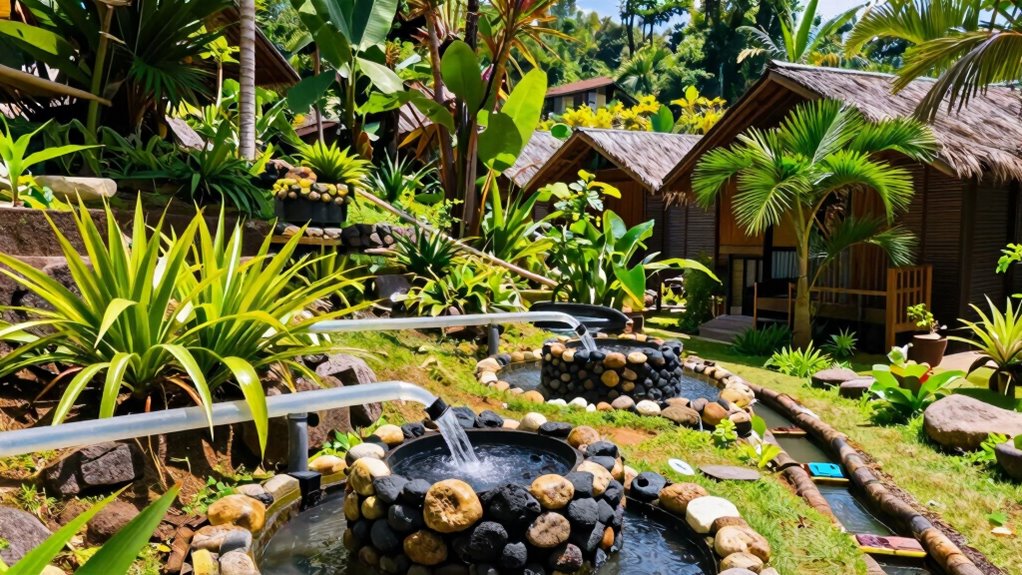
Eco lodges implement practical methods to reuse greywater, transforming wastewater from sinks, showers, and laundry into a valuable resource. You might have heard greywater myths suggesting it’s unsafe, but with proper treatment and filtration, it’s a reliable way to support water conservation techniques. Typically, greywater is diverted through a dedicated plumbing system into subsurface irrigation or greywater gardens. Here’s a simple overview:
| Step | Process | Purpose |
|---|---|---|
| Collection | Greywater flows from fixtures | Capture for reuse |
| Treatment | Filtration and basic cleaning | Remove contaminants |
| Distribution | Irrigation or landscape watering | Reduce freshwater use |
This practical approach minimizes waste, conserves water, and demonstrates eco-friendly principles in action.
What Are the Benefits of Greywater Recycling for Eco-Friendly Lodges?
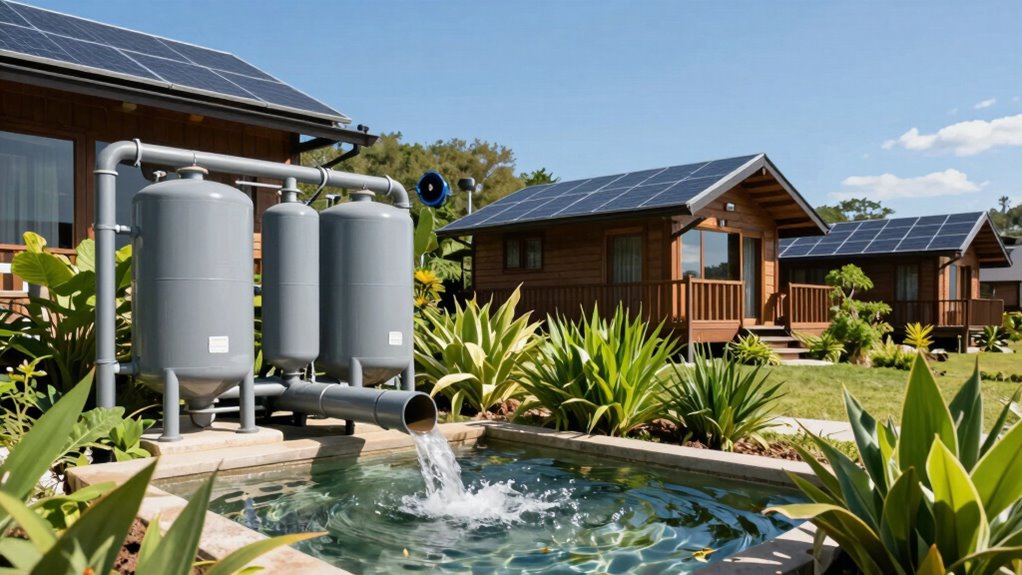
Reusing greywater offers numerous advantages for eco-friendly lodges, making it a practical step toward sustainability. It enhances water conservation efforts, reducing overall water use and easing pressure on local water sources. Here are some key benefits:
Reusing greywater boosts sustainability by conserving water and reducing environmental impact for eco-friendly lodges.
- Reduces water bills, saving money and promoting eco sustainability.
- Decreases demand on municipal water systems, supporting resource preservation.
- Minimizes wastewater discharge, lessening environmental impact.
- Improves resource efficiency by reusing water for irrigation and other non-potable needs.
What Challenges and Best Practices Are Involved in Greywater Systems?
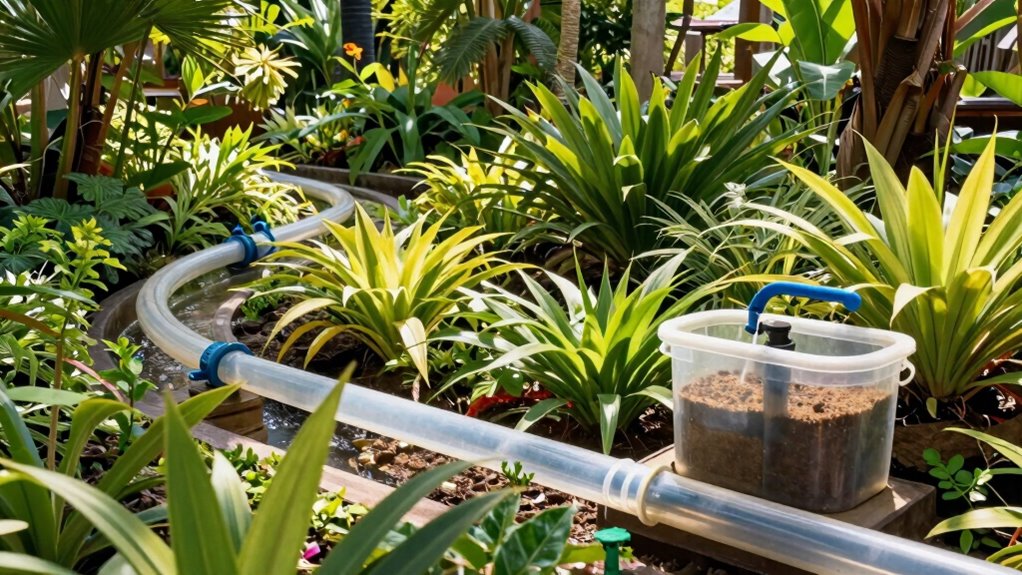
Implementing greywater systems in eco lodges involves steering various challenges, such as ensuring water safety, maintaining system integrity, and complying with regulations. One key concern is preventing greywater contamination, which can pose health risks if not managed properly. Regular system maintenance is essential to avoid blockages, leaks, and bacterial buildup. Best practices include using biodegradable filters and monitoring water quality consistently. To help you navigate these complexities, consider this table:
| Challenge | Best Practice | Outcome |
|---|---|---|
| Greywater contamination | Use appropriate filtering and disinfection | Safer water reuse |
| System maintenance | Schedule regular inspections | Prevent breakdowns |
| Compliance with regulations | Stay updated on local laws | Avoid penalties |
| System integrity | Invest in durable materials | Long-lasting performance |
Frequently Asked Questions
Can Greywater Recycling Systems Be Integrated Into Existing Lodge Infrastructures?
Yes, you can integrate greywater recycling systems into your existing lodge infrastructure. While retrofitting presents challenges like space constraints and system compatibility, careful planning makes it feasible. You’ll need to evaluate your current plumbing and guarantee seamless infrastructure integration. Engaging professionals helps manage retrofitting challenges, ensuring the greywater system works efficiently without disrupting your lodge’s operations, ultimately promoting sustainable water use.
What Maintenance Is Required for Greywater Systems in Eco Lodges?
Maintaining your greywater system means meticulous monitoring and regular repairs. You’ll need to conduct system inspections to catch issues early and perform consistent filter cleaning to keep water flowing freely. It’s essential to clear clogs, check for leaks, and verify proper functioning. This diligent upkeep guarantees your eco lodge’s water reuse system remains sustainable, safe, and smoothly supporting your eco-enthusiast guests’ experience.
Are There Any Legal Regulations Governing Greywater Reuse in Eco Lodges?
Yes, you need to guarantee legal compliance and adhere to regulatory standards for greywater reuse in eco lodges. Local laws vary, so check with regional authorities to understand specific requirements. You should obtain necessary permits, follow guidelines for water quality and system design, and keep detailed records. Staying compliant helps avoid fines, ensures safety, and promotes sustainable practices that benefit your eco lodge’s reputation.
How Does Greywater Recycling Impact Overall Water Consumption in Eco Lodges?
Greywater recycling markedly reduces your eco lodge’s overall water consumption, promoting better water conservation. By reusing water from sinks, showers, and laundry, you lower demand on fresh water sources and decrease wastewater output. This practice not only enhances your lodge’s environmental impact but also cuts costs. Implementing greywater systems demonstrates your commitment to sustainability, attracting eco-conscious guests and setting a positive example for responsible water management.
What Are the Potential Health Risks Associated With Greywater Reuse?
Imagine greywater as a gentle stream, but hidden dangers lurk beneath. You face potential health risks like pathogen transmission and contaminant exposure if greywater isn’t properly treated. These risks can cause illnesses if harmful microorganisms or chemicals come into contact with residents or staff. To avoid this, guarantee rigorous treatment and maintenance of greywater systems, protecting everyone from unseen dangers and safeguarding your eco lodge’s sustainable charm.
Conclusion
By embracing greywater recycling, eco lodges can considerably reduce water usage—up to 40% according to recent studies—helping the environment and lowering operational costs. Implementing effective systems not only promotes sustainability but also attracts eco-conscious travelers. With proper management and adherence to best practices, you can turn greywater challenges into opportunities for greener hospitality. Ultimately, adopting these solutions makes your lodge more resilient and environmentally responsible, fostering a truly eco-friendly guest experience.