
To approach cultural differences smarter, stay open-minded and curious about others’ norms and customs. Practice patience, listen actively, and observe non-verbal cues to avoid misunderstandings and build trust. Ask clarifying questions and use simple language to guarantee clarity. Respect cultural taboos and show genuine interest in learning about different practices. By embracing humility and adaptability, you turn challenges into opportunities for meaningful connections. Keep exploring these strategies to become more confident in steering diverse cultures.

Get travel and outdoor gear delivered free with Prime
- Fast, free delivery on millions of items
- Prime Video, Amazon Music and more included
- Member-only deals all year
Key Takeaways
- Educate yourself about different cultural norms and non-verbal cues to foster respectful understanding.
- Practice active listening, patience, and ask clarifying questions to navigate unfamiliar cultural interactions.
- Use simple language, slow speech, and gestures to bridge language and communication gaps effectively.
- Approach cultural differences with humility, curiosity, and openness to transform misunderstandings into learning opportunities.
- Respect cultural taboos and adapt your behavior to show genuine interest and build trust across cultures.
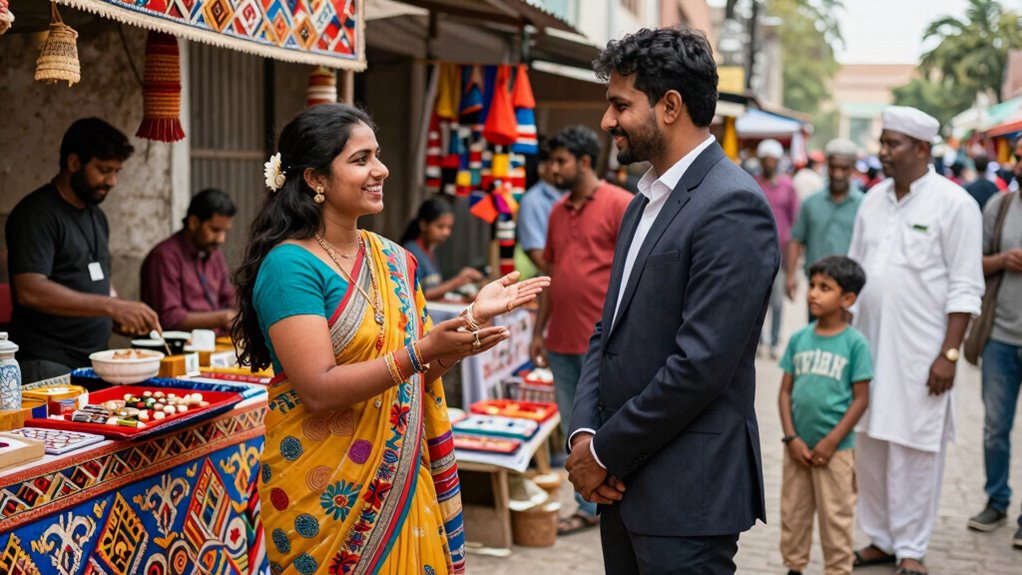
Understanding cultural differences is essential in today’s interconnected world, as it helps you navigate diverse social and professional landscapes more effectively. When you’re engaging with people from different backgrounds, you might encounter language barriers that make communication more challenging. These barriers aren’t just about words; they include differences in tone, idioms, and expressions that can lead to misunderstandings. To approach this smarter, you need to be patient and adaptable, recognizing that language isn’t the only way people communicate. Non-verbal cues, such as gestures, facial expressions, and eye contact, often carry as much meaning as words, and these can vary widely across cultures. For example, what’s considered polite in one culture might be seen as intrusive in another. Being aware of these subtle signals helps you interpret conversations more accurately and respond appropriately.
Rather than rushing to fill silence or correct misunderstandings, take a moment to observe and listen. Pay attention to body language, posture, and facial expressions—they often reveal feelings and attitudes that words might not express openly. When you notice someone’s non-verbal cues, acknowledge them respectfully. This shows that you’re genuinely interested and attentive, which fosters mutual understanding. If language barriers are a concern, don’t hesitate to ask clarifying questions or paraphrase what you’ve heard. Using simple language, speaking slowly, and avoiding idioms can make your communication clearer and more accessible. Sometimes, a smile or a nod can bridge gaps better than words, signaling friendliness and openness across cultural divides.
Building cultural awareness also involves educating yourself about the norms and customs of the people you’re interacting with. This knowledge helps you interpret non-verbal cues correctly and avoid offending others unintentionally. Remember, what’s acceptable in one culture might be taboo in another, so approach unfamiliar behaviors with curiosity rather than judgment. Showing respect and willingness to learn creates a positive environment for dialogue. Ultimately, approaching cultural differences with humility and openness allows you to transform potential misunderstandings into opportunities for connection. The smarter way isn’t about avoiding differences; it’s about embracing them with mindfulness, patience, and genuine interest. As you develop this approach, you’ll find that even communication barriers become manageable, and your relationships—both social and professional—become richer and more meaningful. Recognizing the importance of cultural norms can greatly enhance your ability to connect across diverse backgrounds.
cultural communication guidebook
As an affiliate, we earn on qualifying purchases.
As an affiliate, we earn on qualifying purchases.
Frequently Asked Questions
How Can I Effectively Learn About Unfamiliar Cultures?
To effectively learn about unfamiliar cultures, you should focus on building cultural awareness and overcoming language barriers. Engage with local people, ask questions, and listen actively to understand their customs and perspectives. Use language learning tools or translation apps to bridge communication gaps. Immerse yourself in local traditions, media, and cuisine. Being respectful, open-minded, and curious helps you gain authentic insights and develop meaningful connections across cultures.
What Common Mistakes Should I Avoid in Cross-Cultural Interactions?
You should avoid making quick judgments based on cultural assumptions, as they can lead to misunderstandings. Challenge stereotypes by staying open-minded and asking questions instead of relying on preconceived notions. Be careful not to impose your own cultural norms, and always listen actively. Recognize that differences are not deficiencies, and approach every interaction with respect and curiosity. This helps build trust and fosters meaningful cross-cultural connections.
How Do Cultural Differences Impact International Business Negotiations?
Cultural differences considerably impact international business negotiations by shaping your expectations and strategies. Your cultural assumptions can lead to misunderstandings if you overlook varying negotiation styles, such as direct versus indirect communication. Recognizing these differences helps you adapt, showing respect and building trust. By understanding that negotiation styles differ widely, you can navigate discussions more effectively, avoid miscommunications, and reach mutually beneficial agreements across diverse cultural contexts.
What Are Practical Tips for Adapting to New Cultural Environments Quickly?
You can master new cultural environments faster than a rocket soaring to the stars by practicing cultural sensitivity and employing effective adaptation strategies. Immerse yourself in local customs, learn key phrases, and observe social cues. Stay open-minded, ask respectful questions, and be patient with your learning curve. Embrace differences with curiosity, and you’ll build trust and rapport quickly, turning unfamiliar settings into comfortable, productive spaces.
How Can Technology Facilitate Better Understanding of Diverse Cultures?
Technology helps you understand diverse cultures by enabling virtual exchange programs, where you interact with people worldwide, gaining firsthand insights. Cultural simulations offer immersive experiences, allowing you to practice exploring different customs and scenarios safely. These tools foster empathy and awareness, making cultural learning engaging and accessible. By leveraging virtual exchange and cultural simulations, you can deepen your understanding, break down stereotypes, and build meaningful connections across cultural boundaries.
Conclusion
So, next time you clash over customs or clash over language, remember: the smarter way isn’t to win with your way but to dance to theirs. Embrace the chaos, learn a little, laugh a lot, and maybe—just maybe—become the cultural chameleon you never knew you could be. Because in the grand game of global diplomacy, it’s not about changing the world, but changing your attitude—preferably to “I get it.” Cheers to smarter, sassier cultural savvy!
Fall Picks
fall essentials
As an affiliate, we earn on qualifying purchases.