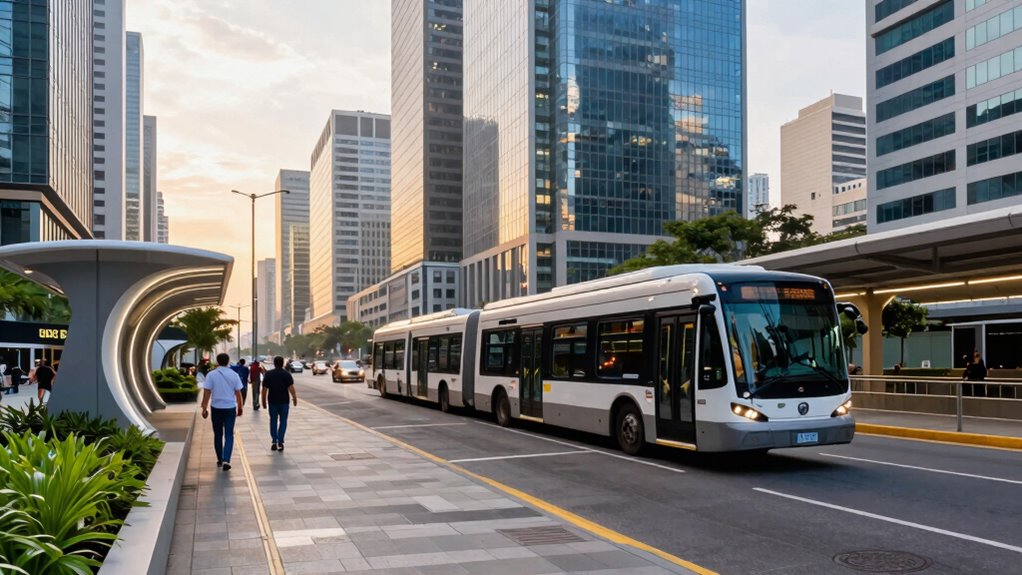

Panama City’s transit system is designed for smooth connectivity, combining modern infrastructure, bus rapid transit, and the metro to reduce congestion and make travel easier. Its strategic planning links neighborhoods and districts efficiently, encouraging public transport over private cars. The system adapts to growth and preserves sustainability, making your daily commute less stressful. If you keep exploring, you’ll discover how smart urban planning continues to shape Panama City’s effortless transportation network.

Get travel and outdoor gear delivered free with Prime
- Fast, free delivery on millions of items
- Prime Video, Amazon Music and more included
- Member-only deals all year
Key Takeaways
- Integrated transit systems connect neighborhoods efficiently, reducing travel time and congestion across Panama City.
- The Panama Metro and BRT lines are strategically planned for future expansion and optimal coverage.
- Urban planning emphasizes sustainable, accessible infrastructure that adapts to demographic and economic changes.
- Prioritizing public transportation encourages residents to choose transit over private vehicles, easing surface traffic.
- Strategic investments and modern infrastructure support smooth, reliable commutes, enhancing overall city mobility.
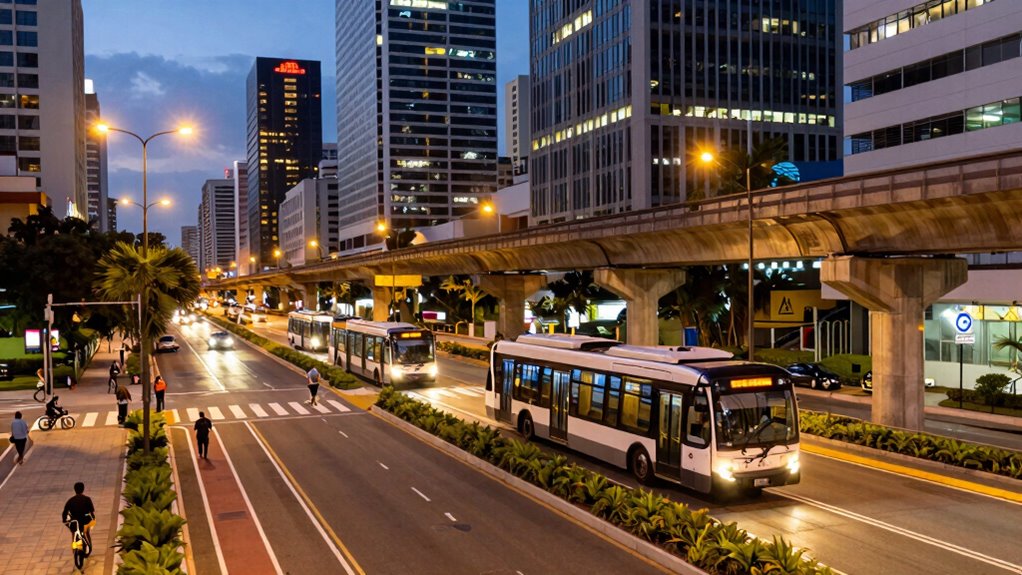
Panama City’s transit system exemplifies efficient urban planning, seamlessly connecting neighborhoods and easing daily commutes. This impressive network didn’t develop overnight; it reflects a thoughtful evolution rooted in the city’s historical development. Over the decades, urban planning in Panama City has adapted to rapid growth, balancing modernization with preservation. The city’s transit infrastructure has grown out of a clear understanding of its unique geography and the needs of its residents. As the city expanded, planners prioritized creating a system that would reduce congestion, improve mobility, and support economic activity.
Panama City’s transit system reflects decades of strategic planning, balancing growth, modernization, and preservation for efficient mobility.
Historically, Panama City experienced bursts of rapid growth, especially after the construction of the Panama Canal, which positioned it as an essential hub for international trade. This economic boom prompted a surge in population, leading to the need for a more organized transit approach. Early efforts focused on basic road networks, but as the city’s size increased, so did the complexity of its transportation needs. Urban planning became more strategic, aiming to link residential areas with commercial and industrial zones, making daily commutes more manageable. The development of bus routes and the introduction of more structured transit corridors laid the groundwork for the modern system. A comprehensive urban strategy has been essential in guiding these developments, ensuring that growth remains sustainable and well-coordinated. Additionally, the city’s adaptability to growth has been crucial in maintaining an efficient transit network that can evolve with changing demands.
Today, the city’s transit logic is a product of decades of strategic planning that emphasizes connectivity and sustainability. Modern urban planning principles have been integrated into new projects, ensuring that the transit system evolves alongside the city’s growth. The Panama Metro, launched in 2014, exemplifies this forward-thinking approach. It was designed not just as a transportation option but as a catalyst for urban development, reducing surface traffic and connecting key districts efficiently. The Metro’s routes follow detailed planning, considering current traffic patterns and future expansion needs, which is a proof to the city’s extensive approach to urban planning. Additionally, the integration of public transit systems demonstrates the city’s commitment to a cohesive transportation network that adapts to future demands.
Moreover, the ongoing development of bus rapid transit (BRT) lines complements the metro system, further enhancing the city’s transit logic. These systems are carefully planned to serve densely populated areas, reduce travel times, and encourage public transportation use over private vehicles. This comprehensive planning approach also incorporates sustainable transportation initiatives to minimize environmental impact and optimize resource use. The city’s thoughtful urban planning ensures that infrastructure investments are sustainable and adaptable, reflecting a deep understanding of demographic shifts and economic trends. This holistic approach to transit development keeps Panama City’s transportation network resilient, efficient, and more accessible than many would expect, making daily life smoother for residents and visitors alike.
As an affiliate, we earn on qualifying purchases.
Frequently Asked Questions
How Does the Transit System Handle Peak-Hour Congestion?
During peak hours, you’ll find the transit system manages congestion efficiently through frequent, reliable services that reduce wait times. The fare remains affordable, encouraging more people to use public transit instead of cars, which eases traffic. This focus on transit reliability and fare affordability helps keep the system moving smoothly during busy times, making your commute less stressful and more predictable. You’ll appreciate how well the system adapts to peak-hour demands.
Are There Any Future Expansion Plans for Panama City’s Transit Network?
Yes, Panama City plans to expand its transit network. You’ll see increased transit funding aimed at improving service and infrastructure, making commutes smoother. Fare adjustments are also on the horizon to support these upgrades without burdening riders. These efforts will enhance connectivity and capacity, ensuring the transit system can meet future demands. So, if you’re a regular commuter, expect better, more efficient transit options soon.
What Safety Measures Are in Place for Transit Users?
Safety measures in Panama City’s transit system balance reassurance with efficiency. You’ll notice security personnel actively patrolling, ensuring a safe environment, while fare discounts encourage responsible use. These combined efforts create a secure space where you can travel confidently, knowing your safety is prioritized. The contrast between affordability and security highlights the city’s commitment to making transit accessible and safe for everyone, fostering trust and comfort on every journey.
How Accessible Is the Transit System for Disabled Passengers?
You’ll find the transit system in Panama City quite accessible for disabled passengers. It offers accessible features like low-floor buses, audio-visual announcements, and tactile paving to assist navigation. User assistance is readily available, with staff trained to support those with mobility challenges. These features work together to make traveling easier and more comfortable, ensuring everyone can navigate the city’s transit system confidently and independently.
What Are the Costs of Using Panama City’s Transit Options?
You’ll find Panama City’s transit costs quite affordable, with bus fares typically around $0.35, making it budget-friendly for daily travel. Fare transparency is excellent, so you always know what you’re paying, and the system’s high transit reliability ensures you won’t face unexpected costs or delays. Notably, over 90% of commuters rely on public transit, emphasizing affordability and effectiveness. This combination makes steering the city both economical and hassle-free.
Conclusion
You might not expect it, but Panama City’s transit system works so seamlessly that it almost feels like fate. The way the city’s infrastructure aligns with your daily needs isn’t just coincidence; it’s a carefully designed puzzle coming together just as you need it. When everything clicks into place—whether you’re catching a bus or crossing a bridge—it reminds you that sometimes, the city’s transit logic is precisely what makes this place feel unexpectedly easier.
Fall Picks
fall essentials
As an affiliate, we earn on qualifying purchases.