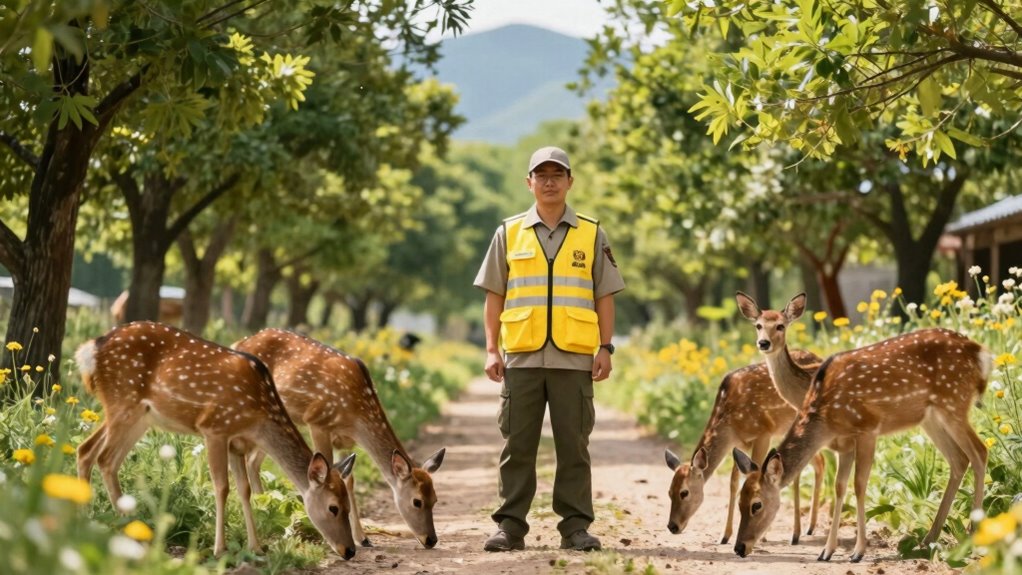

To stay safe while enjoying Jasper’s wildlife, observe animals from a distance and avoid approaching or feeding them. Keep noise levels low, stay on designated trails, and watch for signs like tracks or rustling bushes that indicate nearby animals. Always carry safety gear and know how to react if you encounter wildlife in distress. Following these simple rules helps protect both you and the animals. If you continue, you’ll discover more ways to keep everyone safe.
Key Takeaways
- Observe wildlife from a safe distance and avoid approaching or feeding animals.
- Stay on designated trails to protect habitats and prevent startling wildlife.
- Keep noise levels low and speak softly to prevent stressing animals.
- Carry emergency supplies and be familiar with safety procedures for trail and wildlife encounters.
- Report distressed or injured animals to wildlife authorities instead of attempting rescues.
Why Wildlife Safety Matters When Visiting Jasper
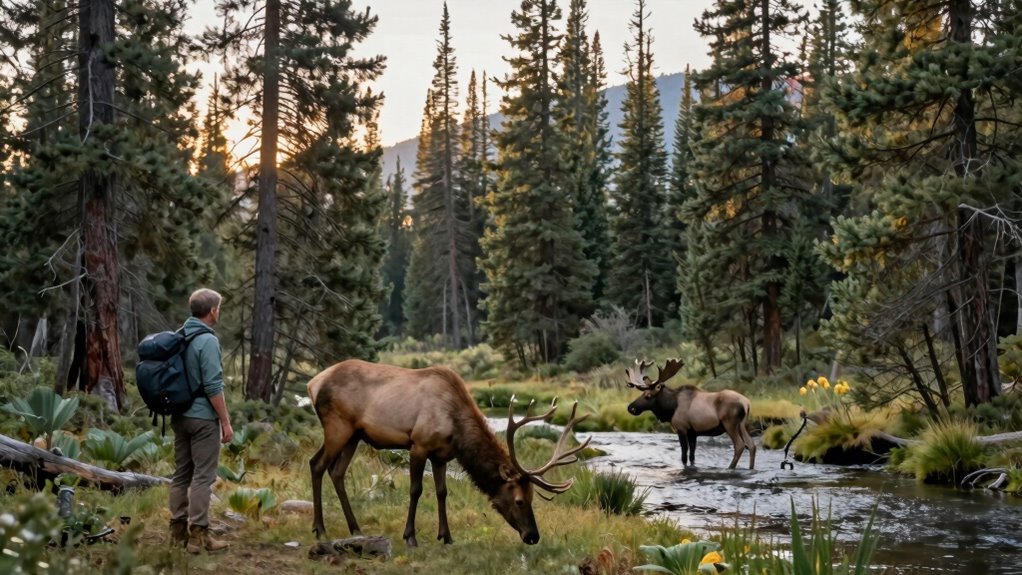
Visiting Jasper offers incredible opportunities to see wildlife up close, but maintaining safety for both you and the animals is essential. Understanding wildlife behavior helps you recognize signs of stress or aggression, preventing dangerous encounters. By respecting animal cues, you avoid startling or provoking them, which keeps everyone safe. Additionally, habitat preservation is critical; staying on designated trails and avoiding disturbing natural areas protects the animals’ environment. When you follow these practices, you help ensure that Jasper’s ecosystems remain healthy and vibrant. Being aware of animal behavior can help you respond appropriately and avoid conflicts. Recognizing animal communication cues is vital for interpreting their responses and maintaining a safe distance. Your awareness of wildlife behavior and habitat preservation not only safeguards your well-being but also supports the conservation of these incredible creatures. Practicing wildlife safety promotes responsible tourism and minimizes human impact, ensuring that Jasper’s wildlife continues to thrive for future visitors to enjoy. Furthermore, understanding non-verbal signals helps you gauge when animals are comfortable or stressed, aiding in safer wildlife viewing.
How to Recognize Wildlife and Respond Safely
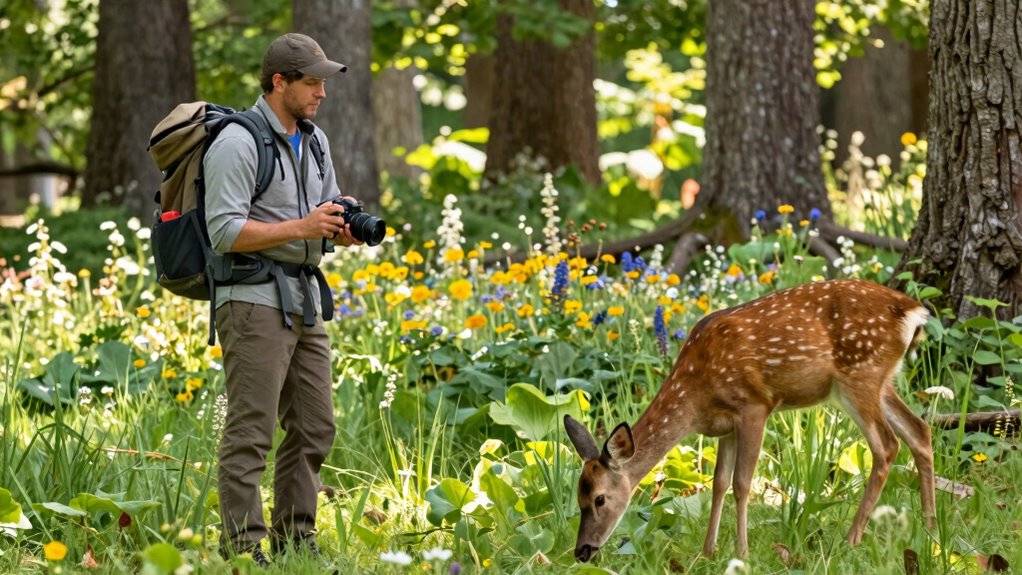
How can you tell if wildlife is nearby, and what’s the best way to respond? You’ll notice clues like animal behavior—such as rustling bushes, sudden movement, or warning calls—or signs of habitat disturbance, like trampled plants or tracks. Recognizing these signs helps you stay alert and act responsibly. When you spot wildlife, keep your distance and avoid startling them. Remember these key points:
Spot wildlife by watching for rustling, movement, or tracks; stay calm, keep distance, and act responsibly.
- Observe animal behavior calmly without approaching
- Look for habitat disturbance as a sign of nearby animals
- Move slowly and speak softly to avoid provoking wildlife
- Being aware of electric dirt bike horsepower can also help you understand the energy and movement of nearby animals, especially if you’re riding in areas where bikes are common.
The Key Rules for Respecting Wildlife and Their Habitats

To truly respect wildlife and their habitats, you need to follow key rules that minimize your impact. Avoid wildlife feeding, as it can alter animals’ natural behaviors and make them dependent on humans. Instead, observe from a distance to prevent habitat disturbance, which can harm plants and animal homes. Stay on designated trails to avoid trampling vegetation and disturbing nesting sites. Keep noise levels down to prevent scaring animals away or causing stress. Never leave trash behind; litter can pollute habitats and attract animals to dangerous human areas. Respect boundaries and signs that mark sensitive zones. Additionally, being aware of local safety guidelines and wildlife awareness best practices helps ensure a safe and respectful experience for both visitors and animals. Practicing ethical wildlife viewing supports conservation efforts and preserves natural ecosystems. Remember that habitat preservation is essential for maintaining healthy ecosystems and ensuring the survival of diverse species. Engaging in conservation education can further enhance your understanding of local wildlife needs. Being mindful of human-wildlife interactions can help prevent conflicts and promote coexistence. By following these rules, you help protect wildlife and ensure their habitats remain healthy and undisturbed for generations to come.
Tips for Staying Safe While Exploring Trails
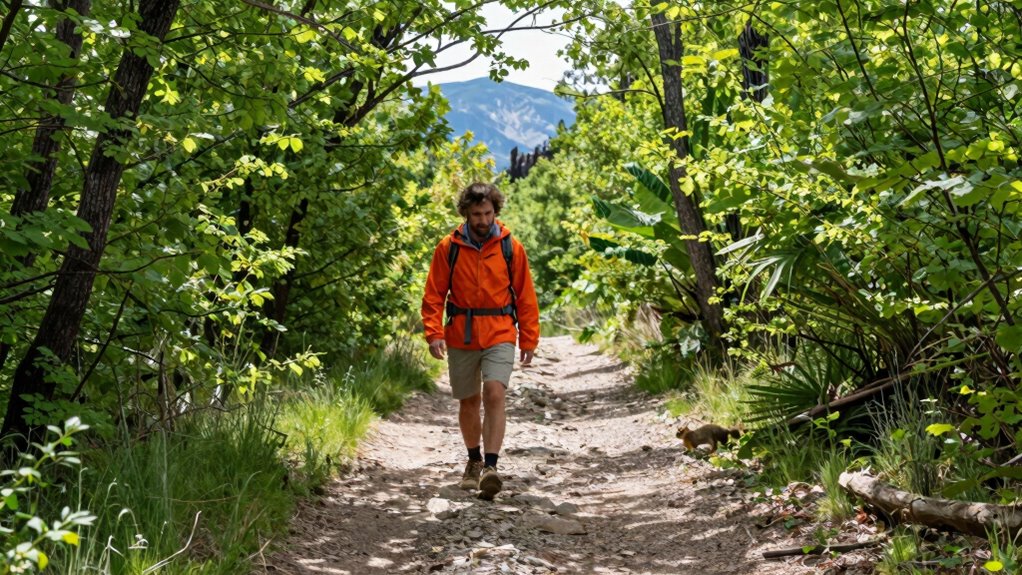
Exploring trails safely requires staying alert and prepared at all times. To protect yourself and respect trail etiquette, follow these essential tips:
- Keep your distance from wildlife and avoid sudden movements to prevent startling animals or provoking defensive behavior.
- Carry a basic emergency kit, including a whistle, flashlight, and first aid supplies, to handle unexpected situations.
- Stick to designated trails to minimize environmental impact and reduce your chances of getting lost or injured.
- Being aware of your surroundings and understanding emergency preparedness can make your adventure safer, especially since wildlife encounters can happen unexpectedly on trails.
- Regularly reviewing trail safety guidelines and understanding local regulations can further enhance your safety and ensure a respectful outdoor experience.
Remember, respecting wildlife and trail etiquette isn’t just courteous—it’s crucial for your safety and theirs. Stay vigilant, plan ahead, and enjoy your exploration responsibly.
What to Do if You See Wildlife in Trouble or Distress
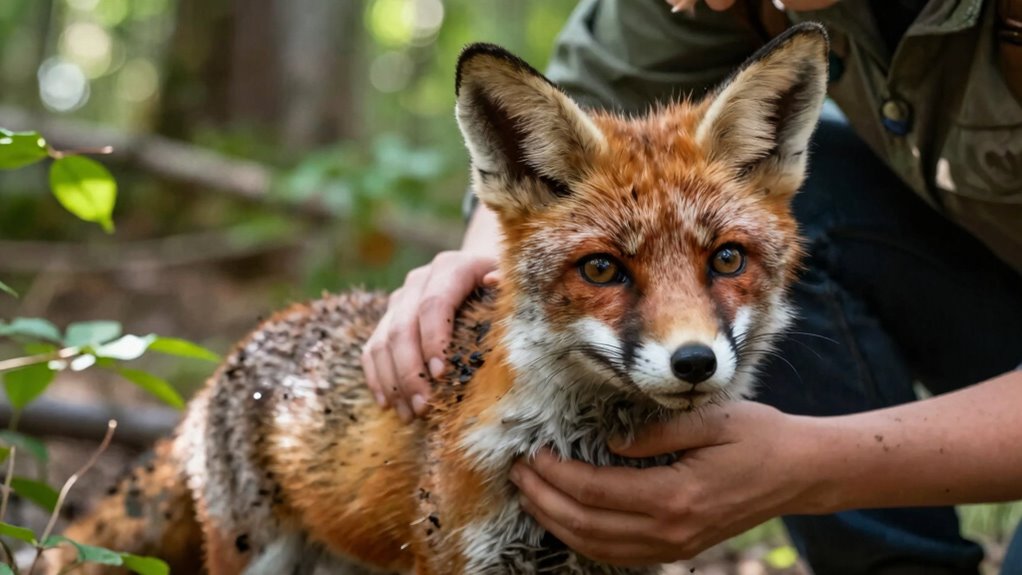
If you come across wildlife in trouble or distress, it’s important to act quickly and responsibly. Your first step is to assess the situation without approaching too closely. If possible, try to identify the species and observe its behavior while maintaining a safe distance. Avoid tracking wildlife or attempting to move injured animals yourself, as this can cause further harm. Instead, follow wildlife rescue procedures by calling local wildlife authorities or rescue organizations. Provide clear information about the animal’s location and condition. While waiting for professionals, keep people and pets away from the scene. Remember, your goal is to support the animal’s safety without causing additional stress or injury. Wildlife safety principles can offer guidance on handling wildlife encounters appropriately. Using smart technology such as cameras or sensors can assist in monitoring the situation remotely and ensuring safety for everyone involved. Incorporating sustainable practices like utilizing appropriate gear and understanding animal behavior can also help prevent future incidents. Being informed about wildlife behavior can improve your response and help protect both humans and animals during such encounters. Let trained experts handle the rescue and recovery process.
Frequently Asked Questions
Are There Specific Seasons When Wildlife Interactions Are More Dangerous?
Yes, wildlife interactions can be more dangerous during mating season and migratory periods. During mating season, animals become more territorial and aggressive, increasing the risk of encounters. Migratory periods also see animals crossing roads or moving through areas where people are present, raising the chance of unexpected interactions. Stay alert, keep your distance, and respect wildlife rules during these times to stay safe and avoid disturbing the animals.
How Do Weather Conditions Influence Wildlife Behavior and Safety Precautions?
Wet weather, like rain or fog, can cause animals to become more unpredictable, increasing safety risks. For example, during heavy rain, animals might venture closer to trails seeking dry shelter, risking encounters. Weather influences animal migration and prompts wildlife to adapt behaviorally—such as seeking cover or becoming more territorial. You should stay alert, reduce noise, and give animals space, especially during changing weather conditions, to stay safe.
Can Wildlife Become Accustomed to Human Presence and Lose Their Natural Fear?
Wildlife can become accustomed to human presence through habituation, often losing their natural fear. When animals cross the human wildlife boundaries repeatedly, they may start to associate people with food or safety, risking dangerous encounters. To prevent this, always maintain respectful distances, avoid feeding wildlife, and follow safety guidelines. Your actions help preserve their natural behaviors and keep everyone safe, ensuring wildlife remains wary and less likely to approach humans.
What Equipment Should I Carry for Wildlife Encounters in Jasper?
Think of your wildlife encounter like a dance—you need the right steps and gear. Carry safety gear like bear spray, a flashlight, and a whistle. Wear neutral colors to blend in and stay aware of your surroundings. I once spotted a moose calmly grazing as I quietly watched, thanks to my wildlife awareness. These tools help you stay safe and respectful, ensuring memorable, safe encounters in Jasper’s wild beauty.
Are There Any Local Myths or Misconceptions About Wildlife Safety in Jasper?
You might hear myths about wildlife safety in Jasper, but don’t buy into them. Myth busting shows that most safety myths, like feeding animals or approaching them, can be dangerous. Keep your distance, stay calm, and never attempt to feed or touch wildlife. Trust the rules and local advice to avoid misunderstandings or accidents. Staying informed and cautious guarantees your safety and helps protect the animals too.
Conclusion
Remember, respecting wildlife keeps both you and animals safe—like giving them space to thrive. While it’s tempting to get close or snap pictures, doing so can cause stress or harm. Think of wildlife as part of the wilderness’s heartbeat, not just scenery. Staying cautious and respectful lets you enjoy Jasper’s beauty without disturbing its delicate balance. In this wild playground, your mindful actions make all the difference—preserving the magic for everyone, including the creatures that call it home.