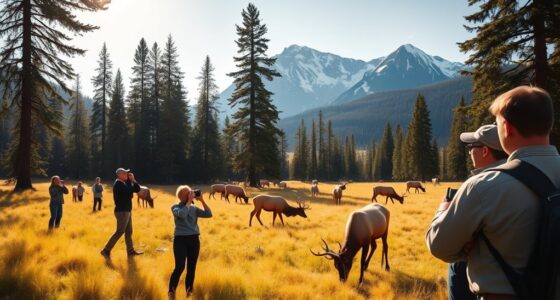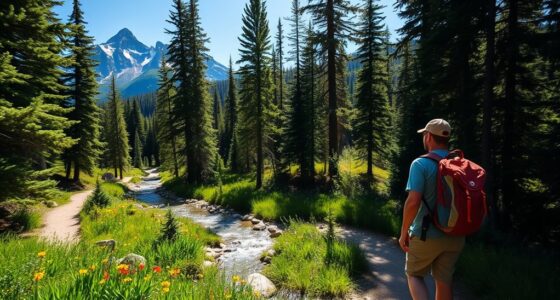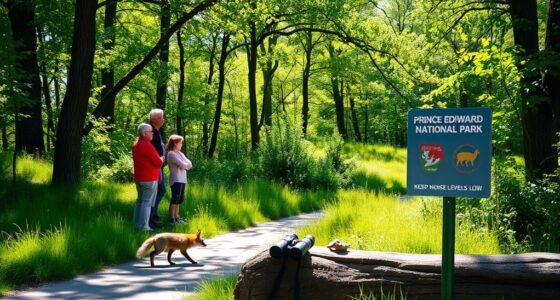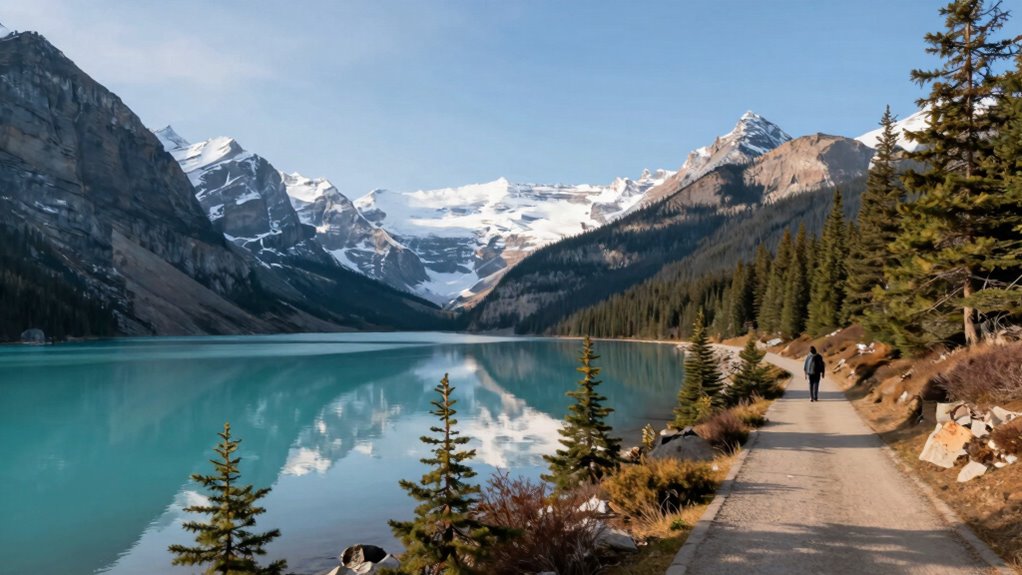

To approach Banff responsibly, stick to designated trails and observation points to protect the environment and avoid adding to the crowd. Keep a safe distance from wildlife, never feed animals, and dispose of waste properly to minimize your impact. Opt for eco-friendly transportation like shuttles or biking, and choose sustainable accommodations. By respecting local rules and learning about the area’s ecosystems, you help preserve its beauty for future visitors. Keep exploring to learn how you can enjoy Banff sustainably.
Key Takeaways
- Visit during off-peak times to avoid crowds and reduce environmental pressure.
- Use designated trails and observation points to minimize habitat disturbance.
- Opt for eco-friendly transportation options like shuttles or biking to lower emissions.
- Respect local signage, rules, and wildlife distances to preserve the natural environment.
- Stay in eco-conscious accommodations that prioritize sustainability and conservation efforts.
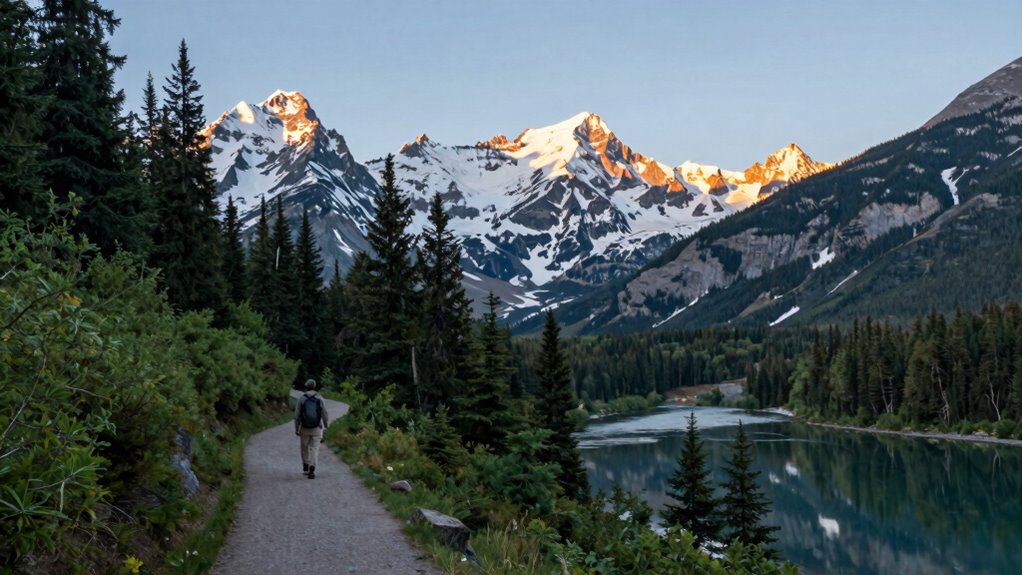
Visiting Banff is a breathtaking experience, but the influx of tourists can quickly turn it into chaos if you’re not careful. To truly enjoy its stunning scenery and natural beauty, you need to be mindful of how your actions impact the environment and local wildlife. Respecting local wildlife means keeping a safe distance and never feeding animals. Feeding wildlife can alter their natural behaviors, make them dependent on human food, and increase the risk of conflicts or accidents. Stay on designated trails and observation points to avoid disturbing their habitats. Remember, these animals have adapted to their environment, and your presence should be unobtrusive. Practicing eco-friendly habits can also help lessen your environmental footprint while exploring the area.
Eco-friendly practices go hand in hand with respecting local wildlife. Opt for sustainable transportation options like shuttles, public transit, or biking rather than renting a gas-powered vehicle. This reduces emissions and helps keep the air cleaner. When choosing accommodations, look for eco-conscious lodges that prioritize energy efficiency, waste reduction, and water conservation. Bring reusable water bottles, utensils, and bags to minimize single-use plastics, which can harm the environment and wildlife. Always dispose of trash properly and leave no trace of your visit.
If you’re planning to hike or explore remote areas, do your part by sticking to established paths and avoiding new trail creation. This prevents erosion and habitat destruction, which can threaten local flora and fauna. Carry out everything you bring in, including food wrappers and other waste, so you leave the landscape pristine for others and wildlife alike. Respect local rules and signage, which are designed to protect the environment and ensure everyone’s safety. Being aware of the biodiversity in the area can also deepen your appreciation for the unique ecosystems you’re visiting. Additionally, learning about the local ecosystem can enhance your understanding of how to minimize your impact during your visit. Recognizing the importance of conservation efforts can inspire more mindful and responsible tourism practices. Furthermore, understanding the impact of tourism on natural sites can help you make more environmentally conscious decisions during your trip.
eco-friendly reusable water bottles
As an affiliate, we earn on qualifying purchases.
As an affiliate, we earn on qualifying purchases.
Frequently Asked Questions
What Is the Best Time of Year to Visit Banff Peacefully?
The best time to visit Banff peacefully is during off-peak travel seasons, typically late fall (October to early November) and early spring (April). During these times, seasonal crowds are minimal, allowing you to enjoy the stunning scenery without the busy crowds. You’ll find the trails less crowded, accommodations more affordable, and a calmer atmosphere overall, making for a more relaxing and immersive experience in Banff.
Are There Hidden or Less Crowded Spots in Banff?
You’ll find hidden gems and less crowded spots in Banff by exploring off-peak visiting times. Venture to lesser-known areas like Sunshine Meadows, which remains peaceful during quieter seasons, or visit Moraine Lake early in the morning before crowds arrive. Consider hiking trails like the Tunnel Mountain or tackling the Lake Louise Shoreline Trail, especially during shoulder seasons. These hidden gems let you enjoy Banff’s beauty without the hustle.
How Can I Support Local Businesses Responsibly During My Visit?
Coincidentally, supporting local businesses means you can make a real difference. You support local sourcing by choosing shops and eateries that prioritize regional products, reducing environmental impact. Cultivate cultural awareness by engaging respectfully with community traditions and stories. By doing so, you help sustain Banff’s unique charm, foster authentic connections, and guarantee your visit benefits the local economy without adding to the tourism strain. Your mindful choices truly matter.
What Are the Transportation Options for Avoiding Traffic Congestion?
You can avoid traffic congestion by using public transit options like the shuttle buses that run frequently around Banff. Renting a car is also a good choice if you want flexibility, but consider car rentals early to secure availability. Combining public transit for popular spots and a rental for off-the-beaten-path adventures helps you navigate smoothly while minimizing congestion, making your visit more enjoyable and less stressful.
Are There Specific Rules for Wildlife Safety in Banff?
You should follow wildlife guidelines closely in Banff to guarantee safety. Always keep a safe distance from animals, typically at least 100 meters for bears and wolves, and avoid feeding them. Respect designated safety zones, and never approach wildlife that appears agitated or is with its young. Staying vigilant and adhering to these rules helps protect both you and the animals, preserving the natural beauty of Banff.
Conclusion
By respecting the environment and fellow visitors, you help keep Banff’s beauty pristine, like a delicate flower in full bloom. Embrace quiet mornings, stick to designated paths, and leave no trace behind. Think of yourself as part of a living tapestry—each action weaving a story of preservation. When everyone plays their part, Banff remains a breathtaking wonder, not a chaotic storm. Together, we can guarantee this gem stays shining for generations to come.