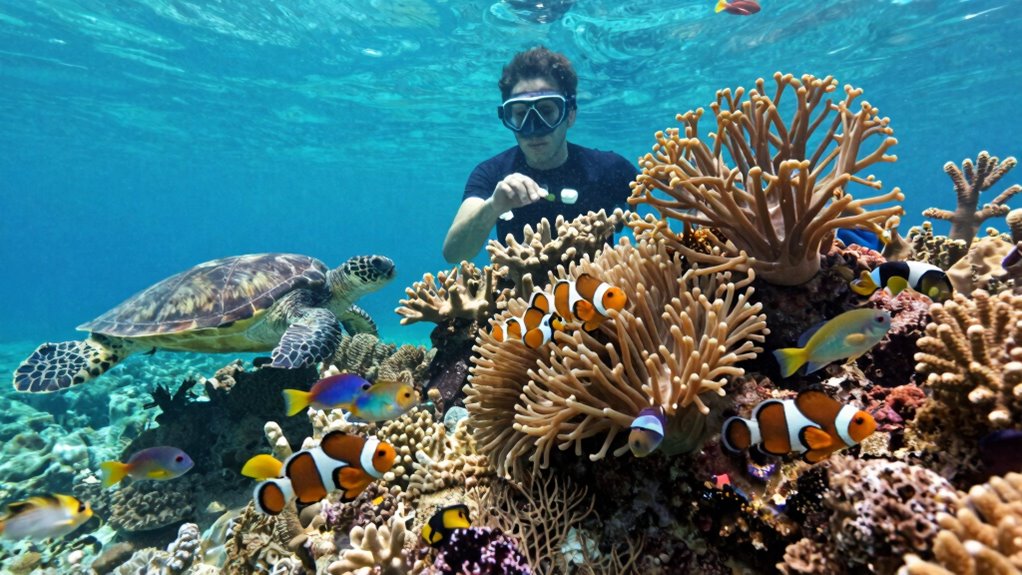

To visit the Great Barrier Reef more thoughtfully, choose eco-friendly tours that support marine conservation and follow responsible practices. Prioritize operators that promote reef protection, use reef-safe sunscreen, and encourage minimal contact with marine life. Support local communities and stay in sustainable accommodations. Participate in conservation activities like reef clean-ups and learn about the reef’s ecology. These actions help preserve the vibrant marine ecosystem for future visitors—exploring further reveals how you can make a real difference.

Get travel and outdoor gear delivered free — and shop member deals
- Fast, free delivery on millions of items
- Access to Prime Big Deal Days deals on October 6–7
- Prime Video, Amazon Music and more included
Key Takeaways
- Choose tour operators committed to marine conservation and sustainable practices.
- Engage in eco-friendly activities like reef-safe snorkeling and avoid touching marine life.
- Support conservation efforts through reef clean-ups and educational programs.
- Stay in eco-lodges that promote sustainability and benefit local communities.
- Educate yourself about reef threats and make environmentally conscious travel choices.
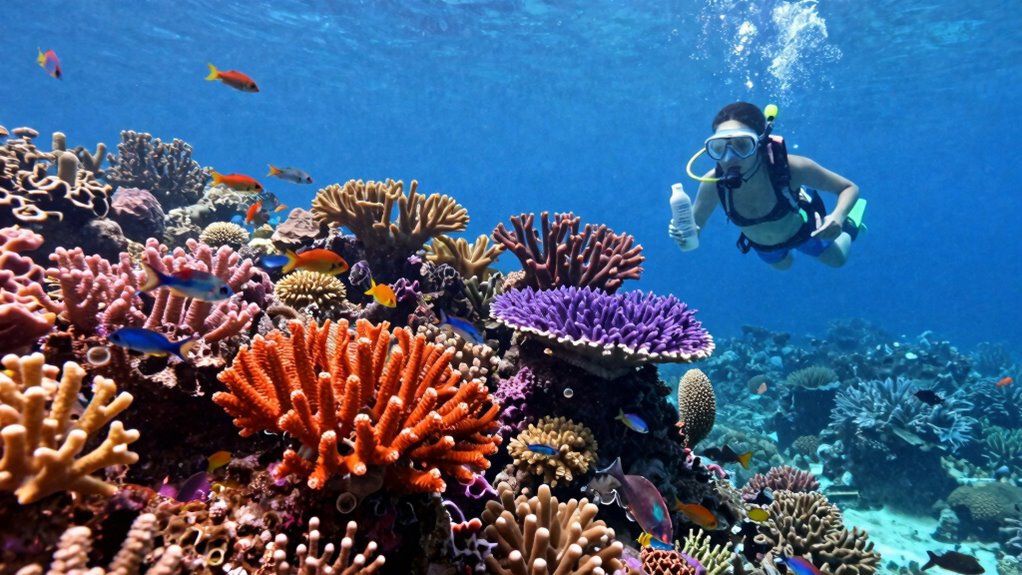
Visiting the Great Barrier Reef requires some planning, but it’s well worth the effort. As you prepare for this extraordinary adventure, consider how your trip can support marine conservation and promote sustainable tourism. The reef is a delicate ecosystem, home to countless species of marine life, and it’s vital that your visit helps preserve its beauty for future generations. By choosing responsible tour operators and eco-friendly activities, you can minimize your environmental impact while still experiencing the wonders beneath the surface.
Start by researching operators who prioritize marine conservation. These companies often follow strict guidelines to protect the reef, such as limiting boat numbers, avoiding sensitive areas, and educating visitors on reef preservation. When booking, ask about their initiatives around coral reef protection and whether they contribute to local conservation projects. This guarantees your money supports efforts to maintain the health of the reef, rather than harming it. Additionally, opt for tours that emphasize sustainable tourism practices—such as using eco-friendly boats, avoiding single-use plastics, and respecting marine life by not touching or disturbing animals.
Choose eco-friendly tours that limit boat numbers, avoid sensitive areas, and support reef conservation efforts.
As you plan your activities, prioritize snorkeling and diving experiences that are environmentally responsible. Remember that touching or standing on corals damages fragile structures, so maintain a safe distance and follow your guide’s instructions. Wearing reef-safe sunscreen also plays a part in protecting the coral from harmful chemicals. Many tour operators now provide or recommend eco-conscious sun protection options, helping you enjoy your time without contributing to coral bleaching or pollution. It’s also helpful to learn about marine protected areas and their importance in maintaining reef biodiversity while choosing your tour options. Incorporating marine conservation strategies into your trip planning can further enhance your positive impact. Understanding the significance of coral resilience can also inspire more mindful interactions during your visit. Being aware of the marine ecosystem’s complexity can deepen your appreciation and commitment to its preservation.
While exploring the reef, consider participating in conservation-focused initiatives, like coral planting or reef clean-ups. These activities give you a hands-on way to contribute to the reef’s health, fostering a deeper connection and understanding of its fragile environment. Your mindful approach extends beyond activities—you can also support local communities by staying in eco-lodges or resorts that prioritize sustainability, ensuring your expenditure benefits the surrounding area and promotes responsible development. Supporting marine conservation efforts can amplify the positive impact of your visit and help ensure the reef’s resilience.
Finally, educate yourself about the reef’s ecology and the threats it faces, such as climate change, pollution, and overfishing. The more informed you are, the better you can make choices that align with marine conservation goals. By traveling thoughtfully and supporting sustainable tourism, you’ll not only enrich your experience but also help safeguard the Great Barrier Reef’s vibrant marine life for years to come. With each responsible action, you become part of the effort to preserve this natural wonder, guaranteeing its magic endures for future explorers like yourself.
As an affiliate, we earn on qualifying purchases.
Frequently Asked Questions
What Are the Best Times of Year to Visit the Great Barrier Reef?
You should visit the Great Barrier Reef between June and October, when the weather is mild, and marine life is most active. During this time, the risk of coral bleaching is lower, and the water clarity is better. Visiting in these months helps you avoid peak tourist crowds and minimizes your impact on marine pollution. Being mindful of these factors allows you to enjoy the reef responsibly and sustainably.
Are There Eco-Friendly Tour Options Available for Visitors?
Yes, you can choose eco-friendly tour options that support marine preservation. Look for operators committed to eco tourism initiatives, which minimize environmental impact and promote conservation efforts. These tours often follow sustainable practices like limiting boat emissions, avoiding coral damage, and educating visitors about marine ecosystems. By selecting responsible tours, you help preserve the reef’s beauty and health, ensuring future generations can enjoy this natural wonder.
How Can I Minimize My Impact on Marine Life During My Visit?
Sure, just keep your distance—because nothing screams respect like disturbing marine wildlife. To minimize your impact, choose eco-friendly tours that prioritize coral preservation and protect marine life. Avoid touching or collecting coral and marine animals, and stay within designated snorkeling or diving areas. By doing so, you help guarantee these vibrant ecosystems survive for future visitors, instead of becoming just a fleeting memory of your careless curiosity.
What Safety Precautions Should I Take While Snorkeling or Diving?
When snorkeling or diving, you should prioritize safety by checking your equipment thoroughly and following proper procedures. Avoid wildlife interactions that could stress or harm marine creatures, and never chase or touch them. Always stay aware of your surroundings, keep a safe distance from delicate coral, and listen to your guides’ instructions. Using reliable gear guarantees your safety, while respectful behavior helps protect the reef’s fragile ecosystem.
Are There Guided Tours That Focus on Conservation Efforts?
Yes, many guided tours focus on conservation efforts for coral preservation and wildlife protection. You can choose eco-friendly operators that emphasize sustainable practices, such as avoiding coral damage and respecting marine life. These tours often include educational programs, highlighting the importance of protecting the reef’s delicate ecosystem. By selecting such tours, you actively contribute to conservation while enjoying the reef, ensuring its beauty and biodiversity thrive for future generations.
Conclusion
By choosing to visit the Great Barrier Reef thoughtfully, you’re not just witnessing a marvel of nature—you’re helping preserve a wonder that could vanish overnight. Imagine telling future generations you played a part in saving the world’s most breathtaking underwater paradise, rather than just rushing through it. Every careful choice you make today could mean the difference between the reef thriving for centuries or fading into a distant memory. Be a hero—protect, respect, and cherish this incredible treasure.
Halloween Picks
halloween
As an affiliate, we earn on qualifying purchases.