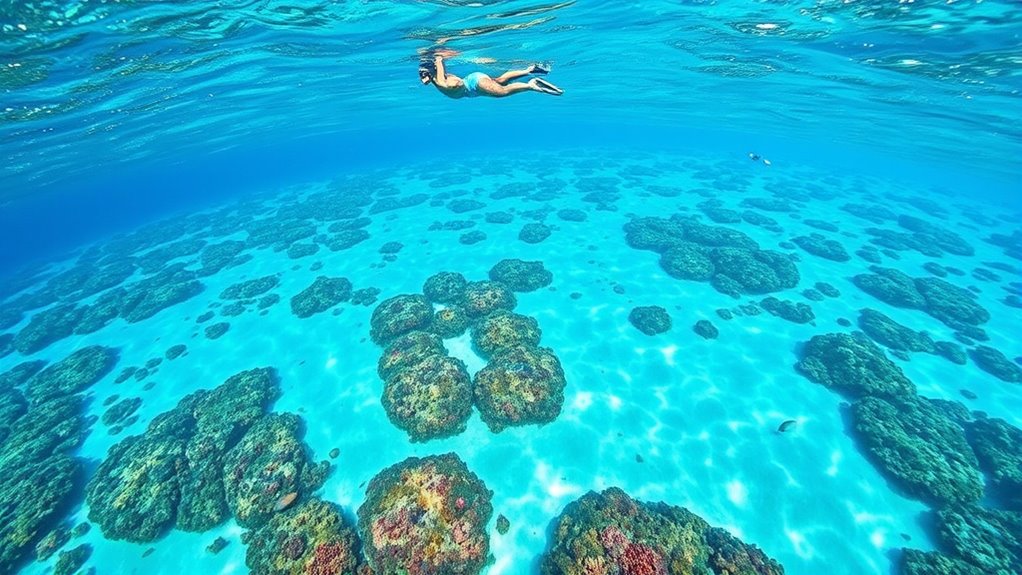

When snorkeling or diving in Ningaloo Reef, you’ve got to follow reef-safe practices. Avoid touching or standing on corals, use flotation devices, and choose reef-safe sunscreen to protect this delicate ecosystem. Keep a respectful distance from marine life, like turtles and manta rays, to avoid stressing them. Engage in local conservation efforts to help maintain the reef’s beauty. Discovering the full range of responsible practices can enhance your experience and contribute to preserving this stunning environment.
Key Takeaways
- Use reef-safe sunscreen to protect your skin and the coral ecosystem, avoiding harmful chemicals like oxybenzone and octinoxate.
- Follow snorkeling and diving guidelines by maintaining a respectful distance from marine life and avoiding any physical contact with corals.
- Utilize flotation devices or buoys to prevent damage to the reef while enjoying underwater activities.
- Participate in community conservation efforts, such as beach clean-ups, to help sustain the beauty and health of Ningaloo Reef.
- Observe marine creatures quietly to minimize stress and disturbance, enhancing your snorkeling and diving experience.

Ningaloo Reef is a breathtaking underwater paradise that beckons snorkelers and divers alike. You’re stepping into a vibrant world filled with colorful corals, diverse marine life, and crystal-clear waters. As you prepare for your adventure, it’s essential to embrace reef-safe practices that protect this delicate ecosystem. The health of Ningaloo Reef depends on your actions, and by adopting responsible behaviors, you can contribute to coral restoration and marine conservation efforts.
Before you plunge in, familiarize yourself with the specific guidelines for snorkeling and diving in Ningaloo Reef. Avoid touching or standing on the corals. These organisms are fragile, and even slight contact can cause irreversible damage. Instead, use a flotation device or a buoy to keep you afloat and maintain a safe distance from the reef. This way, you can admire the beauty below without disturbing the ecosystem.
When selecting your snorkeling or diving gear, opt for reef-safe sunscreen. Traditional sunscreens often contain harmful chemicals that can bleach corals and disrupt marine life. Choose products labeled as “reef-safe,” which are free from harmful ingredients like oxybenzone and octinoxate. By making this switch, you’re not only protecting your skin but also preserving the health of the reef.
As you glide through the water, take a moment to appreciate the vibrant life around you. You might encounter turtles, manta rays, or schools of colorful fish. However, resist the urge to chase or touch them. Instead, observe from a distance, allowing marine creatures to feel safe in their environment. Your respect for their space contributes to the overall health of the reef and supports marine conservation efforts.
Participating in local initiatives can also enhance your experience. Many organizations focus on coral restoration and marine conservation, offering opportunities for visitors to engage in hands-on activities. Whether it’s participating in a beach clean-up or learning about coral propagation techniques, you’ll gain valuable insights while giving back to the reef that captivates you. Additionally, understanding the impact of necessary cookies on tracking visitor interactions can help you make informed decisions about your online presence related to reef conservation.
Frequently Asked Questions
What Is the Best Time of Year for Snorkeling at Ningaloo Reef?
The best time for snorkeling at Ningaloo Reef is during the peak months of April to July. During these seasons, the water’s clarity is at its highest, and marine life is abundant. You’ll spot vibrant corals and a variety of fish, making it an unforgettable experience. While you can snorkel year-round, these months offer ideal conditions, so plan your trip accordingly to make the most of your underwater adventures!
Are There Any Specific Regulations for Diving in Ningaloo Reef?
Yes, there are specific regulations for diving in Ningaloo Reef. You’ll need to respect marine conservation efforts, ensuring you don’t touch or disturb the coral. Dive responsibly and be mindful of your gear; it can cause damage if not handled properly. Remember, protecting the reef is essential. So, as you explore the vibrant underwater world, keep an eye on your surroundings and follow guidelines. Your actions can make a difference in coral protection!
What Marine Life Can I Expect to See While Snorkeling?
While snorkeling, you’ll experience stunning marine biodiversity, including vibrant coral species like Acropora and Porites. Keep an eye out for colorful fish such as clownfish and parrotfish, along with graceful sea turtles gliding by. You might even spot majestic manta rays or the occasional reef shark lurking in the depths. Each dive brings new wonders, so get ready to be amazed by the underwater beauty waiting for you!
Do I Need a Permit for Snorkeling or Diving?
Yes, you’ll need a permit for certain areas when snorkeling or diving. Permit requirements vary based on location and the specific marine regulations in place. It’s essential to verify the local guidelines before you head out. Many popular spots have designated zones where you can explore without needing a special permit, but always confirm the rules to ensure you’re following the regulations and protecting the marine environment. Enjoy your adventure!
Are There Guided Tours Available for Snorkeling and Diving?
You’re in luck! There are plenty of guided tour options available for snorkeling and diving. These tours often provide all the necessary snorkeling equipment rentals, so you won’t have to worry about packing your own gear. By joining a guided tour, you’ll not only explore stunning underwater sites but also learn from experienced instructors who know the area like the back of their hand. So, get ready to plunge into a fantastic adventure!
Conclusion
So, as you gear up for your reef-safe snorkeling and diving adventure at Ningaloo Reef, remember: you’re not just a tourist, you’re a conservation superhero! With your eco-friendly gear and responsible practices, you’ll be saving the ocean one splash at a time. Just think, while you’re marveling at vibrant corals and playful fish, you’re also single-handedly fighting climate change—no cape required! Plunge in, but leave the heroics for the sea creatures; they’re the real stars of the show.