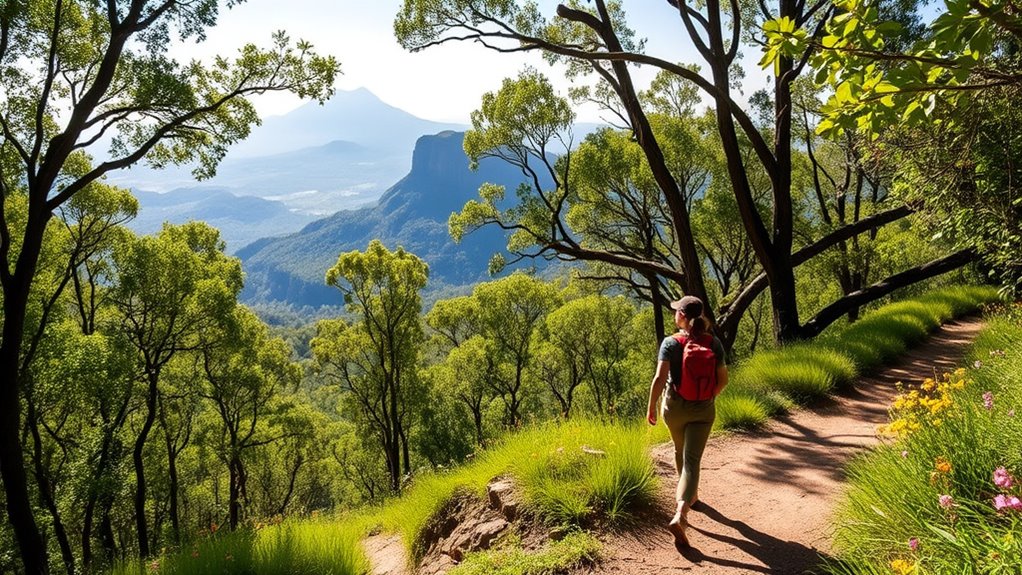

Low-impact hiking in the Blue Mountains allows you to enjoy breathtaking landscapes while protecting the environment. Always stay on designated trails to prevent soil erosion and support biodiversity. Bring plenty of water and snacks, and don’t forget sturdy hiking boots for safety. Respect wildlife by observing from a distance and never feeding animals. Carry out all waste to keep the area clean. By following these principles, you’ll contribute to a sustainable outdoor experience. There’s more to discover!
Key Takeaways
- Always stay on designated trails to prevent soil erosion and protect native ecosystems in the Blue Mountains.
- Pack out all waste, including food scraps and wrappers, to minimize environmental impact.
- Use reusable containers for snacks and water to reduce single-use plastic waste while hiking.
- Respect wildlife by observing from a distance and refusing to feed animals to maintain their natural behaviors.
- Inform others of your hiking plans to promote safety and responsible outdoor enjoyment in the Blue Mountains.

When you explore the breathtaking trails of the Blue Mountains, you don’t just connect with nature; you also embrace a sustainable way to enjoy the outdoors. Low-impact hiking is not just about enjoying the scenery; it’s about being responsible and protecting the environment you cherish. You’ll want to keep a few essential tips in mind to guarantee a safe and enjoyable experience while minimizing your impact on this incredible landscape.
First and foremost, trail safety is vital. Before hitting the trails, make sure you’re well-prepared. Check the weather conditions and pack accordingly. Bring enough water and snacks to keep your energy up, and always wear appropriate footwear. Sturdy hiking boots can make a world of difference, especially on rocky paths. It’s also wise to let someone know your plans and estimated return time. By doing this, you’re taking a proactive approach to your safety, guaranteeing that someone’s aware if something goes wrong.
Trail safety is essential—be prepared, stay hydrated, wear sturdy footwear, and inform someone of your plans.
As you hike, keep an eye out for wildlife encounters. The Blue Mountains are home to diverse flora and fauna, and you’ll likely spot kangaroos, wallabies, and a variety of birds. While these encounters can be thrilling, remember to respect their space. Observing wildlife from a distance is key. Don’t feed them, as human food can be harmful to their health and disrupt their natural behaviors. By keeping your distance, you’re not only protecting the animals but also enhancing your own experience of witnessing nature in its purest form. Additionally, the importance of respecting boundaries ensures that the local wildlife can thrive without human interference.
Walking on designated trails is another important aspect of low-impact hiking. Staying on marked paths helps prevent soil erosion and protects delicate ecosystems. When you stray off the trail, you risk damaging native plants and disturbing animal habitats. The Blue Mountains are a treasure trove of biodiversity, and you can do your part by respecting these boundaries.
Lastly, consider your waste. Carry out whatever you bring in, including food scraps and wrappers. If you’re hiking with a group, encourage others to do the same. By practicing this principle, you’re ensuring that the beauty of the Blue Mountains remains intact for future generations.
Frequently Asked Questions
What Is the Best Time of Year for Low-Impact Hiking?
The best time of year for low-impact hiking is typically during the spring and fall. During these seasons, the weather’s mild, making it easier for you to enjoy the outdoors. You’ll find trail conditions are often more favorable, with fewer muddy spots or extreme temperatures. Spring brings beautiful blooms, while fall showcases vibrant foliage. So, grab your gear and hit the trails when the seasonal weather and conditions are just right for a comfortable hike!
Are There Guided Low-Impact Hikes Available in the Area?
Absolutely, there are guided low-impact hikes available in the area! As the saying goes, “Many hands make light work.” You’ll find various guided tours that focus on eco-friendly options, ensuring you can explore nature without leaving a heavy footprint. These tours often highlight local flora and fauna while promoting sustainable practices. So, grab your gear, join a group, and immerse yourself in the beauty of the outdoors, all while being kind to the environment!
What Should I Pack for a Low-Impact Hike?
When you’re packing for a low-impact hike, prioritize trail essentials like a reusable water bottle, eco-friendly gear, and lightweight snacks. Don’t forget a comfortable backpack, a first-aid kit, and biodegradable toiletries. Wear sturdy shoes and breathable clothing to keep you comfortable. A hat and sunscreen are must-haves for sun protection. Finally, bring a map or GPS device to stay on track. Enjoy your hike while minimizing your environmental footprint!
Are Pets Allowed on Low-Impact Hiking Trails?
Yes, pets are often allowed on low-impact hiking trails, but it really depends on the specific trail’s pet regulations. Have you checked the trail pet policies before heading out? Some areas might require dogs to be leashed or have restrictions during certain seasons. Always make sure to clean up after your pet to keep the trail enjoyable for everyone. So, double-check those rules and enjoy your hike with your furry friend!
How Do I Find Trail Maps for Low-Impact Hikes?
To find trail maps for low-impact hikes, start by checking local park websites and outdoor recreation apps; they often provide reliable trail map sources. You can also look for printable trail maps online on hiking forums or dedicated trail websites. Don’t forget to visit visitor centers in the area, as they usually have physical maps available. These resources will help you plan your hikes effectively and guarantee you have the best experience.
Conclusion
So, if you’re tired of huffing and puffing up steep trails, why not embrace the art of low-impact hiking? You’ll be the envy of all your friends as you gracefully meander through the stunning Blue Mountains, sipping your organic herbal tea while saving the planet, one gentle step at a time. Who needs adrenaline when you can flaunt your eco-warrior status? Remember, it’s not about how fast you go; it’s about how stylishly you stroll!