Before visiting Uluru, recognize it as a sacred site for the Anangu people and approach with respect. Understand that climbing the rock is offensive to their culture and honor their traditions by respecting posted guidelines and participating in cultural tours. Be mindful of the environment by staying on designated paths, avoiding littering, and conserving water. Appreciating Uluru’s spiritual significance and natural beauty helps protect its legacy for future generations—learn more about how to visit responsibly below.

Get travel and outdoor gear delivered free with Prime
- Fast, free delivery on millions of items
- Prime Video, Amazon Music and more included
- Member-only deals all year
Key Takeaways
- Uluru is a sacred site for the Anangu people and should be approached with respect and cultural sensitivity.
- Climbing Uluru is offensive to Indigenous traditions and is discouraged or prohibited.
- Follow park guidelines to protect the fragile environment and minimize ecological impact.
- Engage in cultural tours led by Anangu guides for authentic insights and respectful learning.
- Educate yourself beforehand to understand Uluru’s spiritual significance and preserve its cultural integrity.
Are you planning a trip to Uluru? If so, it’s crucial to understand the deep significance this iconic site holds, especially regarding Indigenous culture. Uluru isn’t just a massive sandstone monolith; it’s a sacred site for the Anangu people, the traditional custodians of the land. These Indigenous communities have passed down stories, ceremonies, and spiritual connections to Uluru for thousands of years. Respecting their cultural heritage means recognizing that climbing the rock is considered offensive and disruptive to their spiritual practices. Instead of viewing Uluru as a tourist attraction to conquer, you should approach it as a sacred site deserving reverence. Learning about the Anangu’s traditions and observing posted guidelines shows respect and helps preserve their cultural legacy. Many Indigenous groups also advocate for visitors to avoid climbing and instead engage with guided walks or cultural tours led by Anangu people, which offer authentic insights into their history and connection to the land.
Beyond cultural considerations, understanding the environmental impact of your visit is just as crucial. Uluru’s natural environment is fragile, and the influx of tourists can contribute to erosion, disturb local wildlife, and damage the landscape if visitors aren’t mindful. Staying on designated paths and refraining from littering helps protect this unique ecosystem. Be conscious of your water use, especially since the region’s arid climate makes resources scarce. Respecting local flora and fauna, such as avoiding disturbing nesting birds or trampling delicate plants, minimizes your footprint. Additionally, avoid activities that could cause lasting harm, like removing rocks or souvenirs from the area, which can upset the ecological balance. The best way to enjoy Uluru’s natural beauty is by appreciating it from a respectful distance and following all park guidelines. Recognizing the cultural significance of Uluru is essential for a meaningful visit. Furthermore, understanding the importance of Indigenous knowledge can deepen your appreciation for the land’s spiritual and cultural connections. Recognizing that the land is a living cultural landscape with ongoing traditions can help you see beyond its physical appearance and appreciate its ongoing cultural relevance. Remember that the land holds sacred meaning for the Anangu people, which should guide your behavior during your visit.
Understanding these aspects—respect for Indigenous culture and awareness of your environmental impact—enhances your experience and ensures it’s meaningful and responsible. The more you educate yourself beforehand, the better you’ll appreciate the significance of Uluru and the importance of preserving it for future generations. Remember, Uluru isn’t just a stunning natural wonder; it’s a living cultural landscape with deep spiritual meaning. By approaching your visit with sensitivity and care, you become part of a collective effort to honor the land and its people, ensuring that Uluru remains a sacred and pristine place for many years to come. Recognizing the importance of cultural heritage preservation can deepen your understanding and respect for this iconic site.
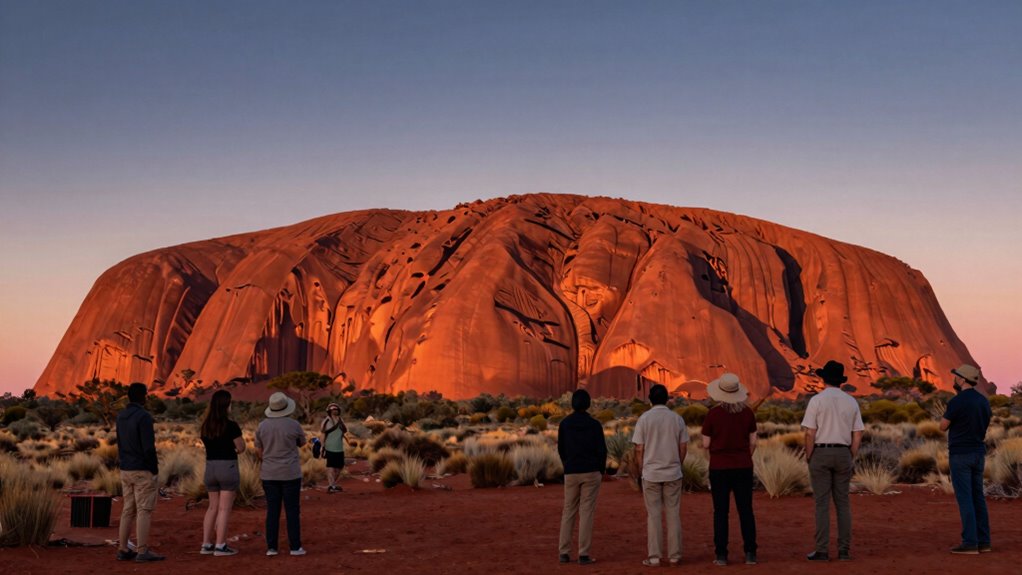
Uluru cultural tour led by Anangu guides
As an affiliate, we earn on qualifying purchases.
As an affiliate, we earn on qualifying purchases.
Frequently Asked Questions
Are There Guided Tours Around Uluru?
Yes, there are guided tours around Uluru that focus on its cultural significance and indigenous perspectives. You’ll learn about the Anangu people’s connection to the land, their stories, and traditions. These tours are led by knowledgeable guides who respect indigenous views, offering a meaningful experience. Participating helps you understand the cultural importance of Uluru and supports respectful tourism practices, enriching your visit and honoring the site’s sacred status.
What Is the Best Time of Year to Visit?
The best time to visit Uluru is during the cooler months from May to September. During this period, you’ll experience milder weather, making it ideal for exploring the site’s Uluru cultural significance and capturing stunning views at the best photography spots. Avoid the extreme heat of summer, which can be harsh and limit your outdoor activities. Visiting in these months guarantees a more comfortable experience and better opportunities to appreciate Uluru’s sacred beauty.
Can I Climb Uluru Legally?
You can’t climb Uluru legally anymore, as it’s a sacred site for Indigenous Australians who see it as a spiritual heart. Respect their perspectives and the environment’s delicate balance, which is why the climb was closed. Imagine Uluru as a wise old guardian, its silent presence whispering stories of tradition and reverence. Embracing this respect helps protect its cultural significance and preserves the environment for future generations to admire in awe.
Are There Any Nearby Accommodations?
Yes, there are several nearby accommodations for your stay. You can explore local lodging options like resorts, hotels, and eco-friendly lodges close to Uluru. If you prefer camping, there are campsite options available at Ayers Rock Resort and nearby campgrounds, offering a more immersive experience. Make sure to book in advance, especially during peak seasons, to secure your spot and enjoy your visit comfortably.
Is It Safe to Hike Around Uluru Alone?
Hiking alone around Uluru isn’t recommended, especially considering its profound cultural significance and environmental impact. Uluru is a sacred site for Anangu people, and solo hiking may disturb its spiritual importance. Statistically, most accidents happen when visitors venture alone without guidance. To protect both yourself and the environment, join a guided tour, respect cultural protocols, and stay on designated paths. Your safety and the site’s integrity depend on responsible visitation.
Conclusion
So, before you pack your selfie stick and plan that “once-in-a-lifetime” trip, remember—Uluru isn’t just another Instagram backdrop. It’s a sacred site, a symbol, and a reminder to respect Indigenous culture. Think twice before climbing or ignoring the rules; your Instagram fame isn’t worth offending the Anangu people. After all, nature and culture deserve more than a quick snapshot and a hashtag. Respect Uluru, or risk becoming just another tourist who missed the point.
Halloween Picks
halloween
As an affiliate, we earn on qualifying purchases.