
Respecting photography limits in sacred places is essential. You should always pay attention to signs that prohibit photography or indicate off-limits areas. Ignoring these can offend local communities and damage invaluable artifacts. By following restrictions, you engage respectfully with the site’s significance and integrity. Remember, asking for permission or guidance from locals shows you care. This mindfulness not only enriches your experience but also fosters a deeper connection with the culture. There’s more to explore about this topic.
Key Takeaways
- Always observe and adhere to photography restrictions, including signs indicating prohibited areas or activities.
- Seek permission from local authorities or community members before photographing sacred spaces or artifacts.
- Engage respectfully with local customs to enhance your understanding and appreciation of the site’s significance.
- Recognize the spiritual role of artifacts and avoid treating them solely as objects for photography.
- Aim to capture the essence of the site while preserving its integrity and honoring its cultural importance.

While capturing the perfect shot can be exhilarating, respecting photography limits is essential for maintaining both artistic integrity and ethical standards. When you find yourself in sacred places, it’s vital to understand the significance of your surroundings. These spaces often hold deep meaning for many people, and your lens can inadvertently overlook their cultural sensitivities.
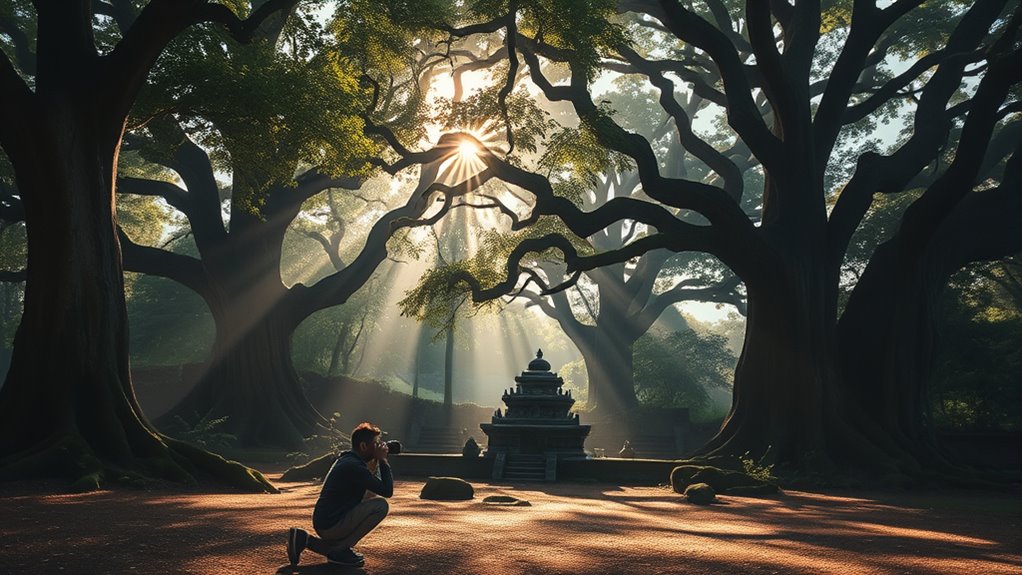
Before snapping that beautiful photo of a religious artifact, take a moment to consider its context. These artifacts are not just objects; they’re symbols of faith, tradition, and history. Imagine being in a cathedral, surrounded by intricate murals and statues that have stood the test of time. While you’d love to capture every detail, remember that some visitors may be there to pray or reflect. It’s about finding that balance between your artistic vision and the sanctity of the space.
Consider the context of religious artifacts; they embody deep faith and history, deserving respect alongside your artistic vision.
You might encounter signs indicating photography is prohibited, or that certain areas are off-limits. Don’t dismiss these warnings. They’re in place to protect the site and its significance. Ignoring them can lead to disrespecting the beliefs of others and even damaging the artifacts themselves. Instead of focusing solely on your shot, think about the stories these places tell and how your actions can honor or undermine them.
As you navigate these sacred spaces, engage with local customs. If you’re unsure about what’s acceptable, ask. Most people appreciate when you show genuine interest in their culture. This not only enriches your experience but also helps you build a respectful relationship with the community. You may find that some sacred sites offer specific times for photography or allow it under certain conditions. Adhering to these guidelines can provide you with the opportunity to capture stunning images while still being considerate.
When photographing religious artifacts, aim to convey their essence rather than just their appearance. Focus on the emotions they evoke and the stories they tell. This approach invites others to connect with the culture and spirituality behind them, rather than merely viewing them as objects.
Ultimately, respecting photography limits in sacred places enhances your work and fosters a deeper understanding of the world around you. Embrace the beauty of these moments, but do so with a heart full of respect and mindfulness for the significance they hold for others. Additionally, being aware of well-sourced coverage can guide you in understanding the cultural significance of the sites you are photographing.
Top picks for "respect photography limit"
Open Amazon search results for this keyword.
As an affiliate, we earn on qualifying purchases.
Frequently Asked Questions
What Are the Consequences of Violating Photography Rules in Sacred Places?
Violating photography rules in sacred places can lead to serious consequences. You might face legal penalties or bans from the site, damaging your reputation. More importantly, it disrespects cultural sensitivities and disrupts preservation efforts. Sacred sites rely on appropriate behavior to maintain their integrity and significance. By ignoring these rules, you risk harming not only the location but also the communities that cherish and protect these important cultural landmarks.
How Can I Find Out Specific Photography Guidelines for a Location?
Imagine you’re a sailor steering through uncharted waters. To find specific photography guidelines for a location, you should consult local tourism websites, official park services, or cultural institutions. These sources often provide insights into photography etiquette and cultural sensitivities. Don’t forget to ask locals—they can offer invaluable advice. By respecting these guidelines, you’ll guarantee your journey is smooth, and you’ll capture moments that honor the spirit of the place.
Are There Any Exceptions to Photography Restrictions in Sacred Areas?
Yes, there can be exceptions to photography restrictions in sacred areas, but it often depends on cultural sensitivities and religious customs. Some places may allow photography during specific events or ceremonies, while others might grant permission for educational purposes. To navigate these exceptions, you should always ask for permission and be respectful of the local traditions and guidelines. Being aware of the context can help you capture meaningful moments without offending anyone.
Can I Take Photos for Personal Use if I’m Respectful?
Yes, you can take photos for personal use if you’re respectful and mindful of cultural sensitivity. Ethical photography means understanding the significance of the place and ensuring your actions don’t disturb others. Before snapping a shot, consider the rules in place and the feelings of those around you. Always ask permission when possible, and remember, your intent should honor the space and its cultural heritage. Enjoy your experience while being considerate!
How Do I Approach Someone for Permission to Photograph in a Sacred Place?
To approach someone for permission to photograph in a sacred place, start with respectful communication. Introduce yourself and explain your intention clearly. Show cultural sensitivity by acknowledging the significance of the location and their traditions. Ask if it’s okay to take photos, and be open to their response. If they decline, respect their wishes without pressure. Building rapport and understanding goes a long way in ensuring a positive interaction.
Conclusion
In the end, respecting photography limits in sacred places is like honoring a delicate dance; each step matters. When you choose to appreciate the beauty around you without a camera in hand, you allow the space to breathe and maintain its sanctity. Remember, it’s not just about capturing a moment, but about preserving the essence of a place that holds deep meaning. So, let your heart be the lens, and embrace the experience fully.