
Microtransit and on-demand shuttles are transforming urban transportation, making it easier for you to navigate busy cities. They adapt to your needs, filling gaps left by traditional public transit. With seamless fare integration and the advent of driverless shuttles, you’ll enjoy a smoother, safer travel experience. Plus, many services focus on sustainability by using electric or hybrid vehicles. There’s so much more happening in this sector, so stay tuned for the latest updates and developments.
Key Takeaways
- Microtransit and on-demand shuttles will increasingly adapt to urban transportation needs, providing flexible alternatives to traditional public transit.
- Expect seamless fare integration through a single mobile app or card, simplifying payments across multiple transit modes.
- The rise of autonomous vehicles in microtransit will enhance safety standards and reduce operational costs for service providers.
- Cities are investing in dedicated lanes and smart traffic signals, improving efficiency and reliability for on-demand shuttle services.
- Many microtransit options will focus on sustainability, utilizing electric or hybrid vehicles to reduce emissions and promote greener urban living.
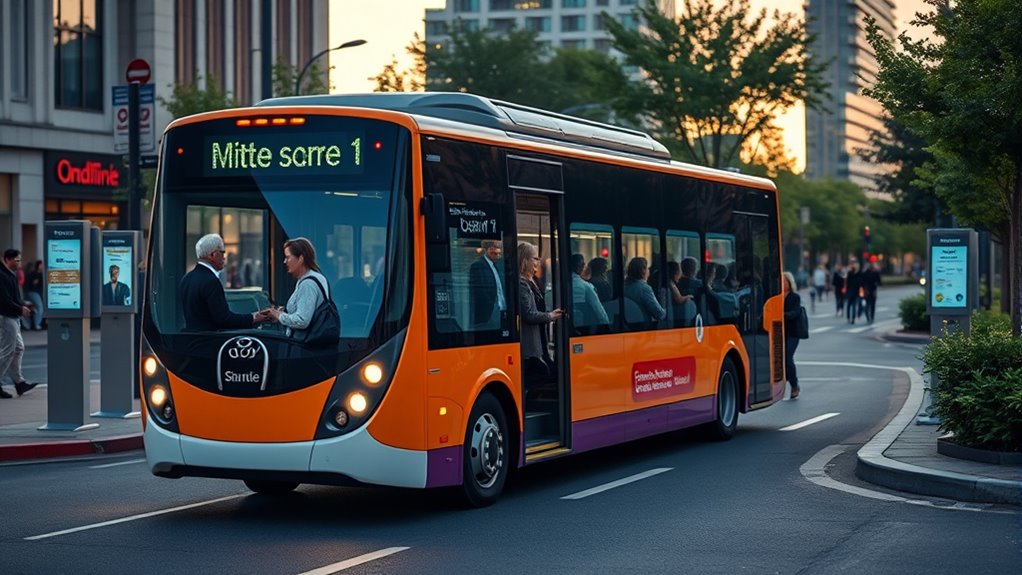
As cities evolve and transportation needs shift, microtransit and on-demand shuttles are becoming essential options for maneuvering urban landscapes. These services adapt to your schedule and location, making it easier than ever to navigate bustling city environments. You’ll find that microtransit fills gaps left by traditional public transportation systems, providing a flexible alternative that can be a game-changer in your daily commute.
One of the most exciting aspects of microtransit is its potential for fare integration. Imagine hopping on a shuttle that seamlessly connects with your subway or bus fare. This integration simplifies the payment process, allowing you to use a single mobile app or card for multiple modes of transit. You won’t have to fumble with cash or multiple tickets; everything becomes streamlined. This convenience not only saves you time but also enhances your overall travel experience, making urban mobility feel more cohesive.
The future of urban travel lies in seamless fare integration, simplifying your journey with a single app for all transit options.
Then there’s the aspect of vehicle automation. As technology continues to advance, you might notice that some on-demand shuttles are beginning to operate autonomously. These driverless vehicles can reduce operational costs and improve safety. While you might have concerns about riding in an automated shuttle, rest assured that these vehicles undergo rigorous testing to ensure they meet safety standards. The prospect of climbing aboard a vehicle that operates without a driver isn’t just futuristic; it’s becoming increasingly commonplace in urban settings.
You can also expect that as these services grow in popularity, cities will invest more in the infrastructure needed to support them. Enhanced dedicated lanes, smart traffic signals, and better communication between vehicles and transit systems will likely improve efficiency and reliability. You’ll benefit from faster travel times and reduced congestion, leading to a more enjoyable urban experience.
In addition to all these advancements, microtransit and on-demand shuttles are designed with sustainability in mind. Many services utilize electric or hybrid vehicles, contributing to reduced emissions and promoting greener cities. As you embrace these innovative transportation options, you’re also participating in a movement toward more sustainable urban living.
Top picks for "microtransit demand shuttl"
As an affiliate, we earn on qualifying purchases.
Frequently Asked Questions
How Do Microtransit Services Differ From Traditional Public Transportation?
Microtransit services differ from traditional public transportation primarily in their fare structure and vehicle amenities. Unlike fixed-route buses, microtransit often uses dynamic pricing based on demand, making it more flexible. You’ll also find that microtransit vehicles typically offer better amenities, like Wi-Fi and comfortable seating, enhancing your travel experience. This personalized approach allows you to enjoy a more convenient ride tailored to your specific needs compared to conventional public transport options.
Are Microtransit Services Available in Rural Areas?
Microtransit services are like bridges connecting rural communities to essential resources. You’ll find that some regions are beginning to embrace these services, providing improved rural access. However, it varies by location. Service expansion is underway, with some initiatives aiming to meet the unique needs of rural residents. Keep an eye out for local programs, as they might soon enhance your transportation options and bring you closer to essential services and opportunities.
What Payment Options Are Accepted for On-Demand Shuttles?
Most on-demand shuttles accept various payment options, including credit and debit cards. You’ll often find mobile payment options like Apple Pay or Google Pay, giving you fare flexibility. Many services also allow you to pay through their dedicated apps, making it easy to manage your payments on the go. So, whether you prefer traditional methods or modern mobile solutions, you’re likely to find something that suits your needs.
How Do I Book a Ride on a Microtransit Service?
To book a ride on a microtransit service, you’ll typically use a mobile app. Start by downloading the app specific to the service. Once you’ve set up your account, you can schedule your ride by entering your pickup and drop-off locations. The app will show you available times and options. Just confirm your ride, and you’ll be set! Keep the app handy for any changes or updates during your trip.
What Safety Measures Are in Place for Passengers Using On-Demand Shuttles?
When you use on-demand shuttles, you’ll find several safety measures in place. Companies often implement contact tracing to keep track of passengers in case of exposure to illness. You’ll notice emergency protocols are established, ensuring quick responses to incidents. Drivers usually undergo background checks and training to prioritize your safety. Plus, many services enhance cleanliness by regularly sanitizing vehicles, helping you feel more secure while riding. Your safety truly matters in every ride.
Conclusion
As you navigate the evolving landscape of microtransit and on-demand shuttles, you’ll find these services weaving seamlessly into the fabric of urban mobility. They’re not just a trend; they’re a lifeline connecting communities, reducing congestion, and promoting sustainability. Embracing this shift means stepping into a future where convenience and efficiency walk hand in hand. So, buckle up—your ride toward a smarter, more connected city is just around the corner.