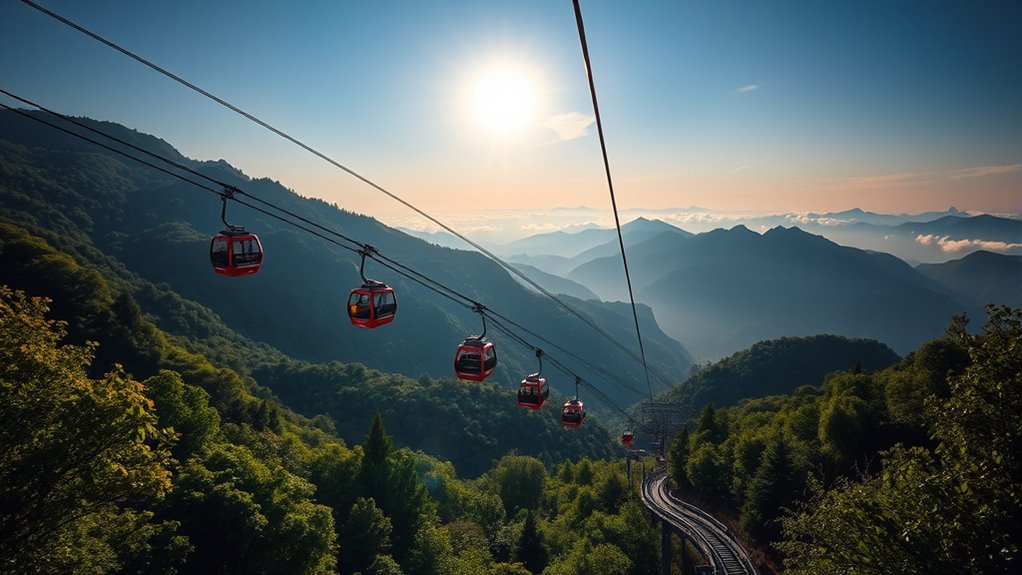

Cable cars and funiculars are practical solutions for traversing hilly terrains in cities. They efficiently transport you up steep slopes while providing breathtaking views. With their advanced engineering and sustainable design, these systems enhance urban travel and reduce congestion. As you glide above the city, you’ll experience a unique charm that connects you with your surroundings. There’s so much more to discover about how these systems work and their impact on urban development.
Key Takeaways
- Cable cars and funiculars provide efficient transportation in hilly regions, navigating steep terrains with ease.
- Both systems utilize advanced engineering for safety, reliability, and smooth elevation changes.
- Funiculars use counterbalanced carriages to conserve energy while maintaining synchronized movement on steep gradients.
- Cable cars offer scenic views, enhancing the travel experience and connecting passengers with their surroundings.
- These sustainable transport options help reduce urban congestion and support eco-friendly city development.
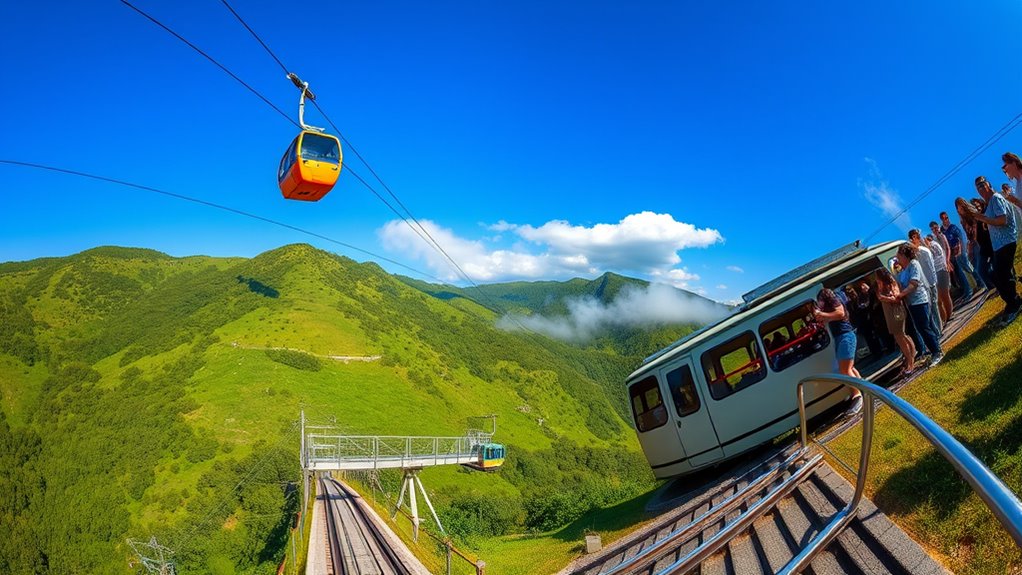
Have you ever wondered how cities nestled in hilly or mountainous regions manage to transport people effortlessly? The answer often lies in the ingenious use of cable cars and funicular systems. These transportation marvels not only provide stunning views but also demonstrate remarkable cable car engineering and funicular system design.
Cities in hilly regions effortlessly transport people using ingenious cable cars and funicular systems, showcasing stunning views and remarkable engineering.
When you step into a cable car, you’re not just getting a ride; you’re experiencing the result of meticulous engineering. Cable car systems use a series of cables and pulleys to lift you smoothly from one elevation to another. The design focuses on safety and reliability, ensuring you can travel confidently even when the slopes are steep. The cables are usually made from high-tensile steel, which provides the necessary strength to support the weight of the car and its passengers. Each car is attached to a main cable, and as the cable moves, it pulls the car along the track, allowing you to glide up and down the hills with ease.
Funicular systems, on the other hand, offer a slightly different experience. They consist of two carriages that are counterbalanced on a single track. When one carriage ascends, the other descends, creating a perfect balance that conserves energy. This funicular system design is particularly effective for steep inclines, making it an ideal choice for cities with sharp gradients. You’ll notice that the ride is smooth and efficient, thanks to the clever engineering that keeps the two cars in sync.
Both cable cars and funiculars are not just practical; they also add charm to the cities they serve. Imagine gliding above the rooftops, enjoying breathtaking views of the landscape. You’re not just traveling; you’re taking part in a unique experience that connects you with your surroundings. Furthermore, the use of sustainable transportation methods in urban areas can help reduce congestion and promote eco-friendly travel.
As urban areas continue to grow, the demand for efficient transportation options becomes more critical. Cable car engineering and funicular system design are key players in this evolution. They provide sustainable alternatives to traditional transport methods, reducing congestion and promoting eco-friendly travel.

MATEIN Travel Laptop Backpack, 15.6 Inch College School Computer Bag, Grey
- Spacious Laptop Compartment: Fits 13-15.6 inch laptops
- Multiple Organization Pockets: Includes pen and key fob hooks
- Compact Travel Size: Meets airline personal item dimensions
As an affiliate, we earn on qualifying purchases.
Frequently Asked Questions
How Do Cable Cars and Funiculars Differ in Design?
Cable cars and funiculars differ primarily in their design and mechanics. You’ll find that cable cars operate on a suspended cable system, allowing them to glide smoothly above ground. In contrast, funiculars rely on a track and are engineered to move up and down steep inclines. Their unique cable car mechanics involve a counterweight system, while funicular engineering emphasizes the balance between two carriages. Each offers a distinct experience while traversing hilly terrains.
Are Cable Cars and Funiculars Environmentally Friendly?
Absolutely, cable cars and funiculars can be seen as the gentle giants of urban transport! They often embrace renewable energy sources, helping to reduce carbon footprints in bustling cities. By whisking passengers up and down hills, they promote urban sustainability, enhancing public transit while easing road congestion. So, next time you hop on one, you’re not just enjoying the ride; you’re also supporting a greener, more eco-friendly way to travel.
What Are the Safety Standards for Cable Cars?
Cable cars must meet strict safety standards, ensuring passenger safety. You’ll want to know that regular safety inspections are mandatory, focusing on the mechanical systems and structural integrity. Operators implement emergency procedures, including evacuation plans and protocols for extreme weather. You can feel secure knowing that these measures are in place, providing a safe experience while enjoying the ride. Always check for the latest safety certifications before boarding.
How Are Cable Cars Powered During Operation?
Cable cars are powered by electric motors, which drive a pulley system that lifts and lowers the cabins. Did you know that some systems can move over 1,200 passengers per hour? This efficient operation relies on the electric motor’s ability to generate consistent power, ensuring a smooth ride. The pulley system translates that energy into movement, allowing the cable cars to traverse steep hills effortlessly while providing stunning views along the way.
Can Cable Cars Operate in Extreme Weather Conditions?
Yes, cable cars can operate in extreme weather conditions. They’re designed to handle winter challenges like heavy snow and ice, with features that prevent buildup on cables and vehicles. In addition, manufacturers guarantee that systems remain functional during storms, enhancing lightning resilience through grounding systems. So, you can enjoy the ride even when the weather’s rough, knowing that safety and operational integrity are prioritized in harsh conditions.
Conclusion
So, next time you hop on a cable car or funicular, just think of it as a delightful glide through the air or a gentle stroll up the hillside. These charming modes of transport not only whisk you to your destination but also offer a scenic escape from the hustle and bustle of everyday life. Embrace the journey, savor the views, and let the ride elevate your spirits as you ascend to new heights, quite literally!