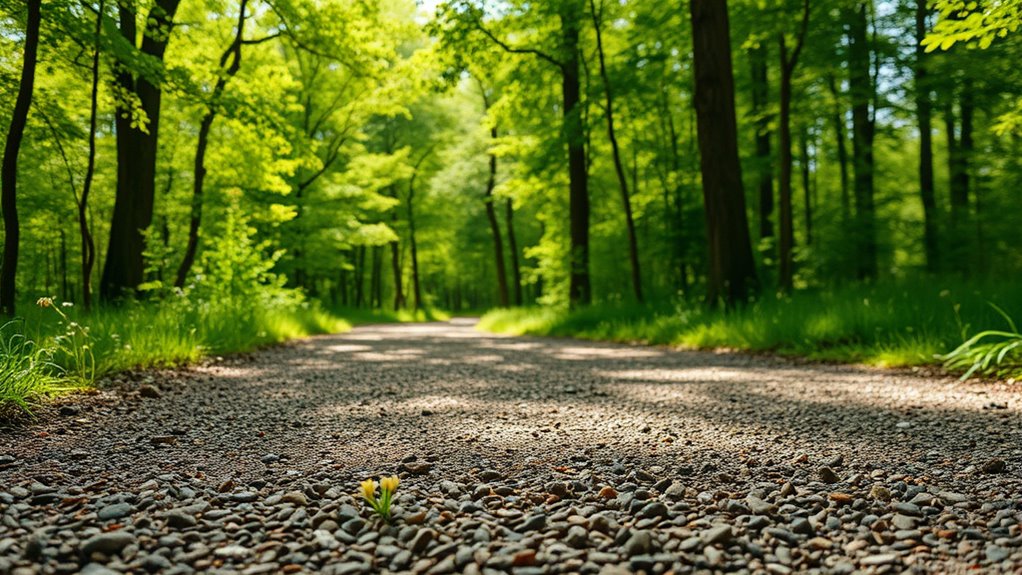

When choosing eco-friendly road surfaces for your hikes, consider materials like decomposed granite, crushed stone, or recycled rubber. These options minimize environmental impact, reduce erosion, and support local wildlife. They also help maintain natural temperature balance and create a more enjoyable hiking experience. Plus, sustainable surfaces require less maintenance, extending the lifespan of trails. By opting for eco-conscious materials, you contribute to preserving nature’s beauty. There’s much more on how these choices benefit both you and the environment.
Key Takeaways
- Opt for sustainable materials like decomposed granite or recycled rubber to minimize environmental impact on hiking trails.
- Choose surfaces that ensure proper drainage to reduce erosion and support local ecosystems.
- Select durable trail materials that require less maintenance and withstand heavy foot traffic effectively.
- Consider natural surfaces that blend with the environment, reducing noise pollution and stress on wildlife.
- Advocate for eco-friendly choices to promote community awareness and encourage sustainable outdoor practices.
When you hit the trails, choosing eco-friendly road surfaces can make a significant difference in preserving nature’s beauty. The materials you select for hiking paths not only affect your experience but also play a crucial role in the environment. By opting for sustainable surfaces, you can minimize wildlife impacts while enhancing trail durability, ensuring that the trails remain passable and intact for years to come.
Imagine walking on a surface that’s not only comfortable but also helps maintain the natural ecosystem. Eco-friendly materials like decomposed granite, crushed stone, or recycled rubber can offer durability without harming the surrounding flora and fauna. These choices promote proper drainage, reducing erosion and minimizing the risk of runoff that could disrupt local wildlife habitats.
Walking on eco-friendly surfaces like decomposed granite or recycled rubber enhances comfort while protecting vital ecosystems and promoting proper drainage.
Think about the animals that call these trails home. When you choose materials that blend seamlessly with the environment, you help reduce disturbances in their natural behaviors. For instance, traditional asphalt can create heat islands and noise pollution that stress wildlife. In contrast, natural surfaces allow for a more tranquil experience for both hikers and the animals. You’ll likely spot more birds, deer, and other creatures if your presence doesn’t overwhelm their habitats.
Trail durability is essential, especially as foot traffic increases. Eco-friendly surfaces generally require less maintenance, which means fewer resources spent on repairs and less disruption to the surroundings. When you select quality, sustainable materials, you contribute to the long-term viability of the trails. This way, you can enjoy hiking without worrying about damaging the environment.
Moreover, by advocating for eco-friendly road surfaces, you inspire others to think about their choices, too. When you share your experiences and knowledge, you can create a ripple effect, encouraging fellow hikers and trail users to prioritize sustainability. Every step counts. Additionally, the adoption of renewable energy technologies can further enhance the sustainability of trail maintenance efforts, reducing the overall environmental footprint of outdoor recreational activities.

WATERFLY Crossbody Sling Backpack Sling Bag Travel Hiking Chest Bag Daypack (Black)
- Compact Size: 7 x 3.5 x 15 inches
- Multiple Storage Compartments: Separate sections for small items
- Front Zipper and Buckle Bags: Secure storage for essentials
As an affiliate, we earn on qualifying purchases.
Frequently Asked Questions
What Materials Are Considered Eco-Friendly for Road Surfaces?
For eco-friendly road surfaces, consider using sustainable material choices like recycled asphalt, permeable concrete, or composite materials made from post-consumer waste. These options reduce environmental impact while promoting durability. You’ll also want to explore eco-conscious construction methods, such as minimizing excavation and using low-impact machinery. By opting for these materials and methods, you’re actively contributing to a greener future, ensuring that your project aligns with environmental sustainability goals.
How Do Eco-Friendly Surfaces Affect Wildlife Habitats?
Eco-friendly surfaces can markedly reduce wildlife disturbance and habitat fragmentation. By using materials that blend with natural surroundings, you help maintain animal migration patterns and minimize disruption. These surfaces often promote vegetation growth, which provides shelter and food for various species. As you choose these sustainable options, you’re not only enhancing your hiking experience but also supporting the ecosystem, ensuring that wildlife can thrive alongside your outdoor adventures.
Are There Cost Differences Between Eco-Friendly and Traditional Surfaces?
Yes, there are often cost differences between eco-friendly and traditional surfaces. When you conduct a cost comparison, you might find that eco-friendly options can be pricier upfront due to materials and installation. However, consider budget considerations like long-term maintenance and environmental benefits, which could save you money over time. By investing in sustainable surfaces, you’re not just spending; you’re contributing to a healthier environment while potentially reducing future costs.
How Long Do Eco-Friendly Road Surfaces Typically Last?
Eco-friendly road surfaces can last anywhere from 10 to 30 years, depending on the materials used. While traditional surfaces may seem more durable, eco-friendly options often require more frequent maintenance to preserve their integrity. You’ll find that with proper care, their durability estimates can rival conventional choices. So, if you’re considering long-term sustainability, weigh the maintenance requirements against the lifespan to make the best decision for your needs.
Can Eco-Friendly Surfaces Handle Heavy Foot Traffic?
Yes, eco-friendly surfaces can handle heavy foot traffic, but their suitability for mountain biking may vary. While some materials are designed for durability, they often face maintenance challenges due to wear and tear. You’ll want to contemplate the specific type of surface and its intended use. Regular upkeep can help maintain its integrity, ensuring both hikers and bikers enjoy a safe and reliable experience on your trails.
Conclusion
As you lace up your hiking boots and step onto eco-friendly road surfaces, remember that every choice you make impacts the trail’s future. Just as a single seed can grow into a mighty tree, your decision to prioritize sustainable materials helps nurture our planet. With around 75% of hikers seeking greener options, your footsteps can lead the way to a healthier environment. Embrace this journey, knowing that together, we can cultivate trails that flourish for generations to come.