
Staying on the trail is essential for protecting our environment and enhancing your outdoor experience. When you wander off designated paths, you risk causing soil erosion, disrupting wildlife habitats, and damaging fragile ecosystems. Following trails preserves the scenic beauty of nature and helps maintain its integrity for future visitors. Plus, it guarantees your safety while hiking. If you want to discover more about the benefits of responsible trail use, there’s even more to explore.
Key Takeaways
- Staying on trails preserves natural landscapes and enhances the scenic beauty for all outdoor enthusiasts.
- Off-trail wandering can lead to soil erosion and degrade the environment, harming local ecosystems.
- Following the Leave No Trace principles helps minimize our impact and ensures nature’s preservation for future visitors.
- Proper trail etiquette promotes courtesy among hikers and maintains the tranquility of natural settings.
- Staying on designated paths enhances visual experiences and protects the integrity of natural views.
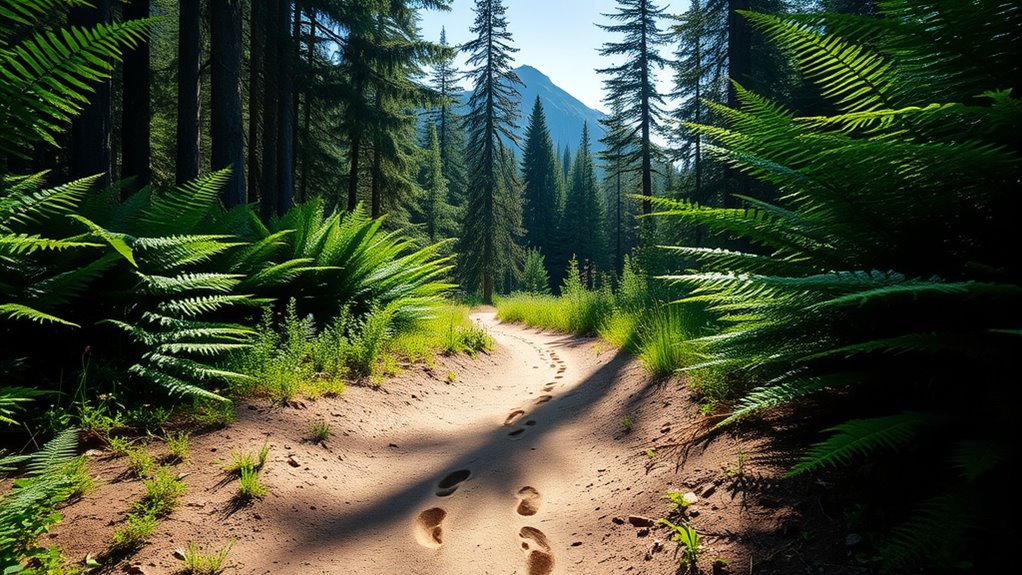
Have you ever found yourself wandering off the beaten path? It’s tempting, isn’t it? The allure of discovering hidden treasures in nature can draw you away from well-marked trails. However, straying off designated paths can have serious consequences, not just for you but for the environment too. Staying on trail is more than just a guideline; it’s an essential practice that helps preserve the beauty of our natural landscapes.
Wandering off the trail may seem tempting, but it poses risks to both your safety and the environment. Stay on path to preserve nature’s beauty.
When you stick to established trails, you’re not only ensuring your safety but also respecting the environment. Off-trail wandering can lead to soil erosion, disrupt local wildlife, and damage fragile ecosystems. By following the Leave No Trace principles, you’re committing to protecting these areas for future generations. The idea behind Leave No Trace is simple: minimize your impact on the environment while enjoying its beauty. This means staying on designated trails, which helps to limit the wear and tear on the landscape.
Trail etiquette plays a significant role in maintaining a positive outdoor experience for everyone. When you encounter fellow hikers, it’s courteous to yield the trail to those going uphill, as they have the right of way. This simple act of consideration ensures that everyone can enjoy their hike without unnecessary disruptions. Additionally, keeping noise levels down and packing out any trash helps maintain the tranquility of nature, allowing others to appreciate it in its purest form.
You might think that wandering off the trail just a little won’t cause much harm, but it can create new paths that others may follow, eventually leading to widespread damage. Each step taken off the path can contribute to habitat destruction and the loss of plant life, which is crucial for maintaining biodiversity. When you choose to stay on the trail, you’re making a conscious decision to protect the environment and promote responsible outdoor behavior. Furthermore, color accuracy plays a vital role in enhancing the visual experience of nature, making it even more rewarding to appreciate by staying on the designated paths.

SEVEN SPARTA Charging Cable Holder with Chassis Bracket Compatible with Tesla Model 3 Model Y Model X Model S Charger Cable Organizer Car Accessories Wall Connector, Patent Approved (Black)
COMPATIBLE WITH TESLA MODEL 3/MODEL Y/MODEL X/MODEL S/ CHARGER: Seven Sparta Charging Cable holder is a perfect holder...
As an affiliate, we earn on qualifying purchases.
Frequently Asked Questions
What Are the Risks of Straying off Designated Trails?
Straying off designated trails can lead to significant environmental impact, like soil erosion and damage to native plants. You might disturb wildlife habitats, causing stress to animals that rely on those areas for shelter and food. Additionally, wandering off the path can increase the risk of getting lost or encountering dangerous terrain. It’s essential to respect designated trails to protect both the ecosystem and your own safety while enjoying nature.
How Can I Find Maps of Local Trails?
You can snag local trail maps from various resources. Check out online platforms like AllTrails or Hiking Project for interactive maps and user reviews. Your local ranger station often has printed maps, too. Don’t forget to tap into community forums or social media groups for trail etiquette tips and advice on hidden gems. With these resources, you’ll navigate the trails like a pro, ensuring you have a fantastic time outdoors!
Are There Specific Trails for Beginners?
Yes, there are plenty of beginner-friendly trails! Look for local parks or nature reserves that offer well-marked paths. While you enjoy your hike, remember to practice trail etiquette by yielding to others and keeping noise levels down. You’ll also want to minimize your environmental impact by sticking to the trail, avoiding shortcuts, and packing out any trash. These simple actions help preserve the beauty of the trails for everyone to enjoy.
What Should I Do if I Get Lost?
If you get lost, stop and stay calm. First, check your map or compass, and look for trail signage to help orient yourself. If you can’t find your way, retrace your steps if it feels safe. If you’re in a remote area, consider your emergency preparedness; signal for help using a whistle or bright clothing. Remember to stay put if you’re unsure, as rescuers will search for you where you were last seen.
Can I Take My Dog on Any Trail?
You can take your dog on many trails, but you need to check the specific rules for each one. Some trails allow dogs, while others don’t. Always prioritize dog safety by keeping your pet on a leash and ensuring they’re well-behaved around other hikers. Remember trail etiquette: clean up after your dog and yield to others. By following these guidelines, both you and your furry friend can enjoy your outdoor adventures responsibly.

MECMO EV Charger Holder SAE J1772 Wall Mount Charging Cable Hanger Organizer, Nozzle Holster Dock Electric Vehicle EVSE PHEV Car Plug Space Saving Garage Wall Connector Cord Hook for Outdoor Indoor
Fits All J1772 Plug: - This Portable EV Charger Cable Hanger compatible with most electric vehicle compatible with...
As an affiliate, we earn on qualifying purchases.
Conclusion
Staying on the trail isn’t just about preserving nature; it’s about respecting the journey we’re all on. Think of it like a road trip—veering off course might lead to unexpected sights, but it can also bring chaos and danger. Just as you wouldn’t want to get lost in unfamiliar territory, sticking to the path keeps you safe and helps protect the delicate ecosystems around you. So next time you hike, remember: the trail’s there for a reason. Stay on it!

JIANWEI EV Charger Holder Wall Mount Compatible for SAE J1772, Electric Car Charging Plug Cable Hanger Cord Organizer, Electric Vehicle Charger Nozzle Holster Dock for Indoor Outdoor(Black)
【PACKAGE CONTENT】You will receive 1pc black wall mount EV charger holder, 4pcs screws and 4pcs expansion tubes, included...
As an affiliate, we earn on qualifying purchases.

EV Charger Holder Wall Mount | Heavy-Duty J-Hook for Electric Vehicle Charging Cable Management, Durable Steel Hook for Indoor/Outdoor Use, EV Charger Cord Organizer, Tesla and J1772 Compatible
Anti-Slip Rubber Coating: The EV charging cable holder ensures your cable remains secure, safeguards it from damage, and...
As an affiliate, we earn on qualifying purchases.