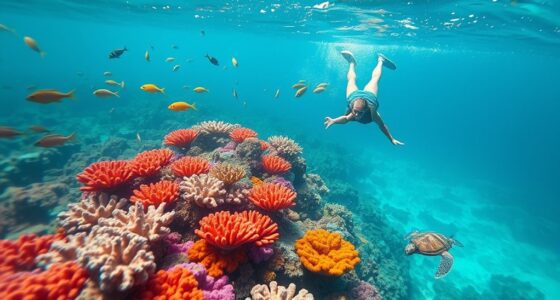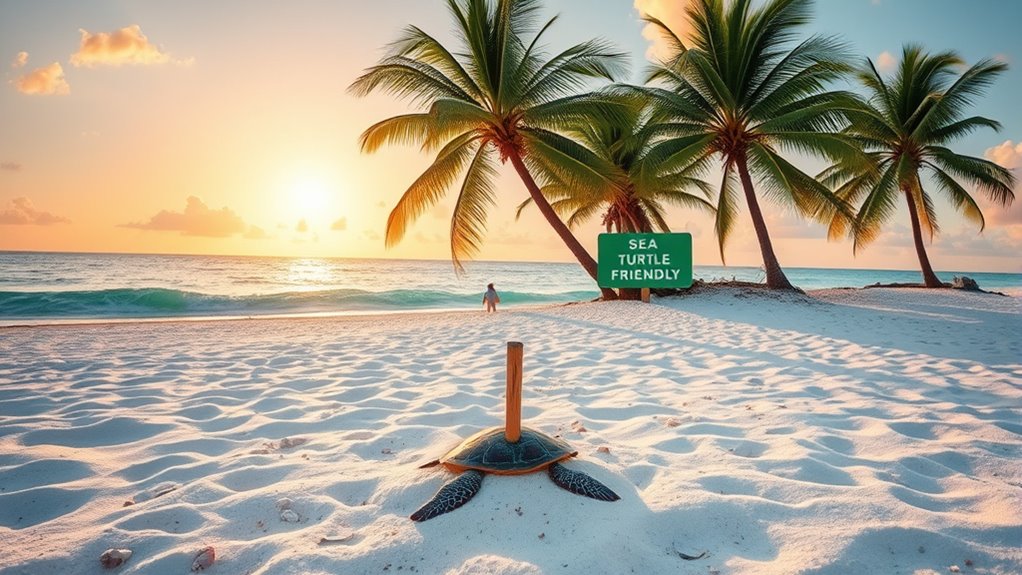

Caye Caulker features stunning beaches that are perfect for sea turtles. These sandy shores serve as essential nesting grounds, where female turtles return yearly to lay their eggs. To help these magnificent creatures, stay clear of marked nesting areas and avoid bright artificial lights that can disorient them. By keeping the beaches clean and supporting local conservation efforts, you can play a part in protecting their habitats. There’s so much more you can do to help sea turtles thrive!
Key Takeaways
- Beaches around Caye Caulker serve as vital nesting grounds for sea turtles, making them essential for turtle conservation.
- Visitors should respect signs indicating nesting activity to avoid disturbing turtle nests and hatchlings.
- Local organizations actively monitor and protect nesting sites, providing opportunities for visitors to volunteer or donate.
- Keeping the beaches clean and free of litter, especially plastics, is crucial for maintaining healthy ecosystems for turtles.
- Responsible beach behavior ensures that future generations of sea turtles can thrive in their natural habitats.
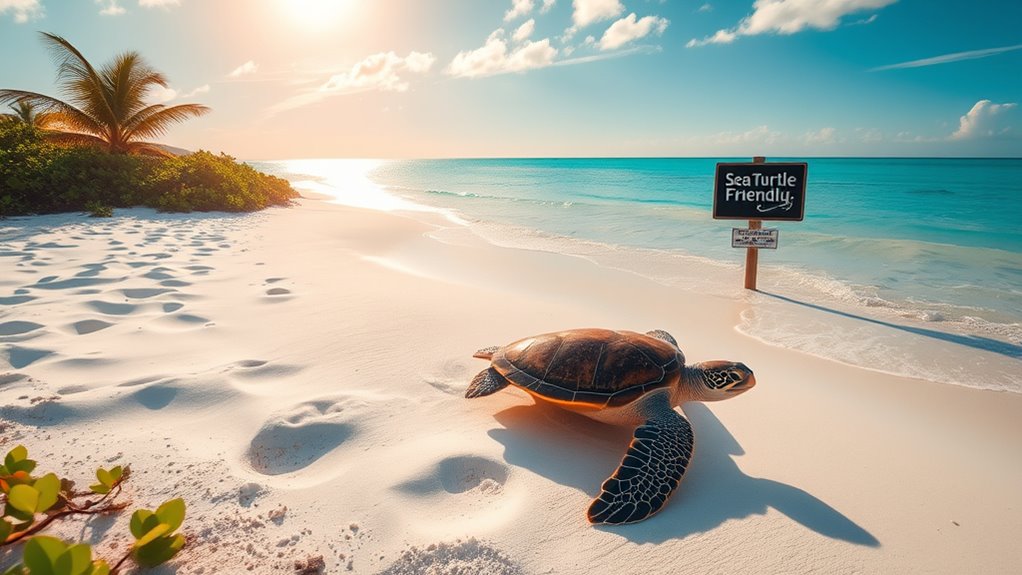
As you stroll along the sandy shores, you might not realize that some beaches are more than just picturesque getaways; they’re indispensable nesting grounds for sea turtles. When you visit Caye Caulker, you’ll find that several beaches play a pivotal role in the life cycle of these magnificent creatures. The sandy shores provide a perfect nesting habitat where female turtles come ashore to lay their eggs. Each year, they return to the same beaches, making it essential to protect these areas.
You may wonder how you can contribute to the conservation efforts that safeguard these nesting sites. First, it’s important to be aware of your surroundings. Avoiding areas marked with signs indicating nesting activity is critical. These signs help protect the nests from disturbances. If you spot a turtle or see tracks in the sand, keep your distance, and do not flash any lights. Sea turtles are sensitive to light, and bright artificial lights can disorient them, preventing them from finding their way back to the ocean.
Moreover, participating in local conservation programs can make a significant difference. Many organizations on the island work tirelessly to monitor nesting activities. You can volunteer your time or even donate to help fund these essential efforts. By engaging with local conservation groups, you’ll not only learn more about sea turtles but also help protect their nesting habitats.
When you’re enjoying your time on the beach, remember that keeping the sand clean is another way you can support sea turtle conservation. Litter, particularly plastic waste, can be harmful to marine life. By cleaning up after yourself and spreading awareness among fellow beachgoers, you contribute to a healthier environment for these turtles.
Interestingly, unique names for Huskies can also reflect the beauty and strength of sea turtles, just as they embody the spirit of nature.
Caye Caulker’s beaches are not just beautiful; they’re irreplaceable ecosystems. As you explore, consider how your actions impact these fragile environments. The next time you see a turtle nest or witness a hatchling making its way to the ocean, you’ll appreciate the importance of these conservation efforts. Your visit can help guarantee that future generations of turtles will continue to thrive in their natural habitats.

BAGAIL 8 Set Packing Cubes Luggage Packing Organizers for Travel Accessories-Cream
- Premium Durable Fabric: Resists wrinkles, stains, and wear
- Water-Repellent Material: Protects clothes from spills and leaks
- Lightweight Design: Easy to pack without adding weight
As an affiliate, we earn on qualifying purchases.
Frequently Asked Questions
What Time of Year Do Sea Turtles Nest on Caye Caulker?
Sea turtle nesting seasons typically occur from May to November, with peak activity around June and July. If you’re planning a trip, these months offer the best times to visit if you want to witness this incredible natural event. During this period, you might spot turtle tracks on the beach and even see the hatchlings make their way to the ocean. It’s an unforgettable experience that’ll leave you in awe of nature’s wonders!
Are There Guided Tours for Turtle Watching Available?
Yes, there are guided tour options for turtle watching. These tours often provide expert insights and guarantee you have a memorable experience. When you participate, remember to follow turtle watching etiquette: keep your distance, avoid flash photography, and never touch the turtles. This helps protect them and their habitat. You’ll not only enjoy the beauty of these creatures but also contribute to their conservation efforts by being a responsible observer.
How Can I Help Protect Sea Turtles While Visiting?
As you stroll along the shimmering shoreline, imagine sea turtles gliding gracefully beneath the waves. You can help protect these gentle giants by practicing beach conservation. Avoid disturbing nesting sites, pick up litter, and use eco-friendly products. Embrace responsible tourism by choosing local guides who prioritize turtle protection. Each small action you take ripples through the ecosystem, ensuring these magnificent creatures continue to thrive for generations to come. Your care makes a difference!
Is Swimming Allowed Near Sea Turtle Nesting Sites?
Swimming near sea turtle nesting sites isn’t generally authorized during nesting season. These beach regulations are designed to protect vulnerable nests and ensure marine conservation efforts succeed. If you’re near such areas, it’s best to stay out of the water and respect designated zones. You can enjoy observing the turtles from a distance, which helps keep them safe while you contribute to their protection. Always check local guidelines for specific rules at the beach you visit.
What Should I Do if I Find a Stranded Turtle?
If you find a stranded turtle, don’t panic. First, guarantee the turtle’s safety by keeping it calm and protected from predators. Then, follow rescue procedures by gently moving it to a shaded area if necessary. Next, contact local wildlife authorities or marine rescue organizations to report the situation, as they have specific reporting protocols in place. They’ll guide you on the next steps to ensure the turtle receives the care it needs.
Conclusion
When you choose to explore the sea turtle friendly beaches around Caye Caulker, you’re not just enjoying paradise—you’re supporting essential conservation efforts. You might think that visiting these beaches means sacrificing some fun, but that’s far from the truth! You’ll find plenty of activities like snorkeling and kayaking while still respecting the natural habitat of these majestic creatures. So, plunge in and embrace the beauty of these beaches, knowing you’re making a difference for sea turtles!