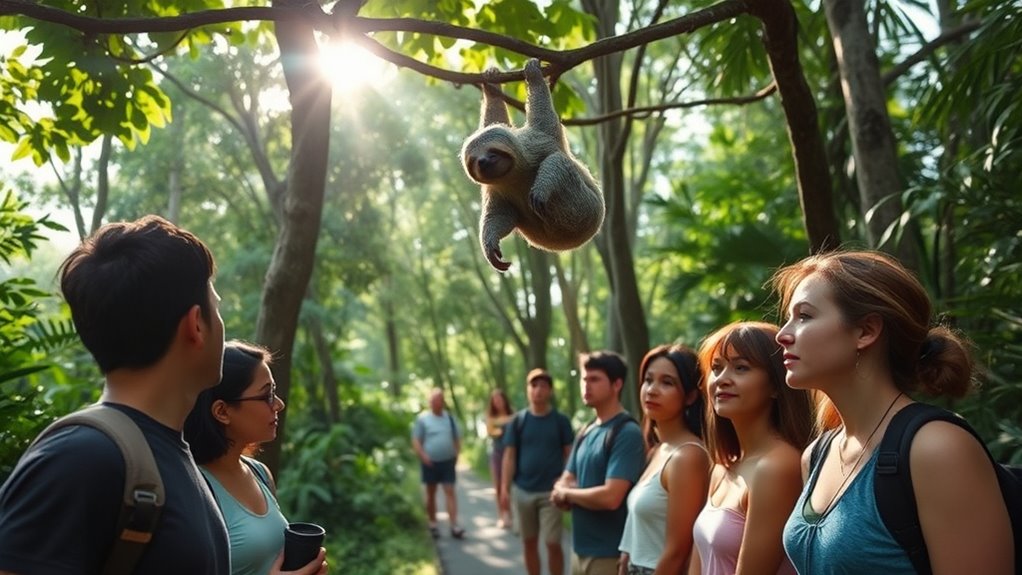

When visiting Manuel Antonio National Park, always respect wildlife and their environment. Keep a safe distance, use binoculars for bird watching, and avoid loud noise. For photography, utilize zoom lenses and natural light, avoiding flash. Stay patient and maintain quietness to enhance your experience and the animals’ comfort. Remember to follow park regulations, never feed the animals, and stick to designated paths. There’s so much more to discover to guarantee a responsible and enriching wildlife viewing adventure.
Listen free for 30 days with Audible
Thousands of audiobooks and originals — cancel anytime.
As an affiliate, we earn on qualifying purchases.
Key Takeaways
- Maintain a safe distance from wildlife and use binoculars for closer observation to minimize stress on animals.
- Use zoom lenses for photography, avoid flash, and capture images in natural light without disturbing wildlife.
- Speak softly and limit sudden movements to create a serene environment for both animals and fellow visitors.
- Visit during early mornings or late afternoons for optimal wildlife sightings and practice patience for natural behaviors.
- Follow park regulations, never feed animals, and respect designated trails to promote conservation and coexistence.
When you venture into nature to observe wildlife, it’s vital to remember that you’re a guest in their home. In places like Manuel Antonio National Park, you’ll encounter a diverse array of animals, from capuchin monkeys to vibrant birds. Respect for their environment and behavior is essential for both your experience and theirs. One of the first things to keep in mind is to maintain a safe distance from the wildlife. Getting too close can stress the animals and disrupt their natural activities. If you’re bird watching, for instance, use your binoculars instead of trying to get right up to the bird. This way, you can observe their behavior without intruding.
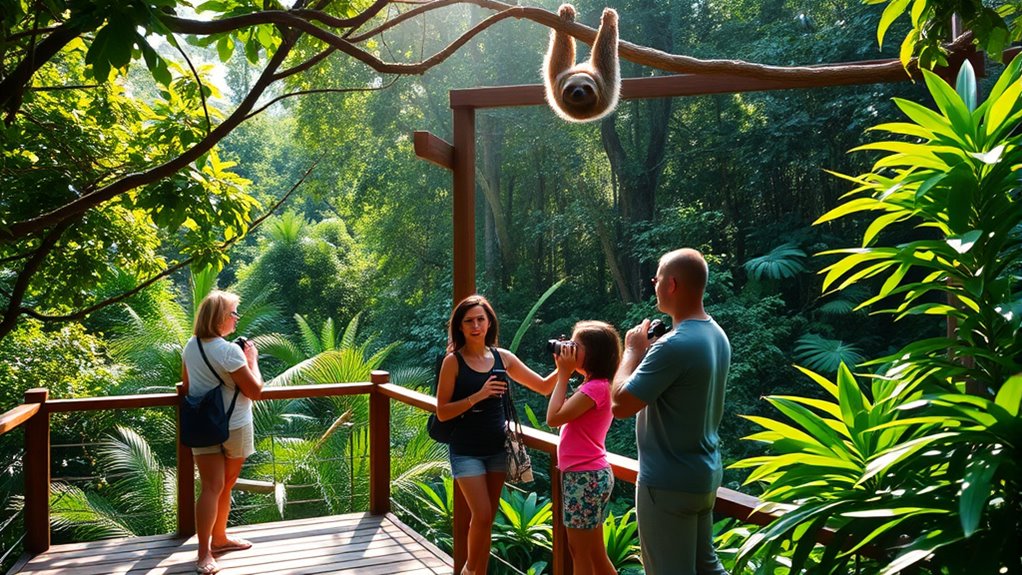
You might also want to be mindful of the sounds you make. Animals are often skittish and can easily be frightened away by loud noises. Speak in hushed tones and limit sudden movements. If you’re traveling with a group, remind everyone to stay quiet and respectful. This creates a serene environment not only for the wildlife but also for other visitors. If you’re equipped with a camera for some wildlife photography, there are some helpful photography tips to enhance your experience. Use a zoom lens to capture stunning shots from afar, reducing the need to approach closer. This technique not only helps you avoid scaring the animals but also allows you to capture them in a more natural state.
When you do take photographs, remember to turn off your flash. Flash photography can startle animals and disrupt their behavior. Instead, focus on the available natural light and adjust your settings accordingly. Early mornings or late afternoons are often the best times for both bird watching and capturing the perfect shot. The soft light during these times can enhance your images and make them truly memorable. Don’t forget to be patient; wildlife doesn’t always perform on cue. Waiting quietly can lead to unexpected encounters.
Lastly, always follow park guidelines and regulations. These rules are in place to protect both the wildlife and the environment. Never feed the animals, as this can alter their natural behaviors and create dependency on human interaction. By adhering to these simple yet effective etiquette guidelines, you guarantee a more enjoyable and respectful experience in Manuel Antonio National Park. Your journey into nature should be a shared experience, where both you and the wildlife can coexist harmoniously. Additionally, engaging in protective styling benefits can help you appreciate the natural beauty around you while ensuring that your personal appearance is well maintained.
Top picks for "wildlife view etiquette"
As an affiliate, we earn on qualifying purchases.
Frequently Asked Questions
What Should I Wear for Wildlife Viewing in the Park?
When you’re heading out for wildlife viewing, proper clothing is key. Opt for lightweight, breathable fabrics that’ll keep you cool. Long sleeves and pants protect against insects, so don’t forget your insect protection. Wear sturdy, comfortable shoes for all the walking you’ll be doing. A wide-brimmed hat and sunglasses will shield you from the sun. Layer your outfit, as temperatures can change quickly. Staying comfortable will help you enjoy the experience even more!
Are There Specific Times When Wildlife Is Most Active?
Yes, there are specific times when wildlife’s most active. Early mornings and late afternoons are your best viewing times, as many animals prefer to move during cooler parts of the day. You’ll notice heightened animal activity patterns during these hours, with creatures like monkeys and sloths more visible. Plan your visits around these times to increase your chances of spotting wildlife and enjoy the vibrant ecosystem in all its glory.
Can I Bring My Pet for Wildlife Viewing?
You can’t bring your pet for wildlife viewing in the park. For the safety of both your pet and the wildlife, it’s best to leave your furry friend at home. Parks often have leash requirements to control pets, but even then, the presence of pets can disturb animals and their habitats. Prioritizing pet safety and the well-being of wildlife guarantees a better experience for everyone involved. Enjoy the park responsibly!
Is Photography Allowed During Wildlife Viewing?
Yes, photography is allowed during wildlife viewing, but there are some photography restrictions you should keep in mind. Make sure you follow the camera guidelines set by the park to protect the animals and their habitat. Avoid using flash or loud equipment that might disturb wildlife. Keep your distance, and remember to enjoy the experience rather than just focusing on capturing the perfect shot. Respect nature while creating lasting memories with your camera!
What Should I Do if I Encounter an Aggressive Animal?
When you find yourself face-to-face with an aggressive animal, think of it like a stormy sea. Your safety precautions are your lifeboat. Stay calm and avoid eye contact, backing away slowly without turning your back. Recognize animal behavior—if it’s charging, make yourself look larger and make noise to deter it. Remember, the best course is to seek higher ground, or a safe distance, ensuring you both stay safe and sound.
Conclusion
In Manuel Antonio National Park, the thrill of encountering wildlife can be breathtaking, but it’s essential to remember your role as a respectful observer. While you might be enthusiastic to snap the perfect photo, think about the delicate balance of nature. Embrace the beauty of a sloth lounging on a branch, but step back and let it be. By blending excitement with mindfulness, you’ll guarantee future visitors can share in the wonder you experienced today.
Flea & tick season Picks
flea and tick prevention
As an affiliate, we earn on qualifying purchases.