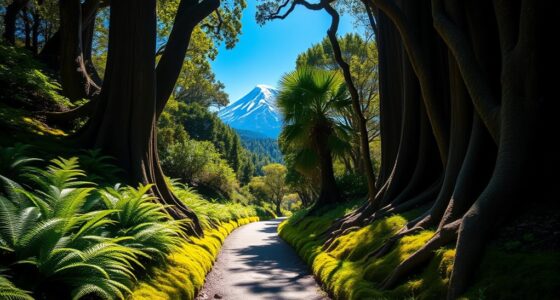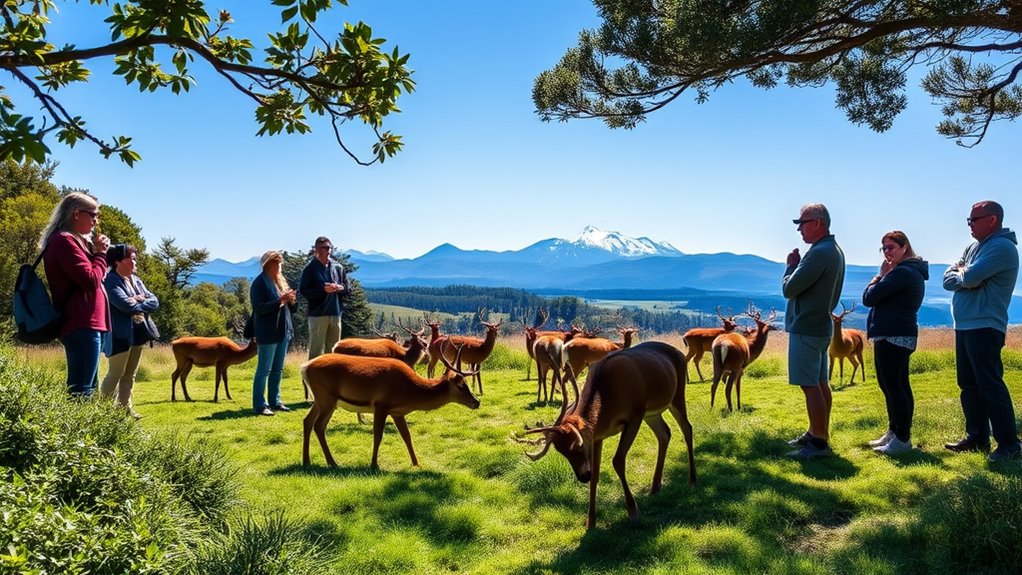

When watching wildlife in Tongariro National Park, keep a respectful distance to minimize stress on animals. Stick to marked trails to protect habitats and avoid feeding wildlife to maintain their natural behaviors. Keep noise down and movements slow for a better viewing experience. Educate yourself about local species and their challenges; this helps foster appreciation and conservation efforts. There’s so much more to learn about best practices for wildlife viewing, so keep exploring!
Key Takeaways
- Maintain a respectful distance from wildlife, using binoculars or zoom lenses for close observation without causing stress to the animals.
- Stick to designated paths and trails to prevent soil erosion and protect wildlife habitats.
- Avoid feeding wildlife to prevent dependency and maintain their natural foraging behaviors.
- Keep noise levels low and avoid sudden movements to create a calm environment for observing wildlife.
- Educate yourself about local species and their habitats to foster appreciation and conservation efforts.

When you venture into the great outdoors to observe wildlife, it is essential to remember that you’re a guest in their home. In Tongariro National Park, you’ll find a rich variety of species, each playing a critical role in their natural habitat. But with this privilege comes responsibility. Being mindful of your presence can considerably reduce animal disturbance and contribute to habitat preservation.
First off, always keep your distance. While it might be tempting to get a closer look at that curious deer or majestic bird, approaching too closely can stress the animals and disrupt their natural behaviors. Instead, use binoculars or a camera with a zoom lens to appreciate wildlife without encroaching on their space. This way, you’ll not only protect the animals but also enjoy a more authentic viewing experience.
Always maintain a respectful distance from wildlife to protect their natural behaviors and enhance your viewing experience.
Next, be aware of your surroundings. Stick to designated paths and trails to minimize your impact on the habitat. Venturing off the beaten path can lead to soil erosion and damage to plants that provide essential food and shelter for wildlife. By respecting these boundaries, you’re promoting habitat preservation and ensuring that future generations can enjoy the same breathtaking sights you do today.
It’s also important to avoid feeding wildlife. Though it may seem harmless, providing food disrupts their natural foraging habits. Animals can become dependent on human-provided food, which can lead to health issues and alter their natural behaviors. By refraining from feeding them, you encourage wildlife to thrive in their natural environment, thereby maintaining the delicate balance of the ecosystem.
Make sure you’re also considerate of noise levels. Loud conversations or sudden movements can frighten animals away. Instead, embrace the quiet of nature; this allows you to connect with your surroundings and increases your chances of witnessing fascinating wildlife moments. Practicing mindfulness techniques can enhance your ability to observe wildlife without causing disturbances.
Finally, educate yourself about the species you might encounter. Understanding their behaviors, habitats, and the challenges they face can enhance your viewing experience and deepen your appreciation for the natural world. Plus, sharing this knowledge with others can foster a collective commitment to wildlife conservation.

BAGAIL 8 Set Packing Cubes Luggage Packing Organizers for Travel Accessories-Cream
- Premium Durable Fabric: Resists wrinkles, stains, and wear
- Water-Repellent Material: Protects clothes from spills and leaks
- Lightweight Design: Easy to pack without adding weight
As an affiliate, we earn on qualifying purchases.
Frequently Asked Questions
What Wildlife Species Can Be Commonly Seen in Tongariro National Park?
In Tongariro National Park, you can spot various bird species like the bellbird, tui, and kea. Keep an eye out for native mammals such as the endangered kiwi and the playful North Island kaka. You’ll find these creatures thriving in their natural habitat, making your visit truly special. Remember to stay quiet and respectful while observing them, as they play an essential role in the park’s ecosystem. Enjoy your wildlife adventure!
Are There Specific Seasons Best for Wildlife Viewing?
Yes, there are specific seasons best for wildlife viewing. Spring and early summer are ideal since you’ll catch the tail end of seasonal migration and witness many species in their breeding seasons. Look for birds nesting and young animals emerging. Autumn also offers great opportunities as animals prepare for winter. Plan your visits around these times to maximize your chances of seeing vibrant wildlife in action, making your experience unforgettable.
Can I Bring My Dog While Wildlife Viewing?
You can’t bring your dog while wildlife viewing, and that’s a good thing for the animals’ safety. Many parks have strict dog restrictions to protect native wildlife. While it might be tempting to bring your furry friend along, it’s important to respect these pet-friendly policies. This helps guarantee a peaceful environment for both the wildlife and other visitors. Focus on enjoying the sights and sounds of nature without distractions!
What Are the Best Viewing Spots Within the Park?
You’ll find some great viewing spots in Tongariro National Park. For wildlife photography, head to the shores of Lake Taupo or the wetlands near the park’s entrance; they’re perfect for capturing stunning landscapes and wildlife. For birdwatching hotspots, check out the forested areas around Whakapapa Village, where you can spot native birds like the Kiwi and Tui. Don’t forget your camera—you won’t want to miss these incredible opportunities!
Are There Any Guided Wildlife Tours Available in the Area?
Yes, there are several guided wildlife tours available in the area! You can explore unique habitats and spot native species while learning from knowledgeable guides. Many of these tours are led by experienced park rangers who share insights about the park’s ecosystem. Joining a park ranger program gives you a deeper understanding of the wildlife and conservation efforts. Be sure to check local tour operators for options that fit your schedule!
Conclusion
When you head out to enjoy the stunning wildlife in Tongariro National Park, remember to respect the creatures that call it home. Just like a gentle breeze that stirs the leaves, your presence should enhance the beauty around you without disturbing it. Keep your distance, avoid loud noises, and never feed the animals. By following these simple guidelines, you’ll help preserve this incredible ecosystem for future generations to appreciate and enjoy. Happy viewing!