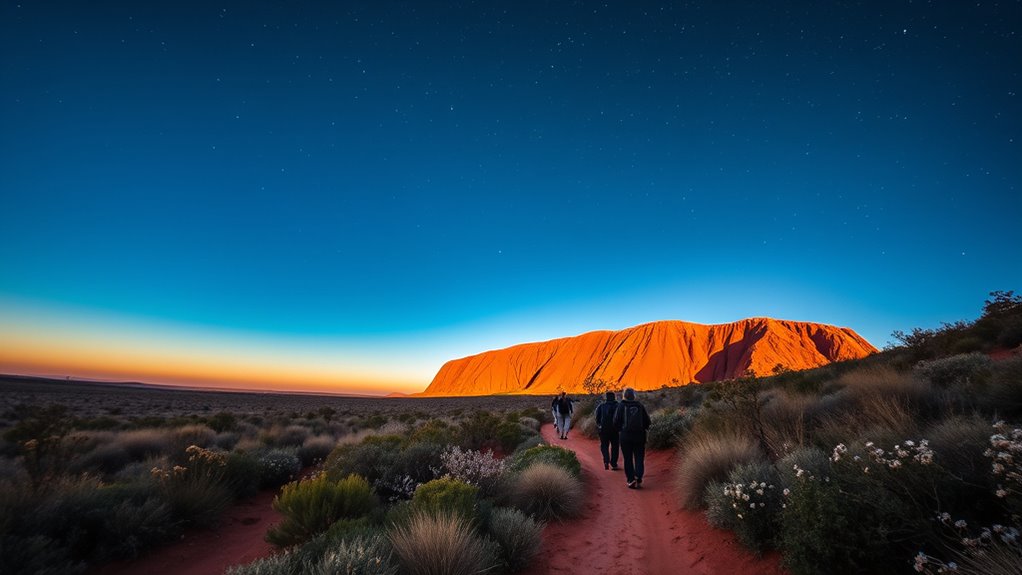

When you hike in Uluru-Kata Tjuta National Park, stick to marked trails to protect delicate habitats and respect the culture of the Anangu people. Carry out all waste to keep the environment pristine and minimize your impact on wildlife. Make sure to visit during cooler months for the best experience and enjoy the stunning views of Uluru at sunrise or sunset. There’s so much more to discover about responsible hiking practices and cultural significance.

Get travel and outdoor gear delivered free with Prime
- Fast, free delivery on millions of items
- Prime Video, Amazon Music and more included
- Member-only deals all year
Key Takeaways
- Stay on marked trails to protect fragile wildlife habitats and preserve the park’s pristine environment.
- Carry out all waste to maintain the park’s natural beauty and cultural integrity.
- Practice low-impact hiking by minimizing disturbance to the area’s diverse species and ecosystems.
- Visit during cooler months and early morning or late afternoon for optimal hiking conditions and stunning visuals.
- Engage with cultural stories and respect aboriginal traditions to enhance your hiking experience.

If you’re looking for a unique hiking experience, Uluru-Kata Tjuta National Park offers stunning landscapes and rich cultural significance. This iconic location isn’t just about breathtaking views; it’s about connecting with the land and its deep-rooted aboriginal heritage. When you lace up your hiking boots, you step into a world that’s been cared for by the Anangu people for thousands of years. Respect for this heritage is essential, and it enhances your hiking adventure.
As you explore the park, you’ll want to adopt low-impact hiking practices to preserve its pristine environment. Stay on marked trails to protect fragile wildlife habitats, which are home to diverse species. You might see kangaroos, emus, or even rare reptiles, all of which contribute to the park’s ecological richness. By sticking to designated paths, you guarantee that these animals can thrive without disruption.
The Mala Walk is a perfect starting point for your hike. This trail not only showcases the magnificent Uluru but also provides insights into the cultural stories of the Anangu people. As you walk, take a moment to absorb the significance of the sacred sites. You’ll notice signs along the trail that explain the area’s cultural and environmental importance. By listening to these stories, you deepen your appreciation for the land and its history.
Remember to carry out what you carry in. This means taking all your waste with you to keep the park clean and undisturbed. You’ll find that this small effort goes a long way in preserving the natural beauty and cultural integrity of Uluru-Kata Tjuta National Park. It’s not just about enjoying the scenery; it’s about leaving the environment as you found it for future generations.
Consider visiting during the cooler months, as the park can get extremely hot. The early morning or late afternoon light casts beautiful hues on Uluru, making your experience even more magical. Whether you’re hiking to witness a stunning sunrise or sunset, the ever-changing colors of the rock will leave a lasting impression.
Ultimately, your journey through Uluru-Kata Tjuta National Park is more than just a hike. It’s an opportunity to engage with aboriginal heritage and appreciate the incredible wildlife habitats that surround you. Additionally, incorporating elements of traditional Indonesian home decor can enrich your experience by connecting you with the cultural artistry of the region. So lace up your boots, respect the land, and immerse yourself in this unforgettable experience.
Frequently Asked Questions
What Is the Best Time of Year for Hiking in Uluru-Kata Tjuta?
The best time for hiking in Uluru-Kata Tjuta is during the cooler months, from May to September. The seasonal weather is mild, making your trek more enjoyable. You’ll also catch more wildlife activity during this period, as animals are more active in cooler temperatures. Plan your hikes early in the morning or late afternoon to avoid the heat. Enjoy the stunning landscapes while staying safe and comfortable on your adventure!
Are There Any Guided Hiking Tours Available in the Park?
Yes, there are guided hiking tours available in the park, like a key revealing the secrets of the land. These tours offer expert insights and guarantee you follow park regulations, keeping both you and the environment safe. You’ll find various options, from short walks to more challenging treks, each led by knowledgeable guides. Joining a tour enriches your experience, making it memorable while respecting the unique beauty of the area.
Can I Bring My Dog on Hiking Trails?
You can’t bring your dog on hiking trails in the park. While it’s great to enjoy nature with your pet, the park has strict dog leash policies to protect the environment and wildlife. If you’re looking for pet-friendly trails, you’ll need to explore other areas outside the park. Always check local regulations before you head out, as they can help guarantee a safe and enjoyable experience for you and your furry friend.
What Should I Pack for a Low-Impact Hike?
When you’re packing for a low-impact hike, you’ll want to cover all your bases. First off, grab eco-friendly gear like a reusable water bottle and biodegradable products. Don’t forget your hydration essentials—staying hydrated is key! Layer your clothing for changing weather, and pack some healthy snacks to keep your energy up. In conclusion, a first-aid kit’s always a smart choice. With these items, you’ll be ready to hit the trails without a hitch!
Are There Any Age Restrictions for Hiking in the Park?
There aren’t strict age restrictions for hiking in the park, but it’s crucial to take into account the physical ability of younger and older hikers. Many trails offer accessibility options, making them suitable for various age groups. If you’re hiking with kids or seniors, choose shorter and easier paths. Always prioritize safety and make certain everyone’s prepared for the hike, regardless of age. Enjoy the stunning landscapes at your own pace!
Conclusion
As you lace up your hiking boots in Uluru-Kata Tjuta National Park, remember that every step you take is a dance with nature’s ancient rhythm. Some say the land speaks to those who listen, revealing stories of the Anangu people and the spirits that roam these sacred sites. So, take a moment to pause, breathe, and truly absorb your surroundings. You might just find that the whispers of the past guide your journey, making each hike a transformative experience.
Columbus Day / Indigenous Peoples' Day Picks
long weekend sales
As an affiliate, we earn on qualifying purchases.