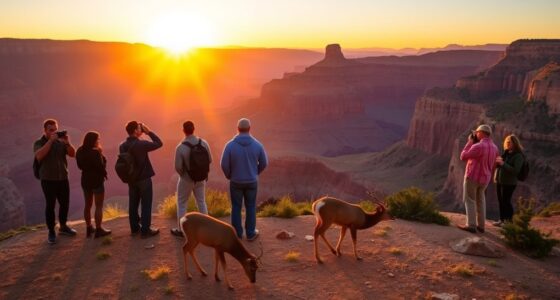
Low-impact hiking in Grand Canyon National Park lets you soak in stunning views while protecting the environment. By sticking to marked trails, you help minimize soil erosion and preserve delicate ecosystems. Respect wildlife by observing from a distance and keeping noise levels down. Plus, by using reusable supplies and packing out your waste, you contribute to the park’s cleanliness. Ready to explore how you can enhance your hiking experience sustainably? There’s plenty more to discover!

Get travel and outdoor gear delivered free with Prime
- Fast, free delivery on millions of items
- Prime Video, Amazon Music and more included
- Member-only deals all year
Key Takeaways
- Stick to marked trails to minimize soil erosion and preserve the Grand Canyon’s natural beauty for future generations.
- Maintain a respectful distance from wildlife to enhance your chances of observing animals without disturbing their natural behaviors.
- Use reusable water bottles and eco-friendly packaging to reduce waste and support the park’s cleanliness during your hike.
- Engage in quiet behaviors to appreciate the canyon’s stunning vistas while minimizing disruption to both wildlife and other visitors.
- Share conservation tips and responsible hiking practices with fellow hikers to promote sustainability within Grand Canyon National Park.

Exploring the breathtaking landscapes of Grand Canyon National Park can be an unforgettable experience, especially when you embrace low-impact hiking. By choosing this sustainable approach, you not only enjoy the stunning views and diverse ecosystems but also contribute to the preservation of the park’s natural beauty. Low-impact hiking encourages you to tread lightly, guaranteeing that the trails remain intact for future generations of adventurers.
Experience the Grand Canyon’s beauty responsibly through low-impact hiking, preserving its landscapes for future explorers.
As you navigate the trails, keep an eye out for the park’s incredible wildlife. The Grand Canyon is home to a variety of animals, from bighorn sheep to elusive mountain lions. Engaging in wildlife observation can be one of the most rewarding aspects of your hike. When you maintain a respectful distance and remain quiet, you increase your chances of spotting these magnificent creatures in their natural habitat. Remember, the goal is to observe, not to disturb. So, take a moment to appreciate the beauty around you—it’s a privilege to witness such vibrant life thriving in this rugged terrain.
While you’re enjoying the sights and sounds of nature, think about how your actions impact the park. Following low-impact hiking principles not only enhances your experience but also plays an essential role in trail conservation. By sticking to marked trails, you minimize soil erosion and help preserve delicate vegetation. Avoiding shortcuts and off-trail excursions ensures that the park remains pristine, allowing future hikers to enjoy it just as you do.
Bring along a reusable water bottle and snacks in eco-friendly packaging to further reduce waste. You’ll find that simple choices like these can make a big difference. Plus, when you pack out what you pack in, you contribute to maintaining the park’s cleanliness, which benefits everyone.
Low-impact hiking isn’t just about what you leave behind; it’s also about the connections you form with nature. AI tools can significantly boost productivity in content production and enhance your outdoor experiences. Take your time to bask in the awe-inspiring vistas and reflect on the importance of protecting these treasured landscapes. Engage with fellow hikers and share tips on how to enjoy the park responsibly. You’ll find that the shared commitment to conservation enriches your experience and deepens your appreciation for the Grand Canyon. Ultimately, embracing low-impact hiking means you’re not just a visitor; you’re a steward of this incredible environment.
Frequently Asked Questions
What Gear Is Essential for Low-Impact Hiking in the Grand Canyon?
For low-impact hiking, you’ll need lightweight footwear to keep your feet comfortable and agile on the trails. Don’t forget a sturdy backpack to carry essentials. Implement hydration strategies by bringing a refillable water bottle or hydration system to stay refreshed. Pack snacks for energy and a lightweight first aid kit for safety. Sun protection, like hats and sunscreen, is vital too, ensuring you enjoy your hike without compromising your well-being.
Are There Guided Low-Impact Hikes Available in the Park?
You’ll find plenty of guided tours that focus on eco-friendly practices in the park. These tours not only help you explore the stunning landscapes but also educate you on how to minimize your impact. With knowledgeable guides leading the way, you can enjoy a sustainable hiking experience that’s both fun and informative. So, grab your gear and get ready to discover the beauty of the canyon while respecting the environment!
What Wildlife Might I Encounter While Hiking?
While hiking, you might encounter diverse wildlife like mule deer, bighorn sheep, and various bird species. Keep an eye out for native plants like the vibrant desert marigold and resilient prickly pear, which thrive alongside unique geological features such as dramatic cliffs and colorful rock layers. Each step reveals the rich ecosystem, so stay alert for signs of movement and appreciate the beauty surrounding you in this stunning landscape.
When Is the Best Time to Hike in the Grand Canyon?
The best time to hike in the Grand Canyon is during spring and fall, when the weather’s mild and the park’s visitation is lower. In spring, you’ll enjoy blooming wildflowers, while fall offers stunning foliage. Summer can be scorching, and winter brings snow, which can limit access. By planning your hikes around seasonal weather, you’ll have a more enjoyable experience and avoid the crowds, allowing you to fully appreciate the park’s beauty.
Are There Restroom Facilities Along the Hiking Trails?
You’re going to want to plan ahead because restroom facilities aren’t available along most hiking trails. However, you’ll find restrooms at key trailhead facilities, like the South Rim’s Grand Canyon Village. As you venture deeper into the park, those facilities become sparse, so it’s best to take advantage of them before you start your hike. Remember, nature calls, and being prepared can make your adventure much more enjoyable!
Conclusion
By embracing low-impact hiking in Grand Canyon National Park, you not only protect the stunning landscapes but also enhance your experience with nature. For instance, imagine hiking along the Rim Trail, where you take precautions to stick to established paths and leave no trace. This mindful approach ensures that future generations can enjoy the same breathtaking views and diverse wildlife. Remember, every step you take matters—choose to tread lightly and respect the incredible environment around you.
Halloween Picks
halloween
As an affiliate, we earn on qualifying purchases.