

To communicate effectively with guides, hosts, and service workers, be clear and respectful. Use specific language and polite words like “please” and “thank you,” which help guide the conversation smoothly. Practice active listening by paying attention, asking follow-up questions, and showing genuine interest. Non-verbal cues like smiling, eye contact, and nodding can build rapport. If you keep these tips in mind, you’ll improve your interactions and get better service every time.
Key Takeaways
- Communicate clearly and politely, using specific requests and expressing appreciation with words like “please” and “thank you.”
- Practice active listening by paying attention, asking follow-up questions, and showing genuine interest.
- Be patient and understanding, especially during busy times or language barriers, to foster mutual respect.
- Use positive body language such as smiling, nodding, and maintaining eye contact to build rapport.
- Consider cultural and situational factors, adapting your communication style to ensure respectful and effective interactions.
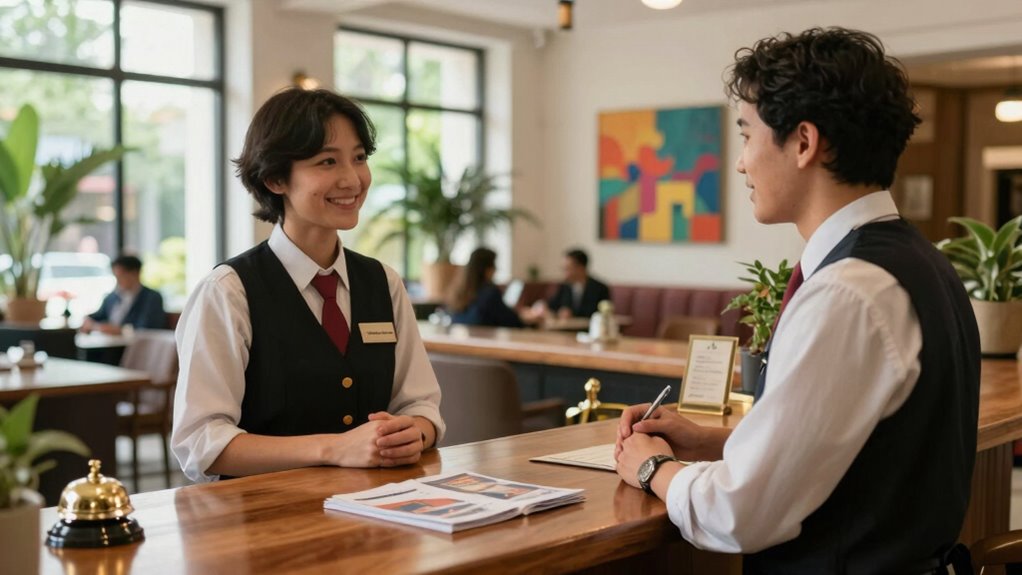
Communicating effectively with guides, hosts, and service workers can greatly enhance your experience and guarantee your needs are met promptly. When you approach these interactions with clarity and respect, you foster a positive environment that benefits everyone involved. Personal communication is key — it creates a connection that makes your requests more understandable and your expectations clearer. Instead of assuming or mumbling, take the time to speak directly, make eye contact, and listen actively. This not only shows respect but also helps prevent misunderstandings. Engaging in straightforward conversations encourages better customer engagement, which leads to more personalized service and a smoother overall experience.
Clear, respectful communication with staff ensures better service and a more enjoyable experience for everyone.
You can start by being specific about what you want or need. For example, rather than asking, “Is there a good place to eat around here?”, you might say, “Can you recommend a nearby restaurant that serves vegetarian options?” This specificity makes it easier for guides and hosts to assist you accurately and efficiently. When service workers understand your preferences or requirements upfront, they’re more likely to provide suitable options or solutions, making your experience more enjoyable. Remember, your tone matters. Approaching staff with politeness and friendliness invites cooperation and creates a more welcoming atmosphere. A simple “please” and “thank you” go a long way in establishing a respectful dialogue.
Active listening also plays a vital role in effective communication. Pay attention to what your guide or host is saying and respond thoughtfully. If something isn’t clear or if you need more information, don’t hesitate to ask follow-up questions. This shows you’re genuinely interested and engaged, which enhances customer engagement. It also helps you gather all the details you need for a satisfying experience. Keep in mind that patience and understanding are essential, especially when staff are busy or encountering language barriers. Showing patience demonstrates your appreciation for their efforts and encourages them to go the extra mile for you. Recognizing cultural differences can also improve your interactions by fostering mutual understanding and respect.
Finally, always be mindful of your body language. Smile, nod, and maintain eye contact to convey your friendliness and openness. These non-verbal cues reinforce your personal communication and make interactions more pleasant. Remember, the goal is to build a rapport that fosters mutual respect and efficient service. When you communicate effectively and prioritize personal connection, everyone benefits — you get better service, and the staff feels appreciated and understood. Practicing effective communication can significantly improve your interactions and overall experience, turning routine exchanges into meaningful connections that enhance your journey.

Practical Indonesian Phrasebook: A Communication Guide (Periplus Language Books)
As an affiliate, we earn on qualifying purchases.
As an affiliate, we earn on qualifying purchases.
Frequently Asked Questions
How Can I Show Appreciation Without Sounding Insincere?
To show appreciation without sounding insincere, focus on offering sincere compliments and expressing genuine gratitude. Be specific about what you appreciate, like their helpfulness or friendly attitude, which makes your praise feel more authentic. Use your own words and a warm tone to connect genuinely. When your appreciation is heartfelt and specific, it naturally comes across as sincere, making the other person truly feel valued.
What Are Common Cultural Misunderstandings When Communicating?
Cultural norms and nonverbal cues often clash, leading to misunderstandings. You might think a firm handshake shows confidence, but in some cultures, it’s seen as aggressive. Eye contact can signal honesty or disrespect, depending on where you are. You interpret silence as disagreement, yet it might be a sign of respect. Being aware of these differences helps you communicate more effectively, avoiding unintended offense and fostering genuine connections.
How Do I Handle Language Barriers Politely?
To handle language barriers politely, focus on non-verbal cues like smiling, nodding, and maintaining eye contact to show you’re engaged. Use simple words and speak slowly, giving the other person time to process. Practice active listening by paying close attention to their responses and gestures. If needed, use gestures or visuals to clarify. Showing patience and respect helps bridge language gaps effectively and politely.
What Are Respectful Ways to Ask for Recommendations?
You should use polite phrasing and cultural sensitivity when asking for recommendations. For example, say, “Could you kindly recommend something?” or “Would you mind sharing your favorite?” Be aware of cultural norms to avoid sounding too direct or disrespectful. Show appreciation for their advice, and maintain a friendly tone. This approach helps you ask for suggestions politely while respecting local customs and building positive connections.
How Can I Communicate My Needs Without Being Demanding?
Did you know that non-verbal cues account for 65-93% of communication? To communicate your needs without sounding demanding, use patience and empathy. Maintain eye contact, smile gently, and use open body language to show understanding. Speak calmly and clearly, and give the person time to respond. By paying attention to non-verbal cues and remaining respectful, you create a positive interaction that encourages helpfulness without pressure.
Conclusion
Remember, respectful, responsive, and relaxed communication creates a positive experience for everyone. When you’re courteous and clear, you cultivate connection and confidence. Whether you’re chatting with guides, hosts, or service workers, your genuine gestures and gracious greetings go a long way. So, stay simple, stay sincere, and speak with sincerity. Small acts of kindness and clear communication make a big difference—turning everyday encounters into memorable, meaningful moments.