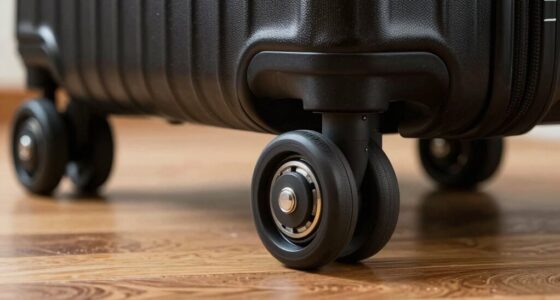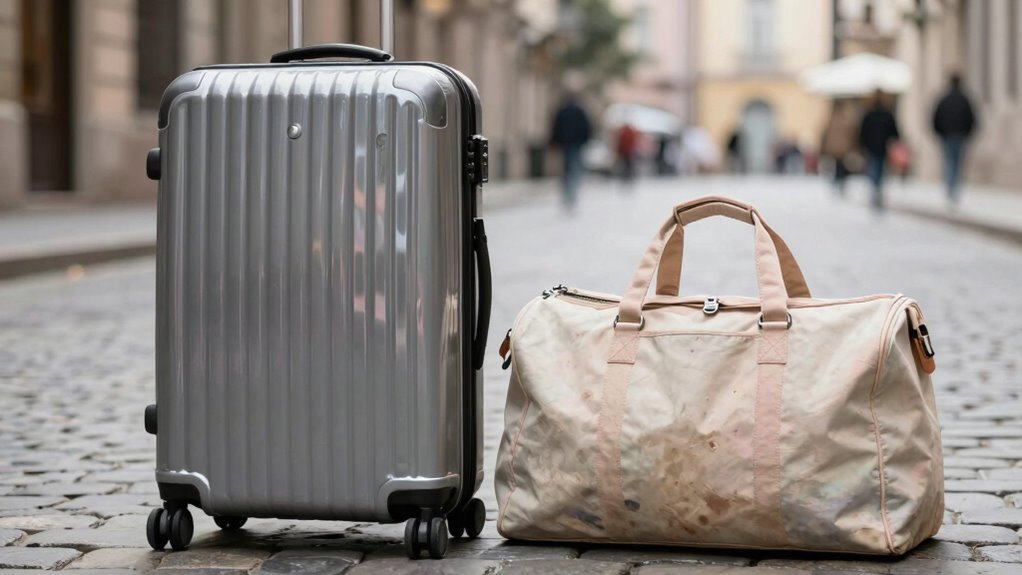

Choosing between hard cases and soft bags depends on your trip’s nature and what you need to protect. Hard cases offer better durability and security for fragile or valuable items, making them ideal for long journeys and rough handling. Soft bags are lighter, more flexible, and fit easily into tight spaces, perfect for short trips or connecting flights. To make the best choice, consider your trip duration, packing style, and airline restrictions—more details can help you decide confidently.

Get travel and outdoor gear delivered free with Prime
- Fast, free delivery on millions of items
- Prime Video, Amazon Music and more included
- Member-only deals all year
Key Takeaways
- Choose hard cases for fragile or valuable items needing maximum protection during rough handling.
- Opt for soft bags for short trips or when flexibility and lightweight packing are priorities.
- Hard cases are suitable for long journeys and heavy luggage, while soft bags work well for quick, casual travel.
- Consider airline restrictions; soft bags are easier to pack within weight limits due to their lighter weight.
- Use hard cases when security and durability are critical; soft bags excel in crowded or tight travel environments.
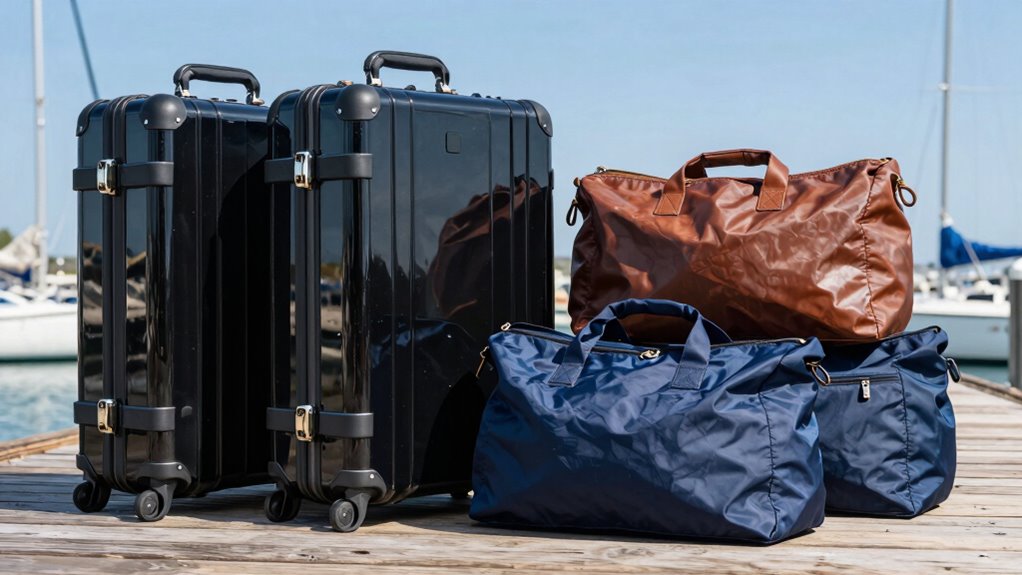
When choosing between hard cases and soft bags for travel or storage, understanding their advantages and limitations is essential. Your decision often hinges on the specific trip details, including airline restrictions and weight considerations. Airlines typically set strict rules about baggage size and weight, so knowing which bag type suits these rules can save you headaches at check-in. Hard cases tend to be more rigid, offering excellent protection for fragile items, but they can also be heavier, which might push you past airline weight limits. Soft bags, on the other hand, are usually lighter, making it easier to stay within weight restrictions, yet they might not provide the same level of protection for delicate belongings.
The durability of hard cases makes them an excellent choice if you’re carrying valuable or fragile items like electronics, glassware, or souvenirs. They’re also great for long trips or situations where your luggage might be tossed around a lot. However, the added weight of a hard case could mean you need to pack lighter overall to avoid exceeding airline weight restrictions. If you’re traveling with tight weight limits, soft bags can help because they’re typically made with lightweight materials like nylon or polyester. These lightweight materials contribute to the overall weight savings of soft bags, which can be a significant advantage in crowded travel environments. Additionally, soft bags often allow for more flexible packing, accommodating irregularly shaped items or extra clothing with ease. These bags can often be packed more efficiently, offering more flexibility in how much you can carry without going over the limit.
Another factor to consider is security. Hard cases usually come with built-in locks or sturdy zippers, making it less likely your belongings will be accessed without your permission. Soft bags often rely on external locks, which can sometimes be less secure, but they tend to be more adaptable in cramped spaces, like overhead compartments. If your trip involves connecting flights or multiple airlines with varying baggage policies, the flexibility and lighter weight of soft bags might be advantageous. They’re easier to squeeze into tight storage spaces and often more manageable when navigating crowded airports or busy streets.
Ultimately, your choice depends on the trip’s nature. For short, casual trips with minimal fragile items, soft bags are convenient and lightweight. If you’re headed on a longer journey or need to protect delicate belongings, a hard case might be better despite its heavier weight. Additional protection can be achieved by selecting a hard case with reinforced corners or shock-absorbing features. Always check the specific airline restrictions before packing, since different airlines have different size and weight limits. Balancing protection, weight, and convenience will help you pick the right luggage for your trip, ensuring a smoother travel experience overall.
As an affiliate, we earn on qualifying purchases.
Frequently Asked Questions
Are Hard Cases More Secure Against Theft Than Soft Bags?
Hard cases are generally more secure against theft because they feature stronger security features like integrated locks and tougher material durability. Their rigid structure makes them harder to tamper with or break into, providing better protection. Soft bags, while lighter and more flexible, often lack advanced security features, making them slightly more vulnerable. So, if security is your priority, hard cases offer better protection against theft.
How Do Weight Restrictions Differ Between Hard and Soft Luggage?
Hard cases usually have a higher weight capacity thanks to their sturdy material durability, allowing you to pack heavier items without concern. Soft bags, made from flexible fabrics, often have more lenient weight restrictions but can be more prone to damage if overloaded. When choosing, consider your packing needs and how much weight your luggage can safely handle, ensuring it meets airline restrictions and protects your belongings during travel.
Can Soft Bags Withstand Rough Handling Better Than Hard Cases?
Imagine soft bags as a flexible vine, bending but rarely breaking under rough handling. Their material durability often surpasses hard cases when faced with jostling, thanks to their pliability. Packing flexibility adds to their resilience, allowing them to absorb shocks and fit into tight spaces. So, yes, soft bags can withstand rough handling better than hard cases, especially when their materials are high-quality and designed for durability.
Do Hard Cases Provide Better Protection for Fragile Items?
Hard cases do provide better protection for fragile items because they offer rigid, cushioning protection against impacts. When you travel with delicate belongings, a hard case absorbs shocks and prevents crushing, ensuring your fragile items stay intact. Soft bags, while lightweight and flexible, may lack the necessary cushioning protection during rough handling. So, if safeguarding fragile items is your priority, opting for a hard case is the smarter choice.
Are Soft Bags More Flexible for Packing Irregularly Shaped Items?
You’ll find soft bags surprisingly flexible for packing irregularly shaped items, thanks to their flexible storage and custom compartments. Ironically, their softness makes them more adaptable than hard cases, which are rigid and less forgiving. With soft bags, you can squish and mold compartments around your items, maximizing space and ensuring everything fits snugly. So, for tricky shapes, soft bags truly shine, offering tailored flexibility that rigid cases simply can’t match.
Conclusion
So, next time you’re packing, remember—hard cases might protect your gear, but soft bags offer flexibility and ease. Ironically, the toughest choice depends entirely on your trip’s needs. Whether you prefer to play it safe or go with the flow, it’s all about what you value most. After all, in the end, the “better” bag is just the one that suits your journey—because sometimes, the most rigid choice isn’t always the smartest.
Halloween Picks
halloween
As an affiliate, we earn on qualifying purchases.