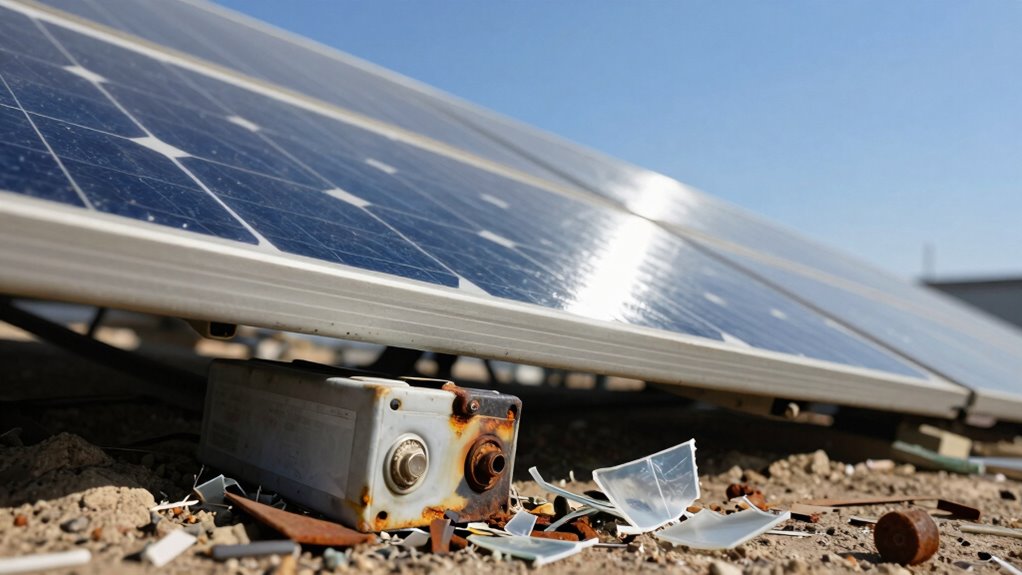

The biggest mistake is relying only on solar panels’ peak output without properly sizing and integrating batteries. When your system doesn’t store enough energy for nighttime, your batteries stay half-fed, limiting power after sunset. This causes you to depend on the grid or cut back on usage. Proper battery capacity and smart management are essential for full autonomy. Keep going to discover how optimizing storage can truly maximize your solar investment.
Key Takeaways
- Relying solely on peak sunlight output neglects nighttime energy needs, leaving batteries undercharged.
- Poorly integrated or undersized batteries limit stored energy, causing incomplete power supply after sunset.
- Without proper energy management systems, excess solar energy is wasted, reducing battery efficiency.
- Mismatched battery capacity fails to align with consumption, resulting in insufficient storage and performance.
- Failing to optimize storage and management leads to reliance on external power sources, undermining independence.
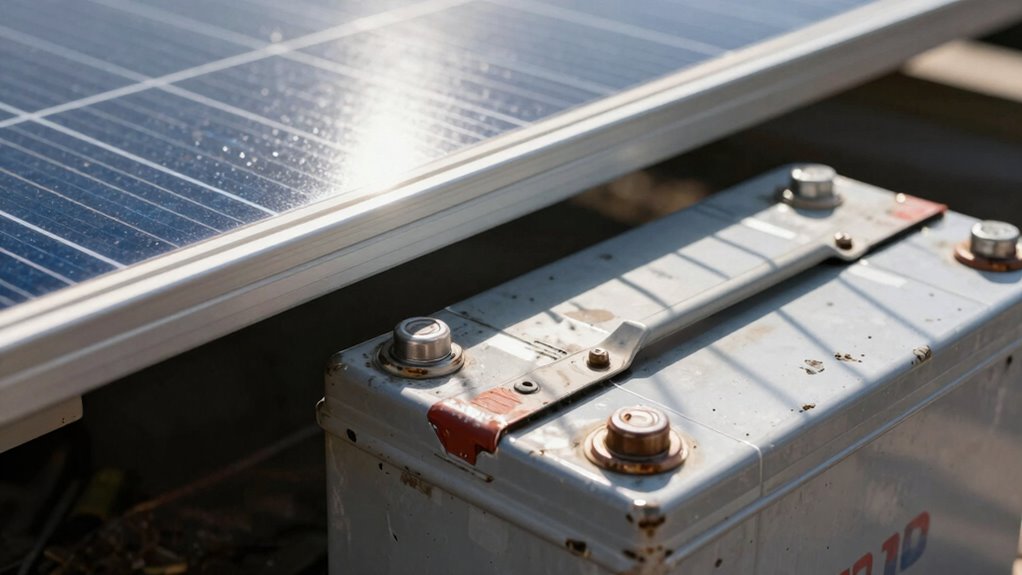
Have we truly considered the full consequences of relying on solar energy? It’s tempting to focus on the bright promise of clean, renewable power, but there’s a hidden pitfall that often gets overlooked: the way we handle battery storage. When you install solar panels, the goal is clear — maximize solar efficiency to generate as much electricity as possible during the day. But without proper battery storage, that efficiency doesn’t translate into reliable power when the sun goes down. Instead, you’re left with a gap, a period where your solar system can’t meet your energy needs, forcing you to buy electricity from the grid or settle for less. This oversight leaves batteries half-fed, underutilized, and ultimately ineffective.
The problem isn’t just about having batteries; it’s about how those batteries are integrated into your system. Many people focus on improving solar efficiency, pushing for more panels and better technology, but they neglect the crucial component of storing that energy efficiently. If your batteries aren’t capable of holding enough charge or aren’t integrated with smart management systems, you’ll find yourself wasting the very energy you worked so hard to produce. Instead of powering your home through the night, your batteries might only provide a fraction of what’s needed, leading to frequent power interruptions or reliance on the grid. This situation defeats the purpose of going solar in the first place.
Moreover, inadequate battery storage can cause a mismatch between energy production and consumption patterns. During peak sunlight hours, your system might produce excess energy, but if your batteries aren’t designed to store that surplus efficiently, it simply goes unused. As a result, you lose potential savings and undermine the overall solar efficiency. Proper energy management systems can help optimize storage and usage, ensuring you make the most of your solar investment. Without these systems, your system remains only partially effective, leaving you with suboptimal performance that hampers your energy independence. You might think your system is doing well, but in reality, it’s only half-operational — generating power but not storing enough of it to maximize independence or savings. Over time, this leads to higher costs and less energy autonomy, negating the benefits that solar energy can offer.
A deeper understanding of battery capacity and how it aligns with your energy needs can help prevent this common mistake.

ECO-Worthy Cubix100 48V 600Ah Server Rack Battery LiFePO4 | 6 Pack 30.72kWh Solar Battery Kit for Home Backup | UL9540 & UL1973 & CEC Listed, for Home Backup Power
- Certifications: UL9540, UL1973, CEC listed
- Capacity: 30.72kWh for whole-home backup
- Power System: Off-grid, reliable energy solution
As an affiliate, we earn on qualifying purchases.
As an affiliate, we earn on qualifying purchases.
Frequently Asked Questions
How Can I Tell if My Solar System Is Underperforming?
You can tell if your solar system is underperforming by monitoring your energy production and comparing it to the expected output for your system size and location. Check for signs of battery degradation, like reduced backup capacity, and confirm your system is properly calibrated. If your batteries aren’t charging fully or your panels aren’t producing enough power, it’s time to inspect these factors and consider professional evaluation to optimize performance.
What Maintenance Is Required for Solar Batteries?
Think of your solar batteries as a garden needing regular tending. You should perform battery calibration to guarantee accurate charge readings and check electrolyte levels to prevent dry or overfilled cells. Regularly inspect for corrosion and keep terminals clean. Proper maintenance helps your batteries stay healthy, just like nurturing plants ensures a lush, thriving garden. With attentive care, your solar system will continue to power your home efficiently.
Are There Alternative Solutions to Improve Battery Life?
You can improve battery life through effective battery optimization and exploring alternative storage solutions. Regularly monitor and balance your batteries to prevent overcharging or deep discharges. Consider upgrading to advanced storage solutions like lithium-ion batteries, which offer better longevity and efficiency. Additionally, integrating smart energy management systems helps optimize usage, ensuring your batteries stay healthier longer. These steps can substantially enhance your solar energy system’s overall performance and lifespan.
How Does Weather Affect Solar Battery Efficiency?
Ironically, weather loves to keep your solar batteries guessing. Cloud cover reduces sunlight, decreasing efficiency, so your batteries get half the charge they need. Meanwhile, temperature fluctuations can either boost or cripple performance—hot days may cause overheating, while cold days slow chemical reactions. You might think sunny days are perfect, but unpredictable weather patterns make it a challenge to keep your batteries fully charged and reliable.
What Are the Long-Term Costs of Solar Battery Replacements?
The long-term costs of solar battery replacements can add up due to battery degradation over time. You’ll need to take into account a detailed cost analysis to understand the total expense, including replacement costs and potential efficiency loss. As batteries age, their capacity diminishes, leading to more frequent replacements. Planning ahead, budgeting for these costs, and choosing high-quality batteries can help you manage long-term expenses effectively.
Conclusion
If you ignore the solar mistake of underestimating battery needs, you’ll face a cycle of imbalance, a cycle of inefficiency, and a cycle of frustration. You might save money upfront, but you’ll lose energy when you need it most. You may trust your system, but you’ll doubt its reliability. By addressing this mistake now, you guarantee your solar setup is complete, reliable, and truly sustainable—because a well-fed battery feeds your future, not just your present.