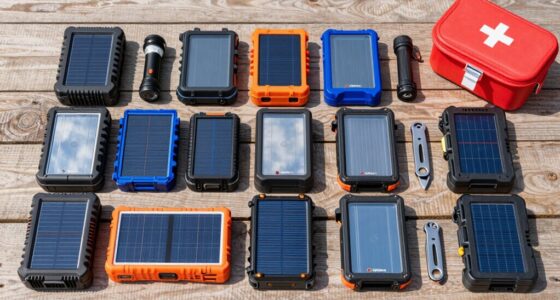
For those seeking reliable portable power with room to grow, a portable power station with an expandable battery offers unmatched flexibility. The AFERIY Portable Power Station stands out as the best overall choice thanks to its massive 1024Wh capacity expandable to over 5000Wh, ideal for long trips or backup power. The Anker SOLIX C2000 Gen 2 delivers high capacity and fast charging, making it perfect for serious outdoor enthusiasts. However, these systems often involve tradeoffs: higher capacity comes with increased weight and cost, while smaller units might lack the expandability needed for larger power needs. Continue reading for a detailed breakdown of these options, their strengths, and their limitations.

Get travel and outdoor gear delivered free with Prime
- Fast, free delivery on millions of items
- Prime Video, Amazon Music and more included
- Member-only deals all year
Complete the kit


Key Takeaways
- Expandable battery capacity is the main feature that distinguishes these stations, but it often results in increased size and cost.
- Top picks balance capacity, portability, and ease of expansion, with some models offering more modular options than others.
- The best value choices often compromise on raw power but excel in usability and price point.
- Premium models tend to deliver larger capacities, faster charging, and more durable build quality, suitable for long-term or heavy-duty use.
- Compatibility and ease of expansion are critical factors that influence how well a station fits different outdoor or backup power scenarios.
| AFERIY Portable Power Station Battery 1024Wh Expandable to 5120Wh |  | Best for Modular Home and Off-Grid Power Expansion | Wattage: 1800 watts | Battery Capacity: 1024Wh (expandable to 5120Wh) | Battery Type: LiFePO4 | VIEW ON AMAZON | See Our Full Breakdown |
| Anker SOLIX C2000 Gen 2 Portable Power Station, 2048Wh, 2400W, Camping |  | Best for Portable, High-Capacity Outdoor Power | Capacity: 2048Wh | Rated Power: 2400W | Peak Power: 4000W | VIEW ON AMAZON | See Our Full Breakdown |
| EF ECOFLOW Portable Power Station Delta 3 Classic, 1024Wh, 1800W AC |  | Best for Reliable Home Backup and Sensitive Electronics | Capacity: 1024Wh | Output Power: 1800W | Surge Power: 3600W | VIEW ON AMAZON | See Our Full Breakdown |
| VTOMAN Jump 600X Portable Power Station 600W, 9 Ports Solar Generator |  | Best for Ultra-Lightweight Camping and Emergency Use | Wattage: 600W | Battery Capacity: 600Wh | Runtime: Approximately 3 hours | VIEW ON AMAZON | See Our Full Breakdown |
| LIBRIDS Portable Power Station 640Wh, 1200W Surge, Solar Generator with 4 AC Outlets |  | Best for Compact, High-Quality Power Backup | Capacity: 640Wh | Surge Power: 1200W | Continuous Power: 600W | VIEW ON AMAZON | See Our Full Breakdown |
| EnginStar Portable Power Station 300W 296Wh Solar Generator |  | Best Compact and Versatile for Emergency and Outdoor Use | Capacity: 296Wh | AC Output: 300W | Dimensions: 9 x 5.5 x 7.5 inches | VIEW ON AMAZON | See Our Full Breakdown |
| Jackery Explorer 300 Portable Power Station, 292Wh |  | Best for Long-Term Use and Versatility in a Lightweight Frame | Capacity: 292Wh | Weight: 7.5 lbs | Outlets: 2 AC, USB-C, USB-A, car port | VIEW ON AMAZON | See Our Full Breakdown |
| PECRON Portable Power Station E1000LFP, 1024Wh/1800W LiFePO4 Battery Backup |  | Best for High Capacity and Expandability in Emergency and Home Use | Capacity: 1024Wh | Wattage: 1800W | Weight: 29 pounds | VIEW ON AMAZON | See Our Full Breakdown |
| ABOK Ark3600 Portable Power Station 3600W, 3840Wh LiFePO4 Battery |  | Best for High-Power and Long-Duration Off-Grid Use | Capacity: 3840Wh (expandable to 11520Wh) | Rated Output: 3600W | Weight: 29 pounds | VIEW ON AMAZON | See Our Full Breakdown |
| ALLWEI Portable Power Station 300W, 256Wh Solar Generator LiFePO4 Battery |  | Best Lightweight and Reliable for Short-Term Outdoor Power | Capacity: 256Wh | Continuous Power: 300W | Weight: 6.4 lbs | VIEW ON AMAZON | See Our Full Breakdown |
| Jackery HomePower 3600 Plus Power Station, 3584Wh, 3600W AC Output |  | Best Overall for Whole-Home Backup | Capacity: 3584Wh | Output Power: 3600W | Voltage: 120V & 240V in parallel | VIEW ON AMAZON | See Our Full Breakdown |
| EF ECOFLOW Portable Power Station River 3 Plus, 286Wh, 760W |  | Best for Expandable Portable Power on the Go | Battery Capacity: 286Wh | Output Wattage: 600W | Surge Power: 1200W | VIEW ON AMAZON | See Our Full Breakdown |
| portable power station with expandable battery | Weight | Capacity | Battery Type |
|---|---|---|---|
| AFERIY Portable Power Station | — | — | LiFePO4 |
| Anker SOLIX C2000 Gen 2 Portab | 41.7 lbs | 2048Wh | — |
| EF ECOFLOW Portable Power Stat | 26.7 pounds | 1024Wh | LiFePO4 |
| VTOMAN Jump 600X Portable Powe | 9.9 pounds | — | — |
| LIBRIDS Portable Power Station | — | 640Wh | — |
| EnginStar Portable Power Stati | 6.5 pounds | 296Wh | Lithium-ion |
| Jackery Explorer 300 Portable | 7.5 lbs | 292Wh | LiFePO4 |
| PECRON Portable Power Station | 29 pounds | 1024Wh | LiFePO4 |
| ABOK Ark3600 Portable Power St | 29 pounds | 3840Wh (expandable to 11520Wh) | LiFePO4 |
| ALLWEI Portable Power Station | 6.4 lbs | 256Wh | LiFePO4 |
| Jackery HomePower 3600 Plus Po | 77.2 pounds | 3584Wh | — |
| EF ECOFLOW Portable Power Stat | 10.4 lbs | — | — |
More Details on Our Top Picks
AFERIY Portable Power Station Battery 1024Wh Expandable to 5120Wh
This expansion battery system stands out for its ability to support up to four batteries, vastly increasing capacity from 1024Wh to 5120Wh, making it ideal for those needing long-term power backup or extensive off-grid setups. Compared with the EcoFlow Delta 3 Classic, it offers superior expandability and a longer cycle life thanks to LiFePO4 cells, but it requires the main Nomad1800 Pro unit to operate, limiting flexibility for those seeking standalone units. Its durable construction and smart app monitoring add convenience, yet the bulkiness when fully expanded could be a drawback for portable needs. This product is better suited to users who already own or plan to purchase the compatible main unit and need substantial, expandable capacity for home or off-grid use.
Pros:- Supports up to four expansion batteries for extensive capacity
- LiFePO4 cells provide over 4000 charge cycles, ensuring longevity
- Smart app monitoring for convenient control
- Durable build with safety certifications
Cons:- Requires main Nomad1800 Pro unit to operate, limiting flexibility
- Bulky when fully expanded, less portable
Best for: Homeowners or off-grid enthusiasts requiring large, expandable battery capacity with reliable long-term performance
Not ideal for: Casual campers or travelers who need a standalone, lightweight power source without the main unit dependency
- Wattage:1800 watts
- Battery Capacity:1024Wh (expandable to 5120Wh)
- Battery Type:LiFePO4
- Charge Cycles:Over 4000
- Supported Expansion Batteries:Up to 4
- Safety Certification:UL Listed
Our verdict“This system is best for users who prioritize massive, expandable capacity for home backup or remote power needs and are willing to accept some bulk.”
Anker SOLIX C2000 Gen 2 Portable Power Station, 2048Wh, 2400W, Camping
The Anker SOLIX C2000 Gen 2 offers a compelling mix of portability and high capacity, with 2048Wh and a rated power of 2400W, making it suitable for extended camping trips or outdoor events. Unlike the larger, more stationary options like the LIBRIDS or EcoFlow Delta, this model emphasizes lightweight design—though at 41.7 pounds, it can still be a bit heavy for some backpackers, yet it balances this with fast recharge times (58 minutes) and the ability to expand capacity up to 4kWh with additional batteries. Its high peak power supports multiple appliances simultaneously, but the lack of detailed solar recharging info may be a concern for off-grid users. Overall, this pick makes the most sense for outdoor enthusiasts who need reliable power without sacrificing portability.
Pros:- Fast recharge in under an hour
- High peak power supports multiple devices
- Portable, relatively compact at 41.7 lbs
- Expandable capacity up to 4kWh
Cons:- Relatively heavy for casual backpackers
- Limited info on solar recharging efficiency
Best for: Outdoor adventurers or campers needing a portable, high-capacity power station with fast recharge features
Not ideal for: Lightweight backpackers or those with minimal power needs who prefer smaller, more manageable units
- Capacity:2048Wh
- Rated Power:2400W
- Peak Power:4000W
- Recharge Time:58 minutes
- Expansion Capacity:Up to 4kWh
- Weight:41.7 lbs
Our verdict“This model is ideal for outdoor enthusiasts who want high capacity and quick recharging in a portable form factor, accepting some weight tradeoffs.”
EF ECOFLOW Portable Power Station Delta 3 Classic, 1024Wh, 1800W AC
The EcoFlow Delta 3 Classic combines a solid 1024Wh capacity with 1800W continuous output, making it a dependable choice for home backup and sensitive electronics. Compared to the larger LIBRIDS station, it offers faster charging (45 minutes to 80%) and supports smart app control, but it isn’t expandable with the Delta 2 Smart Extra Battery, limiting long-term capacity growth. Its lighter weight (26.7 pounds) adds to portability, yet it’s still quite substantial for frequent outdoor use. It’s best suited for users who prioritize reliable, fast-charging power for essential devices and appreciate the seamless integration of solar recharging and smart controls, even if expansion options are limited.
Pros:- Fast charging from 0 to 80% in 45 minutes
- Supports solar recharging and smart app control
- Reliable UPS with quick switch-over
- Suitable for sensitive electronics
Cons:- Limited expansion options, no Delta 2 Smart Battery support
- Heavy at 26.7 pounds for portable use
Best for: Home users or small business owners seeking reliable, fast-charging backup power for electronics and appliances
Not ideal for: Outdoor adventurers requiring extensive expandability or ultra-lightweight portability
- Capacity:1024Wh
- Output Power:1800W
- Surge Power:3600W
- Weight:26.7 pounds
- Charging Time:45 minutes
- Battery Type:LiFePO4
Our verdict“This station excels in providing fast, reliable power for home or office use, with limited expansion flexibility.”
VTOMAN Jump 600X Portable Power Station 600W, 9 Ports Solar Generator
The VTOMAN Jump 600X is designed for maximum portability, weighing under 10 pounds, making it perfect for lightweight camping, outdoor adventures, or emergency scenarios. Its 600W continuous power output is suitable for charging smartphones, small appliances, and LED lights, but it’s limited compared to larger units like the Anker or EcoFlow, especially in capacity and runtime. The fast recharge time (around 50 minutes) and LiFePO4 battery with 3,000 cycles support frequent use, yet it cannot run high-power devices over long periods. This pick is ideal for those who prioritize weight and convenience over high capacity, but it’s not suited for powering larger appliances or extended off-grid setups.
Pros:- Extremely lightweight and compact
- Fast recharge in about 50 minutes
- Long-lasting LiFePO4 battery with 3,000 cycles
- Multiple ports including USB-C and AC outlets
Cons:- Limited to 600W continuous power
- Solar panel sold separately, adding extra cost
Best for: Outdoor enthusiasts or emergency preppers needing a lightweight, quick-recharge backup for small devices
Not ideal for: Users requiring sustained power for high-demand appliances or long-term off-grid living
- Wattage:600W
- Battery Capacity:600Wh
- Runtime:Approximately 3 hours
- Weight:9.9 pounds
- Recharge Time:50 minutes
- Battery Cycles:3000
Our verdict“This ultra-portable station is perfect for lightweight camping or emergency use, with limited capacity for high-power devices.”
LIBRIDS Portable Power Station 640Wh, 1200W Surge, Solar Generator with 4 AC Outlets
The LIBRIDS Portable Power Station offers a balanced combination of size, capacity, and power, with 640Wh and a surge capacity of 1200W, making it suitable for backup during outages or outdoor activities. Compared to the Anker or EcoFlow, it provides a slightly smaller capacity but includes more outlets—4 AC and 4 USB ports—making it versatile for multiple devices. Its pure sine wave inverter ensures safe power for sensitive electronics, and the long cycle life of over 4000 charges emphasizes durability. However, its weight isn’t specified, and it’s less suited for extended off-grid use requiring larger capacity, making it a good compromise for users who need reliable, portable power without extreme capacity demands.
Pros:- Fast charging in 1.5 hours
- Long-lasting LiFePO4 with 4000+ cycles
- Multiple outlets including 4 AC and USB ports
- Pure sine wave inverter for sensitive electronics
Cons:- Indoor use only, not weatherproof
- Weight and dimensions not specified, portability unclear
Best for: Small households or outdoor users needing reliable, portable backup with multiple outlets
Not ideal for: Users who need high capacity for extended off-grid power or large appliances
- Capacity:640Wh
- Surge Power:1200W
- Continuous Power:600W
- Charging Time:1.5 hours
- Number of Outlets:8
- Inverter Type:Pure sine wave
Our verdict“This model is well-suited for reliable, portable backup power for small households or outdoor events, with a focus on safety and durability.”
EnginStar Portable Power Station 300W 296Wh Solar Generator
The EnginStar Portable Power Station excels in portability, offering a lightweight design at just 6.5 pounds, which makes it ideal for outdoor adventures or emergency kits. Compared to larger options like the ABOK Ark3600, it sacrifices capacity for size, limiting it to 296Wh and a 300W AC output—adequate for phones, laptops, and small devices but not high-power appliances. Its multiple charging ports and support for solar, car, and wall charging make it flexible for various situations. However, the absence of a solar panel and its limited output mean it’s best suited for light, short-term power needs rather than extended or high-demand use. This pick makes the most sense for campers or emergency kits that prioritize portability over raw power.
Pros:- Compact and lightweight design for easy transport
- Multiple charging options including solar, AC, and car
- Supports charging multiple devices simultaneously
- Built-in safety features for reliable operation
Cons:- Solar panel not included, increasing overall setup cost
- Limited to 300W output, unsuitable for high-power appliances
Best for: Outdoor enthusiasts and emergency preparedness households needing a lightweight, portable backup for small devices
Not ideal for: Users who want to power high-wattage appliances or require long-lasting backup for multiple devices simultaneously
- Capacity:296Wh
- AC Output:300W
- Dimensions:9 x 5.5 x 7.5 inches
- Weight:6.5 pounds
- Output Ports:8
- Battery Type:Lithium-ion
- Charge Cycles:Over 1000
Our verdict“This is a practical choice for those needing a portable, lightweight power source for small devices and outdoor activities.”
Jackery Explorer 300 Portable Power Station, 292Wh
The Jackery Explorer 300 combines portability with durability, thanks to its LiFePO4 battery that offers over 4,000 charge cycles, making it a strong contender for long-term outdoor use. It weighs only 7.5 pounds, slightly more than the EnginStar but still manageable for most users. Its array of outlets, including USB-C and USB-A ports, provides versatile device compatibility. Compared with the EnginStar, it supports faster charging with solar panels and offers longer battery life, but it shares the same limitation of a 300W maximum output, restricting it from powering high-wattage appliances. This makes it a reliable companion for camping or off-grid living where device longevity and durability matter more than sheer power capacity.
Pros:- Lightweight and highly portable
- Long-lasting LiFePO4 battery with over 4,000 cycles
- Supports fast solar charging and multiple device connections
- Durable design suitable for outdoor conditions
Cons:- Limited to 300W rated output, not suitable for high-wattage devices
- Solar panel not included, additional cost required
Best for: Campers and off-grid users seeking a durable, long-lasting portable power station for small to medium devices
Not ideal for: People needing to run high-power tools or appliances that exceed 300W
- Capacity:292Wh
- Weight:7.5 lbs
- Outlets:2 AC, USB-C, USB-A, car port
- Charge Cycles:Over 4,000
- Charging Time:Approximately 2.8 hours to 80% with 100W solar panel
- Battery Type:LiFePO4
Our verdict“This model offers excellent longevity and versatility for users who prioritize durability and portable device charging over high power output.”
PECRON Portable Power Station E1000LFP, 1024Wh/1800W LiFePO4 Battery Backup
The PECRON E1000LFP stands out with its substantial 1024Wh capacity and 1800W output, making it a strong choice for users who need reliable power for longer periods or higher-wattage devices. Its ability to expand up to 4096Wh offers flexibility that surpasses most portable models like the Jackery or EnginStar, positioning it well for emergency backup or home use. The fast 1.3-hour charge time minimizes downtime, and its multiple output ports support a broad range of devices. However, at 29 pounds, it’s considerably heavier and less portable, which could be a drawback for those needing lightweight solutions. This pick is ideal for users who prioritize capacity and expandability over portability.
Pros:- Large 1024Wh LiFePO4 capacity with expandable options
- Supports up to 1800W output for high-power devices
- Fast charging in just 78 minutes
- Multiple output ports including AC, USB, DC, and XT60
Cons:- Heavy at 29 pounds, less portable for frequent transport
- Higher cost typical of high-capacity units
- Requires solar or AC input for rapid charging
Best for: Homeowners and emergency preparedness buyers seeking expandable power capacity for long-term backup and high-wattage appliances
Not ideal for: Individuals needing a lightweight, portable power station for frequent outdoor activities
- Capacity:1024Wh
- Wattage:1800W
- Weight:29 pounds
- Charge Time:1.3 hours
- Output Ports:5
- Battery Type:LiFePO4
Our verdict“This unit is best suited for users needing serious backup capacity and expandability, especially in emergency or home environments.”
ABOK Ark3600 Portable Power Station 3600W, 3840Wh LiFePO4 Battery
The ABOK Ark3600 is a powerhouse designed for demanding applications, with an impressive 3840Wh capacity and 3600W rated output supported by durable LiFePO4 batteries. Its extendable capacity to 11520Wh makes it stand out among portable options like the PECRON, especially for prolonged off-grid or emergency scenarios. Its extensive port selection, including AC, USB-C, and DC outlets, supports a wide variety of devices, and Bluetooth monitoring adds convenience. Nonetheless, its large size and weight, at nearly 30 pounds, limit portability. It’s a clear choice for users who value capacity and power over ease of transport, such as RV owners or emergency prepper households.
Pros:- Extremely high capacity with 3840Wh, expandable to 11520Wh
- Supports a 3600W rated output for most household appliances
- Over 4000 life cycles for durability
- Multiple charging options including AC, PV, and car
Cons:- Heavy and bulky, less portable
- Higher price point due to capacity and features
- Requires solar or AC input for fast recharge
Best for: Users needing a high-capacity, long-lasting power station for RVs, off-grid living, or backup power in emergencies
Not ideal for: Active outdoor users who require a lightweight, compact unit for frequent transport
- Capacity:3840Wh (expandable to 11520Wh)
- Rated Output:3600W
- Weight:29 pounds
- Charge Time:3 hours (AC), 1.29 hours (AC + PV)
- Output Ports:15
- Battery Type:LiFePO4
Our verdict“This model suits those seeking an extremely high-capacity, durable power source for extended or high-demand off-grid applications.”
ALLWEI Portable Power Station 300W, 256Wh Solar Generator LiFePO4 Battery
The ALLWEI 300W offers a compact and lightweight design, weighing just over 6 pounds, making it highly portable for camping, emergency backup, or outdoor activities. Its 256Wh capacity is modest but sufficient for small device loads, and with multiple recharging options, it supports solar, AC, and car charging—though solar efficiency depends heavily on sunlight conditions. Its diverse ports, including USB-C and USB-A, enable powering several devices simultaneously. Compared to the EnginStar, it has a slightly smaller capacity but is more lightweight, making it ideal for short trips or quick emergencies. The main limitation is its 300W continuous power ceiling, which won’t handle high-wattage appliances or tools.
Pros:- Very lightweight and portable
- Supports multiple recharging methods including solar
- Diverse ports for various devices
- Long lifespan with 3000 charge cycles
Cons:- Limited to 256Wh capacity, restricting run time
- Maximum output of 300W limits power for larger devices
- Solar charging depends on sunlight conditions
Best for: Outdoor adventurers and emergency kits needing a lightweight, easy-to-carry power source for small devices
Not ideal for: Users who need to power high-wattage devices or plan longer off-grid stays
- Capacity:256Wh
- Continuous Power:300W
- Weight:6.4 lbs
- Charge Cycles:3000
- Charging Time (AC):3.5-4 hours
- Battery Type:LiFePO4
Our verdict“This unit is best suited for quick, lightweight outdoor power needs and emergency backup of small devices.”
Jackery HomePower 3600 Plus Power Station, 3584Wh, 3600W AC Output
The Jackery HomePower 3600 Plus stands out for its impressive 3584Wh capacity and robust 3600W continuous output, making it well-suited for powering essential household appliances during outages. Compared to the EF ECOFLOW River 3 Plus, which offers portability and expandability in a smaller form, the Jackery’s larger capacity supports longer backup durations but at a heftier 77.2 pounds. Its multiple charging options—including AC, solar, and hybrid—offer flexibility, though the weight limits its ease of movement, despite features like wheels and a telescopic handle. The high-temp resistant LFP battery ensures safety and longevity, with a lifespan up to 10 years and 6,000 cycles. However, the limited outlets may require multiple units for larger setups, and the price isn’t specified, which could impact accessibility for some buyers. Overall, this pick makes the most sense for those seeking a durable, high-capacity backup that can handle home-level demands, accepting the tradeoff of weight and size.
Pros:- Large 3584Wh capacity suitable for extended backup needs
- Multiple charging options including solar and hybrid modes
- Built with high-temp resistant battery cells for safety and durability
- Wheels and telescopic handle facilitate movement despite weight
Cons:- Heavy at 77.2 pounds, limiting portability
- Limited to 2 outlets, possibly requiring multiple units for larger loads
- Price and availability details are not specified
Best for: Homeowners needing dependable, long-term backup power for essential appliances during outages.
Not ideal for: Individuals prioritizing lightweight, portable units for camping or outdoor adventures due to its weight and size.
- Capacity:3584Wh
- Output Power:3600W
- Voltage:120V & 240V in parallel
- Weight:77.2 pounds
- Dimensions:15.2 x 12.2 x 19.3 inches
- Number of Outlets:2
Our verdict“This power station is ideal for those who want a high-capacity, reliable home backup with some portability considerations.”
EF ECOFLOW Portable Power Station River 3 Plus, 286Wh, 760W
The EF ECOFLOW River 3 Plus offers a compact yet expandable solution, with a 286Wh base capacity and surge power up to 1200W, making it highly versatile for camping, small home use, or emergencies. Its fast X-Stream recharge technology allows a recharge in just about an hour, outperforming larger capacity options like the Jackery HomePower 3600 Plus in quickness, though it provides significantly less power upfront. The ability to expand capacity via the EB300 or EB600 batteries means you can tailor total capacity to your needs, a feature absent in most portable units like the Anker SOLIX C2000. With multiple outlets, including USB-C and UPS features, and smart app control, it caters well to tech-savvy users. The tradeoffs are its limited 286Wh base capacity without expansion and a weight of 10.4 lbs, which, while light, may be insufficient for heavy-duty power needs. It excels for those who want a portable, expandable power source for moderate use and quick recharging.
Pros:- Fast recharge in about an hour with X-Stream technology
- Expandable battery options (EB300 and EB600) for tailored capacity
- Long-lasting LiFePO4 battery with 3000 cycles
- Multiple outlets including USB-C, AC, and UPS support
Cons:- Limited base capacity at 286Wh without expansion
- Relatively high price for its size and features
- Limited surge capacity relative to large appliances
Best for: Campers, emergency prepper, or outdoor enthusiasts seeking a lightweight, expandable power station with fast recharge and multiple outlets.
Not ideal for: Those needing sustained high-capacity power for home backup or running large appliances, due to its initial small capacity and price point.
- Battery Capacity:286Wh
- Output Wattage:600W
- Surge Power:1200W
- Number of Outlets:7
- Weight:10.4 lbs
- Recharge Time:1 hour (AC), 1.5 hours (solar)
Our verdict“This model suits users who want a lightweight, rapidly rechargeable, expandable power source for moderate needs, not heavy-duty home backup.”

How We Picked
The products in this roundup were evaluated based on capacity, expandability, build quality, port selection, charging speed, and overall value. We prioritized units that clearly highlight expandability features, ensuring they can grow with user needs without sacrificing portability or ease of use. Our ranking favors systems that offer a balanced mix of power, expandability, and durability, making them suitable for diverse scenarios, from camping to emergency backup. Cost-effectiveness and user-friendly features also played a key role, helping to identify options that deliver the best performance for their price. This approach ensures readers can find a versatile, scalable power station tailored to their specific needs.| portable power station with expandable battery | Battery Type |
|---|---|
| AFERIY Portable Power Station | LiFePO4 |
| Anker SOLIX C2000 Gen 2 Portab | — |
| EF ECOFLOW Portable Power Stat | LiFePO4 |
| VTOMAN Jump 600X Portable Powe | — |
| LIBRIDS Portable Power Station | — |
| EnginStar Portable Power Stati | Lithium-ion |
| Jackery Explorer 300 Portable | LiFePO4 |
| PECRON Portable Power Station | LiFePO4 |
| ABOK Ark3600 Portable Power St | LiFePO4 |
| ALLWEI Portable Power Station | LiFePO4 |
| Jackery HomePower 3600 Plus Po | — |
| EF ECOFLOW Portable Power Stat | — |
Factors to Consider When Choosing Portable Power Station With Expandable Battery
Choosing the right portable power station with an expandable battery involves understanding several key factors. While capacity and expandability are obvious considerations, other elements like portability, charging options, and system compatibility also matter. Being aware of common pitfalls—such as overestimating your power needs or ignoring weight—can help you make a smarter investment. Here are the main factors to consider before making your decision.Capacity and Expandability
Start by assessing your typical power needs. Larger capacities provide more runtime but tend to be heavier and more expensive. Look for systems that allow you to add batteries or modules easily, ensuring your setup can grow as your power demands increase. Be cautious of models with limited expandability options, which might restrict future upgrades or require replacement altogether.
Port Selection and Charging Options
Multiple outputs—AC, USB, and DC—are essential for versatile use. Check whether the station supports fast charging for both input and output, reducing downtime. Consider the types of devices you’ll power most often and ensure the station offers compatible ports. Some models also support solar input, which is a plus for off-grid or emergency scenarios.
Portability and Weight
While larger batteries mean more power, they also add weight, which can compromise portability. Think about how you’ll carry or transport the station—if you’re backpacking, a lightweight, compact model is preferable. Conversely, for stationary backup, weight may be less of a concern, allowing for larger, more capable units.
Build Quality and Durability
Durability matters for outdoor use. Look for rugged designs, water-resistant features, and high-quality materials that can withstand rough handling or exposure to the elements. Investing in a well-built station can save money and inconvenience in the long run, especially if you plan to rely on it regularly.
Cost and Value
Prices vary widely based on capacity, features, and brand reputation. Avoid overspending on features you won’t use, but also be wary of cheap options that might lack reliability or expandability. Aim for a model that offers a good balance of price and features, considering your current needs and potential future expansion.
Frequently Asked Questions
Can I expand the battery capacity of any portable power station?
Not all portable power stations can be expanded, so it’s important to select a model explicitly designed with modular or expandable batteries. Some systems allow you to add additional batteries or modules easily, while others are fixed in capacity. Always check the manufacturer’s specifications to verify expandability options before purchasing.
How does battery expansion affect the weight and portability of the station?
Adding batteries or modules typically increases the overall weight, making the station less portable. If you need a lightweight solution for frequent travel, consider a smaller, non-expandable unit. Conversely, for stationary or less mobile use, larger expandable stations can provide extended runtime without much concern for weight.
Are solar inputs compatible with all expandable power stations?
Compatibility varies—some models support solar charging as a standard feature, while others require specific panels or adapters. When choosing an expandable station, verify solar input support and compatibility with your preferred panels. Proper solar integration can significantly extend runtime in off-grid scenarios.
What is the typical lifespan of an expandable battery system?
Most lithium-based batteries, including those used in these stations, last around 500-1000 charge cycles. Proper maintenance and avoiding deep discharges can extend their lifespan. Consider the warranty and brand reputation, as higher-quality batteries tend to last longer and maintain capacity over time.
Is it worth investing in a premium expandable power station?
Premium models often offer larger capacities, faster charging, more durable construction, and better expandability options. If you depend heavily on reliable power in remote or critical situations, investing in a higher-end unit can be justified. However, for casual or occasional use, a mid-range model may provide sufficient capability at a better price point.
Conclusion
For users seeking the best overall performance, the AFERIY Portable Power Station offers unmatched capacity and expandability. Those prioritizing value should consider the Jackery Explorer 300 for its affordability and decent features. If premium durability and maximum capacity are essential, the ABOK Ark3600 makes sense despite its higher price. Beginners or casual users might start with smaller, less complex options like the ALLWEI Portable Power Station. For those with specific needs like long-term outdoor adventures or backup power, larger systems such as the EF ECOFLOW Delta 3 Classic or Jackery HomePower 3600 Plus stand out as top choices. Ultimately, your selection should align with your power demands, portability preferences, and budget constraints.Halloween Picks
halloween
As an affiliate, we earn on qualifying purchases.