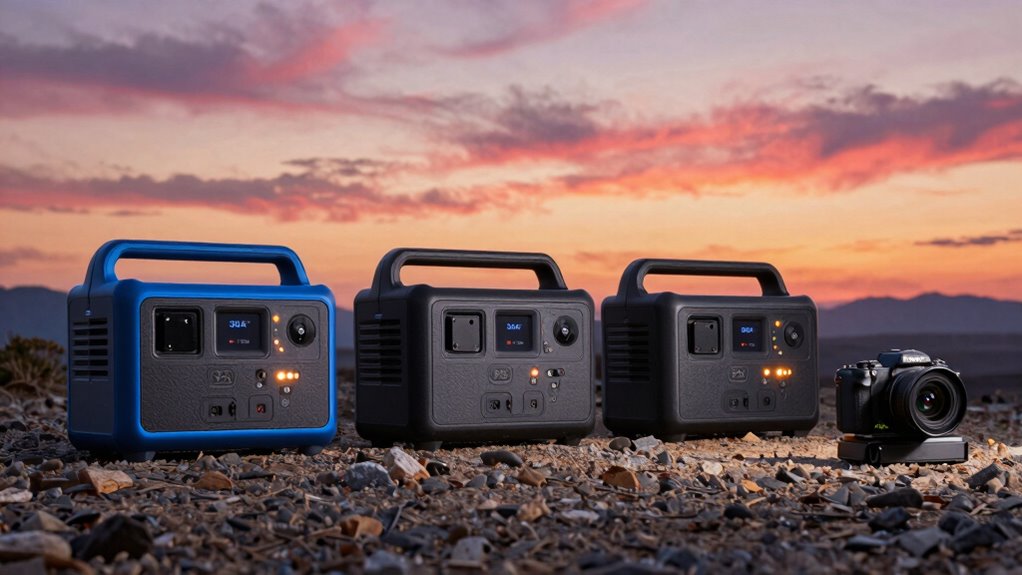

A 30A RV outlet can make a portable power station a practical source of campsite power, but the outlet alone does not tell you how well a unit will suit your rig. Capacity, continuous output, recharge options, and the effort involved in moving the station matter just as much. From the listed details, the BLUETTI Elite 300 is my strongest all-around match because it specifically lists a TT-30 port and 12V/30A output alongside 3014Wh of capacity. The Renogy 2000 is a more manageable alternative with a TT-30 outlet and several charging routes, while the BLUETTI Elite 400 brings a larger 3840Wh battery and a wheeled trolley.

Get travel and outdoor gear delivered free with Prime
- Fast, free delivery on millions of items
- Prime Video, Amazon Music and more included
- Member-only deals all year
The tradeoff is straightforward: the largest batteries support longer use between charges but weigh enough to make loading and storage a real concern. I also distinguish products that explicitly list a TT-30 RV outlet from models whose supplied information does not specify one. Before buying, verify the outlet type and the manufacturer’s instructions for your exact RV connection; a high-wattage AC station is not automatically a direct TT-30 match.
Complete the kit


Key Takeaways
- The BLUETTI Elite 300 and Renogy 2000 explicitly list a TT-30 RV outlet; check the other models’ current specifications before assuming they provide one.
- The Elite 300 pairs its TT-30 port with 3014Wh capacity and 12V/30A DC output, making it the most direct fit among the listed options.
- The Renogy 2000 is the lightest model here at 51.8 lb, but its 2048Wh battery is smaller than the Elite 300, Elite 400, AFERIY, and DELTA Pro capacities.
- For longer off-grid stays, the AFERIY and Elite 400 each list 3840Wh, while the DELTA Pro offers expansion up to 25kWh at a substantial 99 lb starting weight.
- Recharge figures depend on power source and conditions; compare charging inputs and available solar or AC access rather than treating a quoted recharge time as guaranteed.
| BLUETTI Elite 300 Portable Power Station, 3014Wh, 2400W |  | Best Overall for a Listed TT-30 RV Connection | Battery capacity: 3014Wh | Continuous output: 2400W | Surge output: 4800W | VIEW ON AMAZON | See Our Full Breakdown |
| Renogy 2000 Portable Power Station, 2048Wh, 2400W |  | Best for Easier Loading and Flexible Recharging | Battery capacity: 2048Wh | Running output: 2400W | Surge power: 3600W | VIEW ON AMAZON | See Our Full Breakdown |
| BLUETTI Elite 400 Portable Power Station, 3840Wh LiFePO4 Battery, 2600W |  | Best High-Capacity Option with a Wheeled Trolley | Battery capacity: 3840Wh | Battery chemistry: LiFePO4 | Running output: 2600W | VIEW ON AMAZON | See Our Full Breakdown |
| AFERIY 3840Wh Portable Power Station, Expandable to 11.5kWh |  | Best for Expansion and Backup-First Setups | Battery capacity: 3840Wh | Expandable capacity: Up to 11.5kWh | Battery type: LiFePO4 | VIEW ON AMAZON | See Our Full Breakdown |
| EF ECOFLOW DELTA Pro Portable Power Station, 3600Wh, 3600W AC Output | 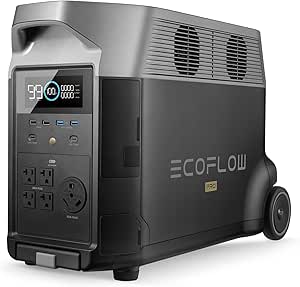 | Best for Maximum Expansion and Home-RV Backup | Battery capacity: 3600Wh | AC output: 3600W | Expandable capacity: Up to 25kWh with compatible equipment | VIEW ON AMAZON | See Our Full Breakdown |
| portable power station with 30a rv outlet | Battery capacity | Weight | Output ports |
|---|---|---|---|
| BLUETTI Elite 300 Portable Pow | 3014Wh | 58 lb | — |
| Renogy 2000 Portable Power Sta | 2048Wh | 51.8 lb | — |
| BLUETTI Elite 400 Portable Pow | 3840Wh | 86 lb | 9 |
| AFERIY 3840Wh Portable Power S | 3840Wh | Conflicting listings: 80.46 lb and 104.7 lb | 15, including five AC outlets |
| EF ECOFLOW DELTA Pro Portable | 3600Wh | 99 lb | 15 |
More Details on Our Top Picks
BLUETTI Elite 300 Portable Power Station, 3014Wh, 2400W
The Elite 300 is my leading pick for buyers who want a clearly specified RV connection, not just a powerful battery with standard AC outlets. Its listed TT-30 port is paired with a separate 12V/30A DC output, giving RV owners two connection details to compare against their setup. The 3014Wh battery and 2400W continuous output also put it ahead of the Renogy 2000 for stated storage capacity, while staying below the 3840Wh class represented by the Elite 400 and AFERIY.
Its 10ms UPS switch is useful for compatible backup loads, but I would not treat that feature as a substitute for checking RV wiring, appliance startup demands, or the station’s operating instructions. At 58 lb, it is lighter than the Elite 400 and DELTA Pro, yet still a bulky item to lift in and out of a vehicle. One ambiguity deserves attention: the product information lists only one total power outlet, despite naming a TT-30 port and 12V/30A output. Confirm the physical output layout and what is included before relying on it for multiple simultaneous connections. Compared with the lighter Renogy, it offers more capacity; compared with the Elite 400, it gives up 846Wh but has the more explicitly stated TT-30 fit.
Pros:- Explicitly lists a TT-30 RV port and 12V/30A DC output
- 3014Wh capacity exceeds the Renogy 2000’s 2048Wh
- 2400W continuous output with 4800W surge rating
- 10ms UPS switch and LiFePO4 battery
Cons:- 58 lb weight can make frequent loading difficult
- Only one total power outlet is listed in the supplied information
- Less capacity than the 3840Wh Elite 400 and AFERIY
Best for: RV owners who want a specifically listed TT-30 outlet, substantial battery capacity, and a separate 12V/30A DC output.
Not ideal for: Buyers who need a light carry, many independently listed AC outlets, or a confirmed multi-outlet layout without checking the product documentation.
- Battery capacity:3014Wh
- Continuous output:2400W
- Surge output:4800W
- RV connection:TT-30 port; 12V/30A DC output
- Battery type:LiFePO4
- UPS switch time:10ms
- Weight:58 lb
Our verdict“I rank the Elite 300 first because it combines a specifically listed TT-30 port with useful capacity and output, though its outlet layout and lifting weight deserve a close check.”
Renogy 2000 Portable Power Station, 2048Wh, 2400W
The Renogy 2000 is the lighter, more charging-flexible TT-30 option in this group. Its 51.8 lb weight is the lowest listed, narrowly below the Elite 300, and its stated charging choices include AC, solar, hybrid, generator, and car input. That mix can suit RVers who alternate between a hookup, a solar setup, and travel days. It also lists a TT-30 outlet directly, which makes it a more clearly documented 30A RV choice than the AFERIY, DELTA Pro, or Elite 400 based on the supplied information.
The compromise is 2048Wh of capacity, the smallest battery here. The Elite 300 carries nearly 1kWh more while keeping the same 2400W running output, so it is a better fit if you expect longer periods away from charging. Renogy’s stated 0–80% recharge in about an hour may help shorten a stop when supported by suitable input, but charging conditions determine the actual result. A stated UPS transfer time of up to 20ms is also slower than the Elite 300’s 10ms figure, and the 3000+ cycle rating is lower than the Elite 300’s listed 6000+ cycles. Its lower weight does not make it effortless to carry, but it gives the Renogy a distinct role for owners who move their station more often and can recharge regularly.
Pros:- Lists a TT-30 RV outlet
- 51.8 lb listed weight is the lowest in this roundup
- 2400W running output and 3600W surge power
- Supports AC, solar, hybrid, generator, and car charging
Cons:- 2048Wh capacity is the smallest among these five models
- UPS transfer time is listed as up to 20ms, slower than the Elite 300
- About-one-hour recharge to 80% depends on charging conditions
Best for: RV users who want an explicitly listed TT-30 outlet, multiple charging sources, and the lightest unit in this comparison.
Not ideal for: Long off-grid stays with few recharge opportunities, or buyers who prioritize the largest battery over carrying weight.
- Battery capacity:2048Wh
- Running output:2400W
- Surge power:3600W
- RV outlet:TT-30
- Charging options:AC, solar, AC + solar, gas generator, car
- UPS transfer time:≤20ms
- Weight:51.8 lb
Our verdict“I recommend the Renogy for mobile RV owners who value a specified TT-30 connection and flexible recharging more than maximum stored energy.”
BLUETTI Elite 400 Portable Power Station, 3840Wh LiFePO4 Battery, 2600W
With 3840Wh of capacity and a 2600W running output, the Elite 400 makes sense when battery reserve matters more than carrying it by hand. Its capacity is 826Wh higher than the Elite 300’s, and it also exceeds the Renogy 2000 by 1792Wh. A wheeled trolley offers a practical answer to the listed 86 lb weight, particularly when moving the unit over firm, reasonably smooth ground. It accepts AC, solar, car, and DC-DC alternator charging, so it can fit a setup that charges from more than one source.
The key limitation for this roundup is directness: the supplied description does not specify a TT-30 RV outlet. Its 120V rating and nine output ports do not by themselves confirm that a TT-30 receptacle is included. I would place it on a shortlist for an RV only after verifying the exact output panel and connection method. Compared with the AFERIY, the Elite 400 has a listed trolley and a stated 15ms UPS switchover, while AFERIY claims expansion to 11.5kWh and a faster sub-10ms UPS transfer. The Elite 400’s stated 80% charge time of 70 minutes uses AC and solar together; its full solar recharge figure is about six hours under stated conditions, not a universal promise. Its larger reserve is appealing, but it cannot outrank the two models with an explicitly identified TT-30 outlet on the information provided.
Pros:- 3840Wh LiFePO4 capacity with 2600W running output
- Wheeled trolley can ease movement on suitable surfaces
- Supports AC, solar, car, and DC-DC alternator charging
- Lists a 15ms UPS switchover
Cons:- Supplied details do not confirm a TT-30 RV outlet
- 86 lb weight remains substantial despite the trolley
- Full solar recharge is listed at about six hours under stated conditions
Best for: RV owners who need a 3840Wh battery, can confirm the desired RV outlet, and prefer wheels to carrying a heavy station.
Not ideal for: Anyone who requires a confirmed TT-30 port from the supplied specifications or needs to carry the station up stairs or over rough ground.
- Battery capacity:3840Wh
- Battery chemistry:LiFePO4
- Running output:2600W
- Surge output:3900W
- Output ports:9
- UPS switchover:15ms
- Weight:86 lb
Our verdict“I see the Elite 400 as a strong high-capacity RV candidate, but only after confirming that its actual outlet panel matches a 30A RV connection.”
AFERIY 3840Wh Portable Power Station, Expandable to 11.5kWh
The AFERIY’s main case is large starting capacity with room to expand: its 3840Wh LiFePO4 battery can grow to a listed 11.5kWh. That makes it a better match than the Renogy 2000 for a stationary backup role or a longer trip where additional compatible storage is part of the plan. It lists 3600W of continuous output, 7200W peak output, five AC outlets, and 15 total output ports. The less-than-10ms UPS transfer time and four charging methods—AC, solar, car, and AC plus solar—also make it a broad-use station for home and mobile applications.
For a guide centered on a portable power station with a 30A RV outlet, however, the provided details do not confirm a TT-30 port. I would not choose it as a direct RV plug-in option without checking the precise output panel and manufacturer guidance. It is also a poor match for frequent lifting: the listing gives conflicting weights of 80.46 lb and 104.7 lb, and its dimensions differ between the description and specifications. Those inconsistencies make transport planning difficult. Compared with the Elite 400, AFERIY offers stated expansion and more listed AC outlets, but the Elite 400 at least lists wheels. Compared with the DELTA Pro, AFERIY starts at a higher listed capacity than the EcoFlow’s 3600Wh, while the DELTA Pro offers a larger stated expansion ceiling of 25kWh.
Pros:- 3840Wh capacity expandable to a listed 11.5kWh
- 3600W continuous output and 7200W peak output
- Five AC outlets and 15 total output ports
- Less-than-10ms UPS transfer and four charging methods
Cons:- Supplied information does not identify a TT-30 RV outlet
- Conflicting listed weights of 80.46 lb and 104.7 lb
- Description and specification dimensions do not match
Best for: Buyers building a backup-focused setup who value expandable capacity, numerous listed ports, and fast UPS switching.
Not ideal for: RVers who need a confirmed TT-30 outlet, frequent portability, or unambiguous dimensions and weight before purchase.
- Battery capacity:3840Wh
- Expandable capacity:Up to 11.5kWh
- Battery type:LiFePO4
- Continuous output:3600W
- Peak output:7200W
- UPS transfer time:Less than 10ms
- Weight:Conflicting listings: 80.46 lb and 104.7 lb
- Output ports:15, including five AC outlets
Our verdict“I would choose AFERIY for expandable backup power, not as a confirmed 30A RV plug-in station until its outlet and conflicting physical specifications are verified.”
EF ECOFLOW DELTA Pro Portable Power Station, 3600Wh, 3600W AC Output
The DELTA Pro is the most ambitious expandable backup platform here, with 3600Wh of base capacity and a stated expansion path up to 25kWh using compatible batteries or generators. Its 3600W AC output and 15 listed output ports give it a substantial role beyond occasional campsite charging, and its app supports monitoring and settings over Wi-Fi or Bluetooth. Charging options include a wall outlet, solar, car outlet, EV station, and compatible outdoor generator. For a buyer who expects to build a larger backup arrangement over time, those choices make it stand apart from the Renogy 2000’s smaller, more mobile setup.
But the supplied product details do not confirm a TT-30 outlet, so the DELTA Pro is not my first recommendation for someone seeking a direct 30A RV connection without extra verification. Its 99 lb weight is also the highest clearly stated weight in this comparison, making it better suited to a mostly parked setup than regular loading into a vehicle. The AFERIY starts at 3840Wh and is listed as lighter in one of its conflicting figures, but has a lower expansion ceiling; EcoFlow’s 25kWh claim is the stronger growth path if compatible accessories are acceptable. The DELTA Pro can also reach a listed 4500W with X-Boost or 7200W paired output, but those are distinct operating configurations, not the same as its standard 3600W AC output. Buyers should match the connection and output mode to their actual RV needs.
Pros:- 3600Wh base capacity with expansion listed up to 25kWh
- 3600W AC output and 15 output ports
- Multiple charging paths, including solar and EV stations
- App control through Wi-Fi or Bluetooth
Cons:- Supplied details do not confirm a TT-30 RV outlet
- 99 lb weight makes routine transport difficult
- Expansion depends on compatible extra batteries or generators
Best for: Owners who want a large, expandable home-and-RV backup system and can verify the correct RV connection separately.
Not ideal for: Buyers prioritizing a confirmed TT-30 socket, low weight, or a simple station for frequent travel.
- Battery capacity:3600Wh
- AC output:3600W
- Expandable capacity:Up to 25kWh with compatible equipment
- Output ports:15
- Charging methods:EV station, solar, wall outlet, generator, car outlet
- Weight:99 lb
- Control:EcoFlow app via Wi-Fi or Bluetooth
Our verdict“I would choose the DELTA Pro for a scalable backup system rather than a simple TT-30 RV solution, unless its exact outlet configuration is confirmed.”

How We Picked
I ranked these five stations around the actual RV use case in the title: connecting a 30A RV load to portable battery power. That means a clearly identified TT-30 outlet carries more weight than a large capacity number on its own. The Elite 300 and Renogy 2000 explicitly list a TT-30 RV outlet. For the AFERIY, DELTA Pro, and Elite 400, the supplied product details do not identify a TT-30 outlet, so I treat them as capacity- and backup-focused alternatives, not confirmed direct 30A RV matches. Buyers should verify the port configuration before purchase.
I also compared continuous output and battery capacity, since the outlet does not guarantee that a station can handle every appliance or sustain a long stay. Weight and moving aids matter in RV ownership: a 50-pound unit can still be awkward, while an 86- or 99-pound model may be better parked near the vehicle than carried. Finally, I considered charging flexibility, UPS features, expansion, and data consistency. Where the supplied specifications conflict, such as AFERIY’s listed weight and dimensions, I flag that rather than choosing the more convenient figure. The ranking favors the best stated fit for RV connection first, then differentiates the remaining units by their useful strengths and limitations.
Factors to Consider When Choosing Portable Power Station With 30a Rv Outlet
For a 30A RV connection, I would start with the outlet itself, then check whether the battery and charging plan suit the way you camp. A TT-30 receptacle, a 30A DC output, and a station’s general AC capacity are not interchangeable claims. Confirm the exact port, voltage, supported load, and connection instructions for your RV before choosing.
Verify the TT-30 outlet before comparing capacity
A TT-30 is a specific RV-style receptacle. In this lineup, the BLUETTI Elite 300 and Renogy 2000 explicitly list a TT-30 RV outlet. The supplied details for the AFERIY, Elite 400, and DELTA Pro do not name one, so I would verify the exact model’s output panel before treating any of them as direct 30A RV options. The Elite 300 also lists 12V/30A DC output; that is a separate output description, not proof that every connection on the unit serves the same purpose. Match the station to the RV inlet and follow both manufacturers’ guidance on cords, adapters, grounding, and load limits.
Match wattage to what you plan to run
Continuous output is the sustained power figure, while surge ratings describe short-term peaks for compatible loads. The Elite 300 and Renogy 2000 both list 2400W continuous output, but the Renogy’s 3600W surge is lower than the Elite 300’s 4800W. The AFERIY and DELTA Pro list 3600W continuous output, while the Elite 400 lists 2600W. Add up the running demands of the appliances you expect to use, then account for startup behavior where relevant. A 30A outlet label should not be read as a promise that the station can run every RV appliance at once.
Choose capacity around recharge access
Capacity in watt-hours gives a rough sense of stored energy, not a guaranteed runtime. The Renogy’s 2048Wh battery favors lighter travel; the Elite 300’s 3014Wh adds reserve; and the Elite 400 and AFERIY list 3840Wh. The DELTA Pro starts at 3600Wh and has the largest stated expansion ceiling, up to 25kWh with compatible equipment. Actual runtime changes with load, temperature, conversion losses, and the devices connected. If you can recharge daily, a smaller battery may be enough. For longer stays without a hookup, more capacity or an expansion plan may matter more than a fast recharge headline.
Treat charging times as conditional
Fast-charge claims rely on the available input and the conditions used for the quoted figure. Renogy lists 0–80% in about one hour; the Elite 300 lists 78 minutes to 80%; the Elite 400 lists 80% in 70 minutes with AC and solar; and AFERIY gives an as-fast-as 1.5-hour full recharge under supported input conditions. Those figures are not directly comparable without matching the input source and test conditions. For RV use, look at which charging sources you can actually access: AC at a hookup, solar in camp, car or alternator charging while traveling, or a generator where permitted.
Plan for weight, storage, and handling
Portability means more than whether a unit has a handle. The Renogy is listed at 51.8 lb and the Elite 300 at 58 lb; both still require care when lifting. The Elite 400 weighs 86 lb but includes a wheeled trolley, while the DELTA Pro is 99 lb. AFERIY’s supplied weight figures conflict, so I would confirm the current specification before planning a storage spot. Think about the route from vehicle to campsite, steps, cargo access, and whether the station can stay secured in one place. Wheels can help on level ground, but they do not remove the challenge of lifting a heavy unit into an RV or vehicle.
Use UPS and expansion features for the right job
UPS switching may help maintain power to compatible equipment when a supported source changes, but the listed transfer times—10ms, 15ms, under 10ms, or up to 20ms—do not automatically make a unit suitable for every sensitive device. Check the manual and load requirements. Expansion has a separate tradeoff: it can extend backup time but adds compatible equipment, cost, space, and setup. AFERIY lists expansion to 11.5kWh, while the DELTA Pro lists up to 25kWh. If your main goal is a direct RV outlet, confirm the port first; expansion cannot make an unspecified receptacle into a confirmed TT-30 connection.
Frequently Asked Questions
Which power stations in this roundup explicitly list a TT-30 RV outlet?
The BLUETTI Elite 300 and Renogy 2000 explicitly list a TT-30 RV outlet in the supplied product information. The AFERIY, BLUETTI Elite 400, and EcoFlow DELTA Pro descriptions do not specify a TT-30 port, so I would verify their exact outlet panels and current manufacturer documentation before choosing them for direct RV connection.
Does a 30A RV outlet mean I can run every appliance in my RV?
No. The outlet identifies a connection type, while the station’s continuous output, surge capability, battery capacity, and operating limits determine what it can support and for how long. Check the running and startup demands of your appliances, and follow the power station and RV manufacturers’ connection guidance. A TT-30 port should not be treated as a guarantee that all loads can operate simultaneously.
Is the Renogy 2000 a better choice than the BLUETTI Elite 300?
I would choose the Renogy 2000 when lower listed weight and a wide range of charging sources matter most: it weighs 51.8 lb and lists AC, solar, hybrid, generator, and car charging. The Elite 300 is the stronger fit when you want more stored energy, with 3014Wh versus 2048Wh, and a faster listed UPS switch. Both explicitly list a TT-30 outlet, so the decision is mainly capacity, weight, charging routine, and the outlet layout you need.
Can I rely on the quoted recharge times?
Use them as conditional estimates, not guaranteed results. Input power, solar conditions, battery state, and the charging method affect how long a recharge takes. For example, the Elite 400’s 70-minute figure is for reaching 80% using AC and solar, while AFERIY’s full-recharge claim is tied to supported input conditions. Compare the charging sources available on your trips and consult the manufacturer’s specifications for the configuration you expect to use.
Which option makes the most sense for longer stays away from hookups?
The answer depends on whether you need a confirmed TT-30 connection or maximum battery reserve. Among the explicitly listed TT-30 models, the Elite 300 has more capacity than the Renogy 2000. The Elite 400 and AFERIY each list 3840Wh, and the DELTA Pro lists expansion up to 25kWh, but their supplied details do not confirm a TT-30 outlet. For any of those larger-capacity options, verify the RV connection before buying and plan for their substantial weight.
Conclusion
For the clearest stated match to a 30A RV connection, I recommend the BLUETTI Elite 300. It combines a listed TT-30 port, 3014Wh capacity, and 2400W continuous output, though I would confirm its listed outlet layout before purchase. Choose the Renogy 2000 if you want the lighter explicitly listed TT-30 option and can make its smaller 2048Wh battery work with regular recharging. For a longer-capacity setup, the BLUETTI Elite 400 offers 3840Wh and wheels, while the AFERIY adds expansion and a strong listed output; verify both the TT-30 connection and the Elite 400’s exact outlet panel first. The EcoFlow DELTA Pro is the better direction for an expandable home-and-RV backup system, not a confirmed direct TT-30 purchase based on the supplied specifications. Across all five, check the precise outlet, load limits, and physical dimensions against your RV and storage space.