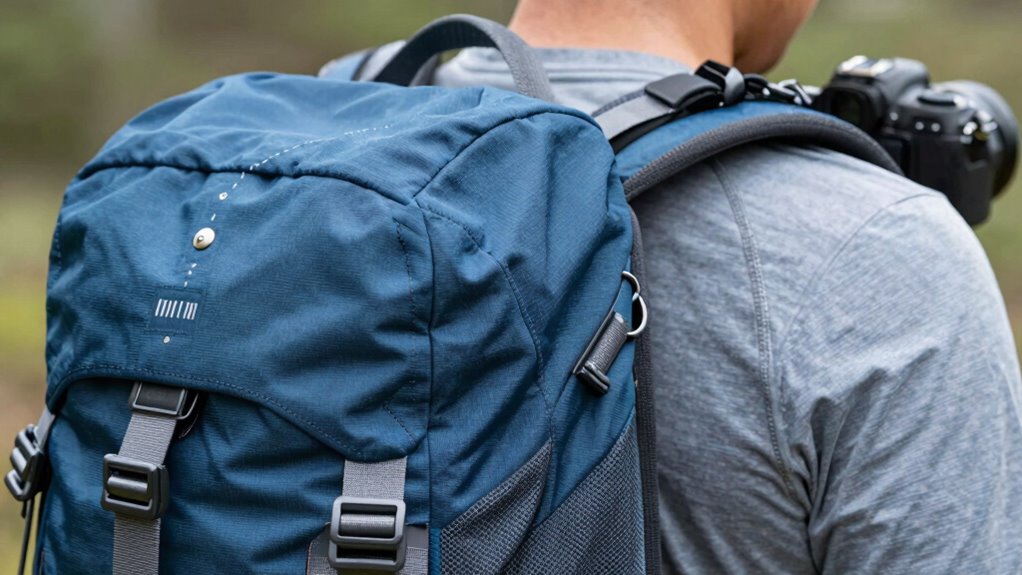

To get a proper fit for your backpack, start by accurately measuring your torso length from the base of your neck (C7) to your hips, then choose a pack size matching that measurement. Adjust the shoulder straps until the pack sits snugly without pinching or restricting movement, and tighten the load lifters to lift the pack closer to your back for stability. Ensuring your hip belt fits well is also key. Keep these tips in mind, and you’ll find there’s more to perfecting your pack fit.

Get travel and outdoor gear delivered free with Prime
- Fast, free delivery on millions of items
- Prime Video, Amazon Music and more included
- Member-only deals all year
Key Takeaways
- Measure from the base of your neck (C7) to the top of your hips to determine torso length accurately.
- Select a backpack size (small, medium, large) that matches your measured torso length for proper fit.
- Adjust shoulder straps so the pack sits snugly without restricting movement or breathing.
- Tighten load lifters to lift the pack closer to your back, improving stability and weight distribution.
- Ensure the hip belt sits comfortably on your hips and is tightened to transfer weight effectively from shoulders.
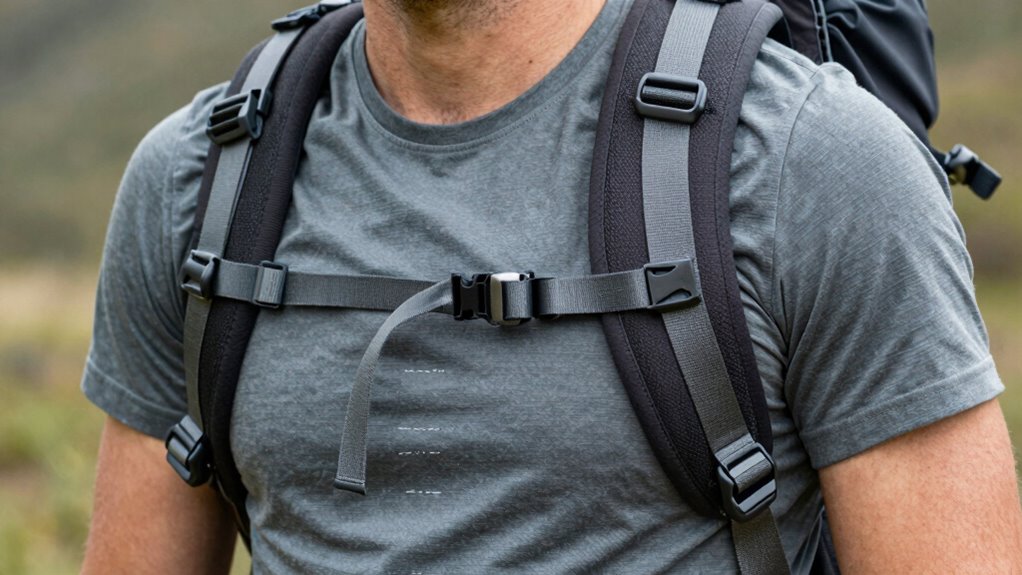
Are you struggling to find a backpack that fits comfortably for your outdoor adventures? One of the most vital factors is making sure the pack’s torso length is correct and that you’re adjusting straps properly. Your torso length determines where the pack sits on your back, impacting both comfort and stability. If the pack is too long or too short, it can cause discomfort, uneven weight distribution, and even back pain over time. To find your torso length, stand upright and measure from the base of your neck (the C7 vertebra) down to the top of your hips. Most packs come in small, medium, or large sizes, matching different torso lengths, so selecting the right size is your first step.
Once you’ve chosen a pack that matches your torso length, the next step is adjusting the straps. Properly adjusting straps is essential because it helps balance the load across your shoulders and hips, reducing strain. Start with the shoulder straps—tighten or loosen them so that the pack sits snugly against your back without restricting movement or breathing. The shoulder straps should contour your shoulders comfortably, with no gaps or pinching. Afterward, move to the load lifters, which are located at the top of the shoulder straps. These should be tightened to lift the pack closer to your back, which helps stabilize the load and reduces sway. Be careful not to over-tighten, as this can cause uncomfortable pressure or restrict blood flow.
Adjusting the straps also helps manage pack weight. When you carry a heavier load, ensuring the pack is snug against your back prevents unnecessary movement that can cause fatigue or imbalance. If your pack has a hip belt, make sure it sits comfortably on your hips, not your waist. Tighten it enough so that most of the pack’s weight transfers from your shoulders to your hips—a key step in reducing shoulder fatigue. Additionally, proper pack fit is crucial for preventing long-term injury and ensuring a comfortable hiking experience. As you load your pack, keep checking and readjust the straps to maintain a balanced, comfortable fit. The goal is to distribute weight evenly, so you’re not leaning forward or backward, which could cause discomfort or injury.
Frequently Asked Questions
How Often Should I Adjust My Backpack’s Fit During a Trip?
You should make frequent adjustments to your backpack’s fit throughout your trip to guarantee comfort optimization. Check and tighten the load lifters and hip belt whenever you notice discomfort or feel the pack shifting. Don’t wait for discomfort to worsen; small, regular tweaks keep the load balanced and prevent fatigue. By staying attentive and adjusting as needed, you’ll maintain better control and enjoy your hike more comfortably.
Can My Torso Length Change Over Time?
Yes, your torso length can change over time due to posture changes and muscle development. As you build core strength or improve your posture, your spine may straighten, affecting how your backpack fits. Regularly assess your fit and make adjustments if needed. Keep in mind that these changes are natural, so staying aware of your body’s shifts helps ensure your pack remains comfortable and properly supported on your adventures.
What Is the Best Way to Test Load Lifter Adjustments?
To test your load lifter adjustments, start by wearing your pack with the shoulder straps snug but comfortable. Tighten the load lifters until the top of the pack sits close to your shoulders, ensuring even weight distribution. Perform backpack fit testing by walking around, checking for comfort and balance. Adjust load lifter calibration as needed, making sure they lift the pack’s weight evenly, reducing strain on your shoulders and back.
Are There Specific Brands Known for Better Fit for Different Torso Lengths?
Certain brands specialize in fitting different torso lengths, ensuring better comfort and support. Look for brands like Osprey and Gregory, which are known for their brand specialization in pack sizing consistency. They offer a range of sizes tailored to various torso lengths, making it easier to find a pack that fits well. Choosing these brands helps you get a more customized fit, reducing strain and enhancing your backpacking experience.
How Do I Know if My Backpack Is Too Heavy for My Frame?
You’ll know your backpack is too heavy if it causes discomfort or pain, especially in your shoulders and back. Check if the weight isn’t shifting unevenly, which indicates poor weight distribution. Proper shoulder padding helps reduce strain, so if it’s digging in or feels too tight, the load might be too heavy. Aim for a pack that feels balanced, with comfortable shoulder support, and doesn’t cause fatigue after a short walk.
Conclusion
Remember, a well-fitting backpack is your best friend on the trail. Take the time to measure your torso and adjust those load lifters—they’ll make your hike more comfortable and enjoyable. As the saying goes, “A stitch in time saves nine.” Don’t wait until discomfort slows you down; find the right fit now and keep exploring with confidence. Happy hiking!
Fall Picks
fall essentials
As an affiliate, we earn on qualifying purchases.