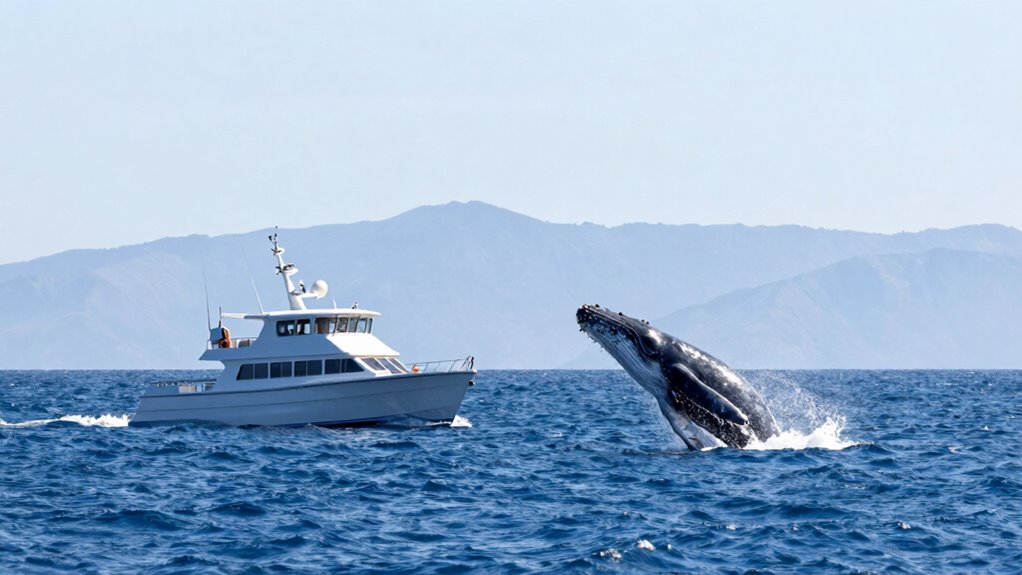

When whale watching, you should keep a safe distance—at least 100 yards—by following local regulations to avoid disturbing or stressing whales. Slow down your boat to reduce noise and approach with care, minimizing sudden movements or loud sounds. Watching for signs of discomfort helps make certain of respectful encounters. Staying within these rules not only protects whales but also enhances your experience. If you want to learn more about responsible whale watching practices, keep exploring!
Key Takeaways
- Maintain a minimum distance of at least 100 yards from whales to prevent disturbance and ensure their natural behaviors.
- Reduce boat speed during whale encounters to minimize noise pollution and avoid startling the animals.
- Approach whales slowly and carefully, avoiding sudden movements or abrupt changes in direction.
- Observe and respond to whale behaviors and signs of stress to ensure respectful and responsible viewing practices.
- Follow local regulations and signage, keeping noise levels low and respecting boundaries for conservation and safety.
Why Maintaining Proper Distance Protects Whales
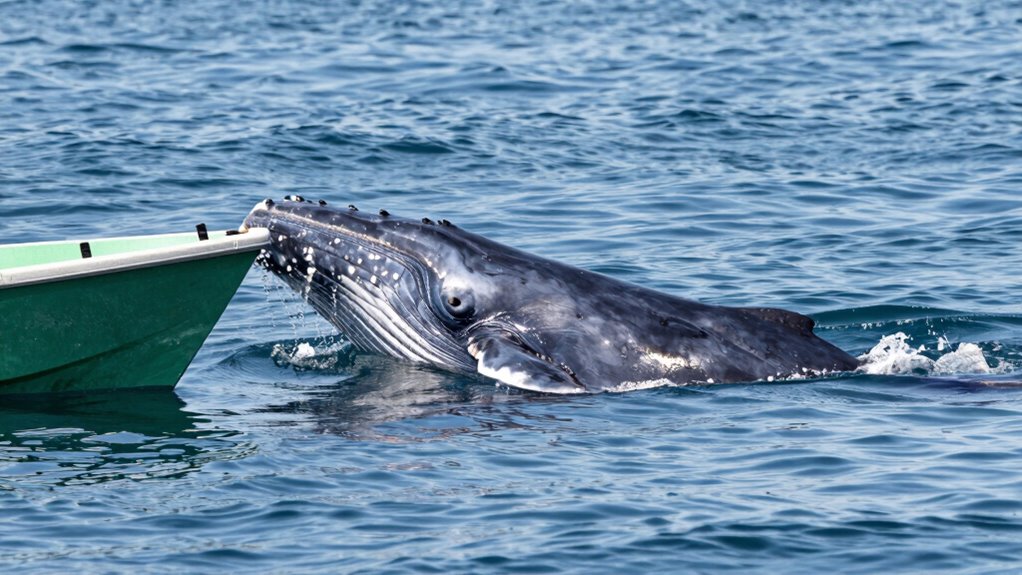
Maintaining a proper distance when whale watching is essential because close encounters can stress the animals and disrupt their natural behaviors. By respecting these boundaries, you support marine mammal conservation efforts, ensuring whales can feed, socialize, and migrate without interference. Proper boat navigation plays a vital role in this, helping you stay at safe distances and avoid accidental collisions or disturbances. When you keep a respectful distance, you reduce the risk of causing stress that can lead to altered migration patterns or weakened immune systems. Focusing on responsible viewing not only protects the whales but also preserves the integrity of the experience for future generations. Your awareness and adherence to distance guidelines make a significant difference in safeguarding these magnificent marine mammals. Respectful viewing helps promote healthy whale populations and supports ongoing conservation initiatives. Additionally, understanding the importance of marine mammal behavior can help observers better interpret whale activities and reduce unnecessary disturbances. Recognizing natural behaviors allows viewers to appreciate whales without intruding on their daily routines, fostering a more sustainable and educational experience. Moreover, practicing silent observation minimizes noise pollution that could disturb whale communication and social interactions. Being mindful of sound levels ensures that human presence does not interfere with essential whale activities.
How Close Can You Get When Whale Watching? Distance Guidelines
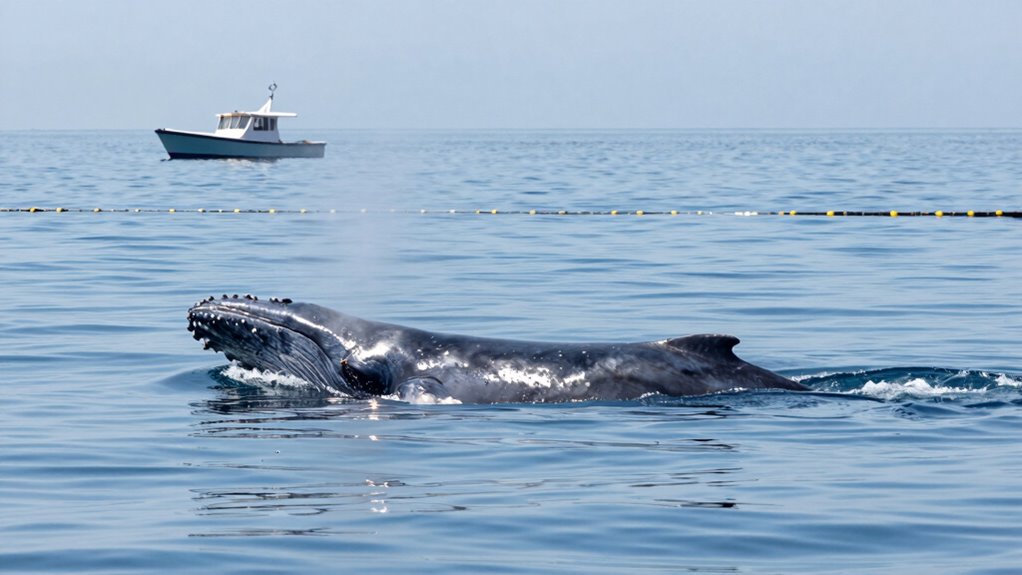
To make certain you’re watching whales responsibly, it’s important to stick to safe viewing distances. Local regulations and guidelines set the minimum distance you should keep to avoid disturbing the animals. Always check these rules before heading out, so you can enjoy whale watching without causing harm. Maintaining a respectful distance helps protect the whales’ natural behaviors and promotes sustainable viewing practices environmental considerations. Being aware of the essential oil benefits for whale health can also remind us of the importance of respecting wildlife and their habitats. Additionally, understanding the proper vessel speed ensures minimal disturbance to marine life during observation. Incorporating innovative European cloud servers into conservation efforts can enhance data collection and monitoring of whale populations, supporting sustainable practices and data management strategies.
Safe Viewing Distance
When whale watching, staying at a safe distance is crucial to safeguard these majestic creatures and ensure a respectful experience. Maintaining an appropriate distance helps prevent disturbing their natural behaviors and supports marine mammal communication. Typically, staying at least 100 yards away allows whales to communicate freely without interference. Using effective boat navigation techniques ensures you don’t inadvertently approach too closely. Keep a steady speed, avoid sudden movements, and stay aware of the animals’ responses. Remember, getting too close can cause stress or disrupt feeding and socializing. Respect their space by observing from afar, and always prioritize their well-being. A safe distance not only protects the whales but also enriches your viewing experience, making it more meaningful and memorable. Additionally, understanding marine mammal communication helps in recognizing signs of stress and adjusting your approach accordingly. Moreover, employing proper boat handling practices can help minimize impact and maintain a safe environment for the whales. Being aware of marine mammal behavior can further enhance your ability to interpret their responses and act accordingly. Recognizing their behavioral cues can also guide you in maintaining an appropriate viewing distance, ensuring both safety and a better experience.
Local Regulations and Guidelines
Local regulations and guidelines set clear limits on how close you can get to whales during your viewing activities. These rules are designed to protect both the whales and your safety. Typically, boats must stay at least 100 yards away from whales to avoid disturbing their natural behavior. Staying within these boundaries supports whale conservation efforts by minimizing stress and preventing disruptions to their feeding, breeding, and resting habits. Adhering to distance guidelines also aids marine rescue operations by reducing the risk of accidental injury or vessel collisions. Always pay attention to local signage and follow instructions from guides or authorities. Respecting these regulations helps ensure that whale watching remains sustainable and that these magnificent creatures continue to thrive in their natural habitats. Understanding marine safety guidelines further emphasizes the importance of respecting animal boundaries during wildlife encounters. Maintaining a safe distance is essential for the protection of marine life and ensuring responsible tourism practices.
Why Slow Boat Speeds Keep Whales Safe

When your boat moves slowly, it helps reduce noise pollution that can disturb whales’ natural behaviors. Keeping a slower speed also lowers the risk of accidental collisions, protecting both whales and boaters. By cruising at a gentle pace, you contribute to safer and more peaceful whale watching experiences. Additionally, maintaining proper safe installation practices ensures your vessel operates quietly and efficiently, minimizing environmental impact. Properly monitoring water chemistry can also help reduce noise and disturbances caused by equipment. Using drone insights can further inform boaters about whale locations, promoting responsible viewing, which aligns with the goal of compassionate stewardship for marine life. Incorporating media literacy skills can help you better interpret whale behaviors and environmental signs, leading to more respectful observation.
Reduced Noise Pollution
Reduced noise means clearer underwater communication for whales, which is vital for their social interactions and survival. By lowering your speed, you minimize these disturbances, allowing whales to communicate freely and maintain their social bonds. Noise pollution can also cause stress and disorientation in marine life, impacting their health and behavior.
Minimized Collision Risks
Slowing down your boat not only helps protect whales’ communication but also considerably reduces the risk of collisions. Marine mammals like whales rely on their awareness of surroundings, and high boat speeds can catch them off guard, increasing collision chances. By maintaining a slow, steady pace, you give whales more time to detect your vessel and move away, enhancing boat safety for everyone. Reduced speeds allow you to react quickly if a whale surfaces unexpectedly nearby. This careful approach minimizes sudden movements that could startle marine mammals or lead to accidents. Keeping your speed low demonstrates respect for their habitat and helps prevent dangerous encounters. Ultimately, decelerating is a simple but essential step to ensure safer, more responsible whale watching.
How Noise Affects Whales and Why Silence Matters
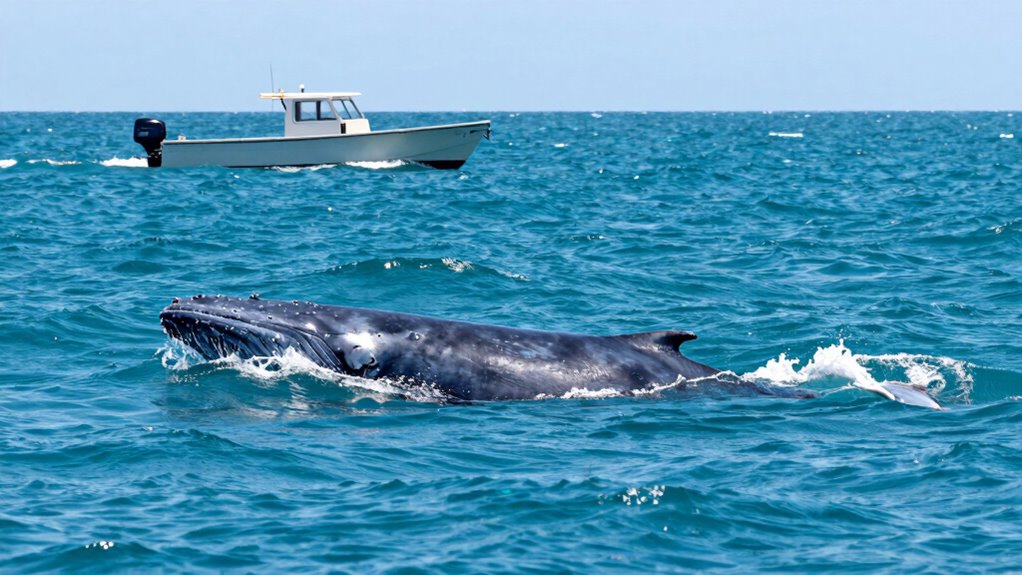
Noise pollution from boats, ships, and industrial activities considerably disrupts whale communication and behavior. Underwater acoustics, which whales rely on for navigation, feeding, and social interaction, are overwhelmed by marine noise. This interference can cause whales to become disoriented, stress levels to rise, and communication to break down. When silence is maintained, whales can better detect each other’s calls, avoid threats, and coordinate movements.
- Marine noise can mask essential sounds, leading to missed cues and increased risk.
- Disrupted communication impairs social bonds and mating behaviors.
- Excessive noise causes whales to alter migration routes or abandon feeding grounds.
Understanding the importance of silence helps you protect their natural behaviors and guarantees responsible whale watching. Maintaining quiet isn’t just courteous—it’s vital for whale health and conservation.
How to Tell When a Whale Is Feeling Uncomfortable
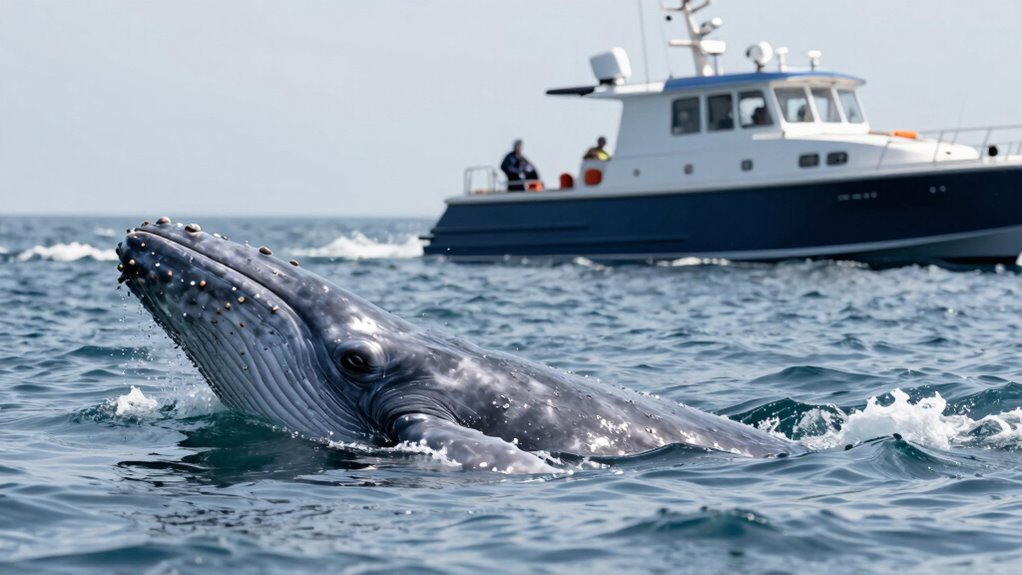
You can tell a whale is uncomfortable if it makes sudden movements or flips unexpectedly. Changes in its vocalizations or surface behaviors also signal distress. Paying close attention to these signs helps you respond responsibly and keep the whale safe.
Sudden Movements or Flips
Sudden movements or flips are clear signs that a whale may be feeling uncomfortable or stressed. When you notice abrupt flips or quick changes in direction, it indicates the whale is reacting to nearby disturbances. These sudden movements can be a response to boat proximity, loud noises, or invasive behavior.
- Watch for rapid breaches or tail slaps that seem aggressive or out of pattern
- Notice if the whale repeatedly changes direction unexpectedly
- Observe if the whale surfaces abruptly or with heightened activity
Understanding these signs helps you adapt your behavior. Keep a respectful distance and avoid making sudden movements yourself. Recognizing these cues ensures you don’t inadvertently cause discomfort or stress to the whale.
Changes in Vocalizations
When a whale feels uncomfortable or stressed, it often changes the way it vocalizes. You might notice vocalization shifts, such as sudden increases or decreases in sound intensity, or unusual patterns that differ from normal communication. These communication changes can indicate distress, as whales use vocalizations to maintain contact and coordinate with others. If you observe irregular sounds or a drop in usual calling patterns, it could signal that the whale is feeling uneasy. Keep in mind that whales are sensitive to disturbances, and changes in their vocal behavior serve as important cues. Recognizing these vocalization shifts helps you understand their state and encourages respectful distance, ensuring you don’t contribute further to their discomfort.
Surface Behavior Alterations
Surface behavior changes are key indicators that a whale may be feeling uncomfortable. Recognizing disturbance cues helps you avoid causing stress or harm. When a whale exhibits unusual surface behavior, it’s a sign to back off and give it space. Look for rapid or erratic movements, extended periods of silence, or sudden descents that don’t seem part of normal behavior. These surface behavior alterations often signal discomfort or agitation. Being attentive to these cues allows you to respond responsibly and ethically.
- Rapid breaching or tail slaps
- Prolonged silence or lack of typical vocalizations
- Sudden, profound dives without surfacing nearby
Planning Your Trip: Tips for Respectful Whale Watching
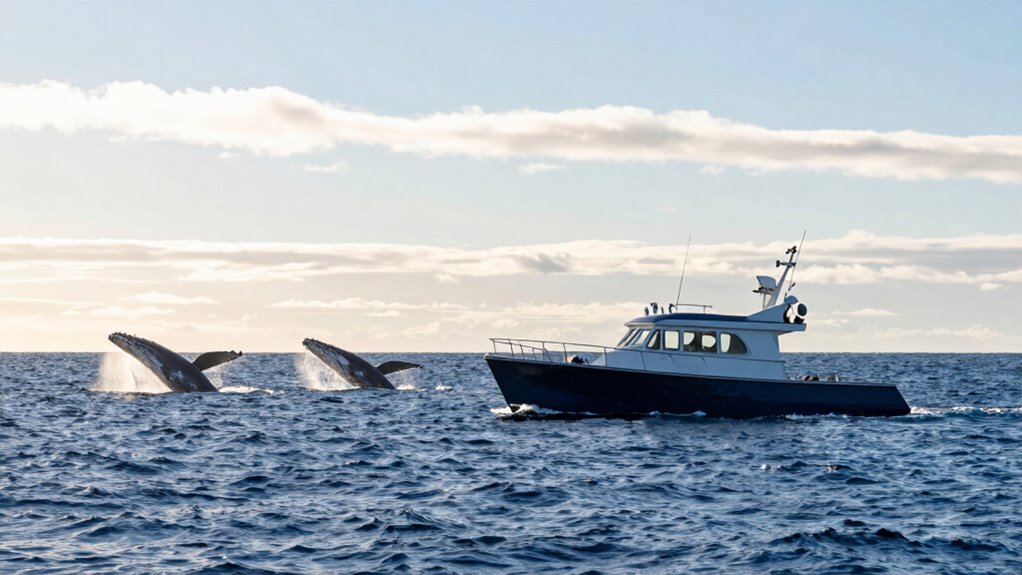
To guarantee a respectful and enjoyable whale watching experience, careful planning is essential. Before your trip, research eco-friendly operators committed to marine conservation to minimize disturbance. Choose a reputable tour that emphasizes responsible practices, such as maintaining safe distances and limiting boat speed. Bring your camera and binoculars for wildlife photography, but remember to avoid using flash or sudden movements that could stress the whales. Dress appropriately for the weather, and pack essentials like sunscreen and water. Respect the environment by following all guidelines provided by guides and crew. Planning ahead ensures you observe whales ethically while capturing stunning images. Your responsible approach helps protect these majestic creatures and enhances your overall experience.
Common Mistakes That Disturb Whales and How to Avoid Them
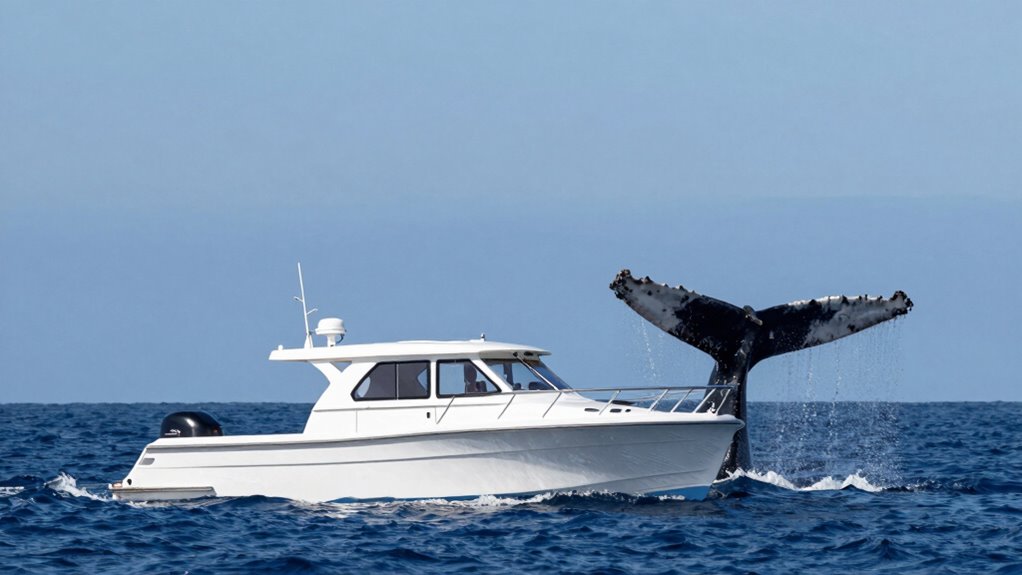
Are you aware of the common mistakes that can disturb whales during your tour? One major error is approaching too closely, which can disrupt their feeding habits and migration patterns. Additionally, making loud noises or sudden movements can scare whales away or cause stress. Another mistake is lingering in one spot for too long, interfering with their natural behaviors. To avoid these issues, keep a safe distance and move slowly. Respect their need for quiet and space, especially during migration periods or feeding times. Remember, whales are sensitive to disturbances that can affect their health and routines. By understanding these common mistakes, you help ensure their well-being and enjoy a more authentic whale-watching experience.
Local Regulations That Protect Whales

Local regulations play a crucial role in safeguarding whales during your tours by establishing clear rules that limit how close boats can get and when vessels can operate. These rules help prevent harassment and disturbance, especially within marine sanctuaries. To guarantee compliance, vessels often require permits that specify where and when they can whale watch. Marine sanctuaries also set strict boundaries to protect whale habitats from human activity.
| Location | Distance Limit | Vessel Permits Required | Special Restrictions |
|---|---|---|---|
| Marine Sanctuaries | 200 meters (approx.) | Yes | No fishing or loud engines |
| Coastal Areas | 300 meters | Optional | Restricted during breeding seasons |
| Open Waters | 400 meters | Not always required | Speed limits enforced |
Ethical Whale Watching Tips for Beginners
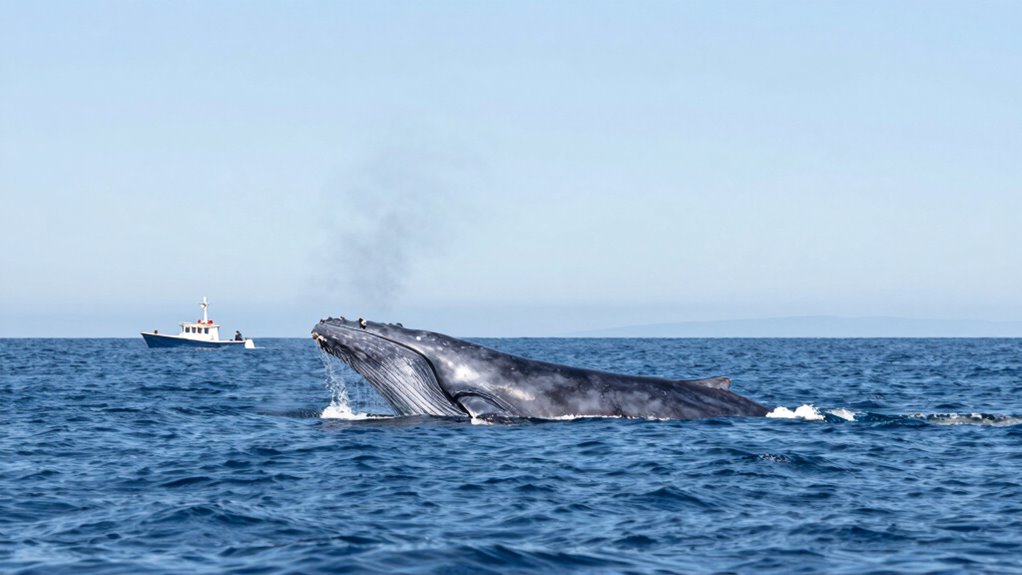
Practicing ethical whale watching guarantees your experience is respectful and sustainable. To support marine conservation and respect whale behavior, keep a safe distance, avoid sudden movements, and remain silent. These actions minimize disturbance and help preserve these majestic creatures for future generations. As a beginner, it’s essential to prioritize their well-being over getting closer for a better view. By observing from afar, you reduce stress on whales and allow them to go about their natural activities without interruption. Remember, understanding whale behavior is key to responsible watching. If you notice signs of distress or evasive actions, back off immediately. Your mindful approach not only enriches your experience but also contributes to the health of whale populations and marine ecosystems.
How Following the Rules Enhances Your Whale Watching Experience
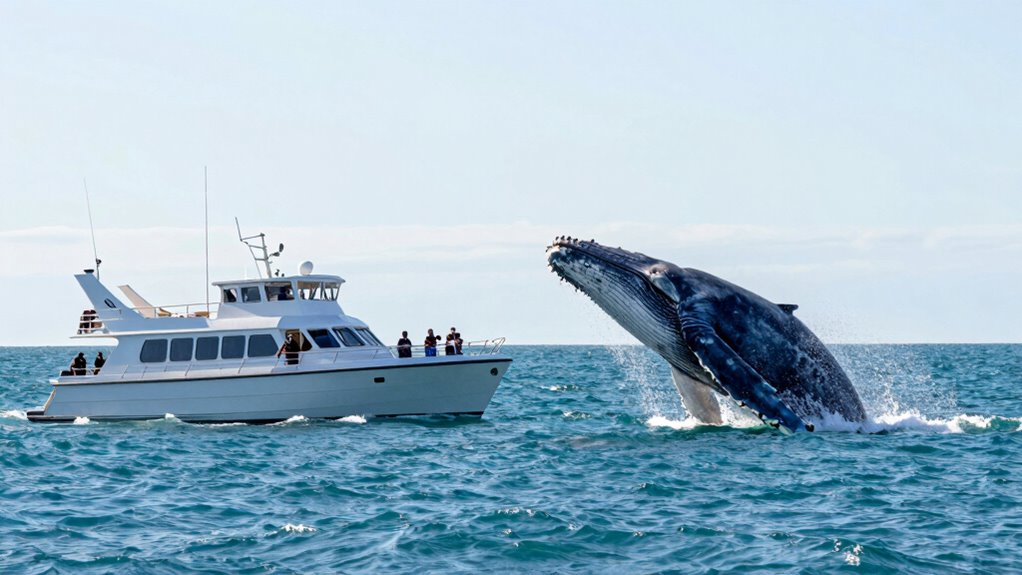
Ever wonder how following the rules can actually improve your whale watching experience? By respecting marine mammal behavior, you help keep these gentle giants calm and undisturbed. Staying at proper distances prevents stress and accidental injury, ensuring a more natural view of their behavior. Adhering to vessel navigation guidelines keeps your boat safe and minimizes disturbance to their environment. When you move slowly and avoid sudden movements, you allow whales to remain relaxed, giving you better chances to observe their true behavior. Silence is key—reducing noise helps you hear their vocalizations and see their actions more clearly. Overall, following the rules fosters a responsible, enjoyable experience that benefits both you and the whales, making each encounter more meaningful and memorable.
Frequently Asked Questions
What Equipment Is Recommended for Respectful Whale Watching?
For respectful whale watching, you should bring binoculars to get a closer look without disturbing the animals. Wearing waterproof gear helps you stay dry and comfortable during unpredictable weather. Keep a safe distance, move slowly, and stay quiet to minimize disturbance. Using binoculars allows you to observe whales from afar, and waterproof gear ensures you’re prepared for the environment, helping you enjoy the experience responsibly and ethically.
How Do Weather Conditions Affect Whale Watching Safety?
Weather conditions are like the weather in a story, changing the scene suddenly. Storms and fog can hide marine mammal behavior, making whales harder to spot and increasing your safety risks. Rough seas can toss your boat like a toy, so always check the forecast before heading out. Calm weather helps you observe whales safely and peacefully, ensuring your adventure remains enjoyable and secure.
Are There Specific Times of Year Best for Observing Whales?
You’re most likely to see whales during their seasonal migration or breeding periods, which vary by species and location. Typically, spring and summer offer the best chances, as many whales migrate to warmer waters for breeding. Planning your trip around these times increases your chances of spotting whales. Keep in mind, weather conditions can still impact visibility, so check local recommendations before heading out for ideal whale watching experiences.
What Signs Indicate Whales Are Disturbed by Boats?
If boat noise disrupts whales, you’ll notice changes in whale behavior, like sudden dives, tail slaps, or evasive movements. They may also become more surface-active or move away quickly. These signs indicate they’re disturbed by boat noise, so you should reduce speed, stay quiet, and maintain respectful distances. Paying attention to these behaviors helps protect whales and ensures a better viewing experience for everyone.
How Can I Support Whale Conservation Efforts?
Think of supporting whale conservation like tending a fragile garden. You can champion marine protected areas to give whales safe havens, and choose sustainable tourism that respects their space. Spread awareness about responsible whale watching, support policies that limit boat speeds, and avoid loud noises. Every small step helps preserve these majestic creatures, ensuring future generations can marvel at their beauty and keep the ocean’s symphony alive.
Conclusion
By respecting distance, speed, and silence, you not only protect whales but also guarantee a more rewarding experience. When you follow these rules, you allow whales to behave naturally and feel safe. Think of it like a dance—you lead with care, and the whales respond. Ultimately, your mindful approach helps preserve these incredible creatures for future generations, proving that gentle, responsible whale watching benefits everyone involved.