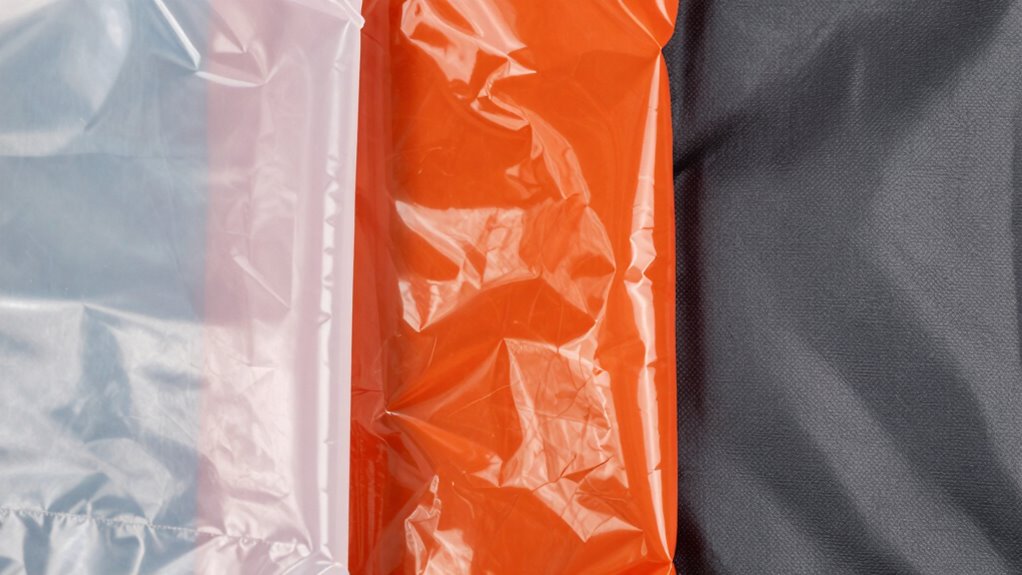

Waterproof bag fabrics use materials like TPU and PVC to keep your gear dry and sturdy. TPU, or thermoplastic polyurethane, resists tears and abrasions and is more eco-friendly, while PVC is affordable and provides excellent water resistance but is less eco-conscious. Coatings like silicone or polyurethane are often applied to fabrics like polyester or nylon to enhance their waterproof qualities. To discover more about these materials and how they protect your gear, keep exploring.

Get travel and outdoor gear delivered free with Prime
- Fast, free delivery on millions of items
- Prime Video, Amazon Music and more included
- Member-only deals all year
Key Takeaways
- TPU and PVC are common fabrics used with coatings for water-resistant waterproof bags.
- TPU is eco-friendlier, flexible, and resistant to tears, while PVC is cost-effective and highly water-resistant.
- Coatings like polyurethane, silicone, or water-based layers enhance fabric waterproofing and durability.
- PVC involves chlorine, releasing harmful chemicals and being less biodegradable compared to TPU.
- Sustainable options include water-based coatings and eco-friendly fabrics that reduce environmental impact.
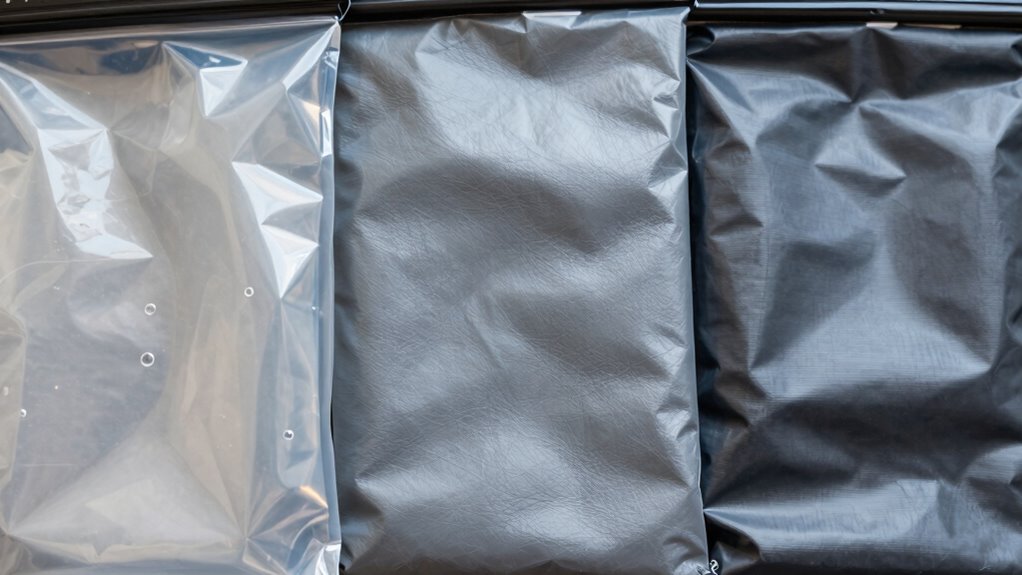
When choosing a waterproof bag, understanding the fabrics behind their durability and water resistance is essential. The materials used in these bags determine not only how well they keep your belongings dry but also how they impact the environment. Material durability plays a crucial role because it influences how long your bag will last and withstand daily wear and tear. For example, some fabrics are inherently tough and resistant to punctures, tears, and abrasions, making them ideal for outdoor adventures or frequent use. Others may be lightweight but less durable, suitable for short trips or occasional use. It’s also vital to consider the environmental impact of these fabrics. Some materials are eco-friendly, biodegradable, or recyclable, which helps reduce pollution and conserve resources, while others involve manufacturing processes that can harm ecosystems.
Polyurethane (PU) coatings and fabrics like TPU and PVC are common choices in waterproof bags. TPU, or thermoplastic polyurethane, offers a great balance of durability and flexibility. It’s resistant to tears and abrasions, making it a popular choice for outdoor gear. Plus, TPU is generally more environmentally friendly than PVC because it doesn’t contain chlorine and can be recycled more easily. PVC, or polyvinyl chloride, provides excellent water resistance and is often used because it’s cheap and easy to produce. However, PVC is less eco-friendly since its manufacturing involves chlorine, which can release harmful chemicals, and it’s not biodegradable. When considering environmental impact, it’s worth noting that many manufacturers are moving towards more sustainable options, like TPU or coated fabrics made from recycled materials.
Waterproof bags often feature coatings or laminates that enhance water resistance without sacrificing flexibility. Polyester or nylon fabrics with specialized coatings can provide high durability and water resistance without significantly increasing environmental harm. Coatings like silicone or polyurethane can be applied to fabrics to improve their resistance to water, but some coatings may be more sustainable than others. For instance, water-based coatings tend to be more environmentally friendly than solvent-based ones, which can release volatile organic compounds during manufacturing. Additionally, innovative sustainable fabrics are emerging as eco-conscious alternatives in the industry. Ultimately, choosing a waterproof bag isn’t just about finding the most water-resistant fabric but also considering how the material’s durability aligns with your needs and how its environmental impact fits into your values. By understanding these aspects, you can select a bag that’s not only effective at protecting your gear but also aligns with sustainable practices.
Frequently Asked Questions
How Do TPU and PVC Fabrics Compare in Environmental Impact?
You’ll find that TPU fabrics are generally more environmentally sustainable than PVC because they contain fewer harmful chemicals and are easier to recycle. PVC, on the other hand, involves toxic additives like phthalates, making it less eco-friendly and less recyclable. If environmental sustainability and fabric recyclability matter to you, choosing TPU is a better option, as it minimizes environmental impact and supports more sustainable practices in waterproof bag manufacturing.
Are Waterproof Coatings Breathable or Waterproof?
Waterproof coatings are typically waterproof, preventing water from passing through, but they aren’t usually breathable. Only coatings with high permeability allow moisture vapor to escape, making them breathable. For example, some coatings have a coating permeability of 10,000 g/m²/day, meaning they can vent moisture while keeping water out. So, if you’re choosing between breathable and waterproof, consider your activity—breathability helps with comfort, while waterproofing keeps your belongings dry.
How Long Do Waterproof Bag Fabrics Typically Last?
Waterproof bag fabrics usually last between 2 to 5 years, depending on your usage and care. If you choose high-quality materials like TPU or coated fabrics, their durability can extend longer. Regular cleaning and avoiding harsh conditions help maintain their fabric lifespan. Keep in mind, the material durability varies; some fabrics withstand wear and tear better, ensuring your waterproof bag stays reliable for years.
Can Waterproof Fabrics Be Repaired if Torn?
Did you know that over 80% of waterproof fabrics can be successfully repaired? If your waterproof fabric gets torn, don’t worry—you can often do fabric repair or tear mending at home or with a professional. Using waterproof patch kits or seam sealants, you can restore the fabric’s integrity, making your bag nearly as good as new. Just follow the repair instructions carefully for the best results.
What Maintenance Is Required to Keep Waterproof Fabrics Effective?
To keep your waterproof fabrics effective, you need to perform regular waterproof cleaning to remove dirt, oils, and debris that can compromise their barrier. Avoid harsh chemicals and use gentle, fabric-specific cleaners. Also, inspect for tears or worn areas and repair them promptly to maintain fabric longevity. Proper maintenance guarantees your waterproof bag stays durable and reliable, protecting your gear from water damage over time.
Conclusion
Now that you know the key differences between TPU, PVC, and coatings, you’re better equipped to choose the perfect waterproof bag. But which material truly offers the ultimate protection for your adventures? The answer might surprise you. Stay tuned, because uncovering the best fabric could change the way you think about waterproof gear forever. Don’t miss out—your next outdoor adventure depends on it.
Halloween Picks
halloween
As an affiliate, we earn on qualifying purchases.